
Andean Hillstar
Oreotrochilus estella
Order: Apodiformes / Family: Trochilidae
Wikimedia Commons
About the Andean Hillstar
The Andean Hillstar, scientifically recognized as Oreotrochilus estella, is an extraordinary member of the hummingbird family, Trochilidae, that thrives in the altitudinal extremes of the Andes. This species is uniquely adapted to survive in conditions that would challenge many other birds, residing at elevations ranging from 3,500 to 5,200 meters. Found predominantly in Peru, Bolivia, Chile, and Argentina, the Andean Hillstar exemplifies the remarkable diversity of life that has evolved to inhabit the high Andes. Its presence in these remote regions highlights the ecological significance of high-altitude ecosystems, where it plays a vital role in pollinating various native flowering plants. These interactions are crucial for the maintenance of alpine plant communities, underscoring the hillstar's importance in its ecosystem. The bird's seasonal behaviors are intricately linked to the flowering cycles of these plants, with the Andean Hillstar following blooms across its range to secure food resources. In addition to its ecological role, the Andean Hillstar is a symbol of the resilience and adaptability of avian species, showcasing the intricate balance between environmental challenges and evolutionary adaptation. The bird's ability to withstand cold temperatures and reduced oxygen levels is a testament to its specialized physiology. Its presence in these high-altitude regions also attracts birdwatchers and researchers eager to study its unique adaptations and behaviors, contributing to a broader understanding of avian life in extreme environments. The Andean Hillstar's vibrant plumage and dynamic flight make it a subject of fascination and admiration, enhancing its role as both a pollinator and an ambassador for the rugged beauty of the Andes.
The Andean Hillstar belongs to the family Trochilidae, within the order Apodiformes. These birds typically live typically 5-7 years, with a maximum recorded of 10 years..
How to Identify a Andean Hillstar
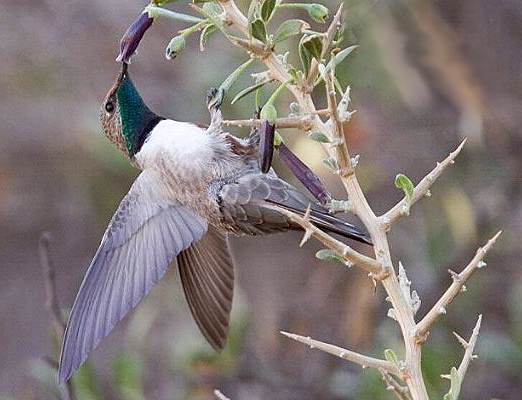
Identifying the Andean Hillstar involves noting its striking iridescent green head and back, contrasted with a white throat and breast. Adult males display a vivid green plumage with a bluish-black tail, while females are more subdued, featuring a grayish-brown back and less pronounced iridescence. Juveniles resemble females but with a slightly duller appearance. The male's throat is a distinctive white, bordered by a bold green stripe that can aid in identification. In flight, the Andean Hillstar's silhouette is typical of hummingbirds, with rapid wingbeats and a compact body. When perched, its posture is upright, often on exposed branches or rock outcroppings. Despite its unique appearance, the Andean Hillstar can be confused with other high-altitude hummingbirds such as the Giant Hummingbird. However, the latter is significantly larger and lacks the hillstar's vibrant green head. Observers should also note the hillstar's behavior, as its preference for open, rocky slopes and its altitudinal range can help differentiate it from similar species.
Having trouble telling birds apart? Upload a photo to our bird identification tool for an instant species match.
Andean Hillstar Habitat and Range
Preferred Habitat
The Andean Hillstar inhabits the rocky slopes and puna grasslands of the Andes, thriving at elevations between 3,500 and 5,200 meters. It is often found near montane shrublands and alpine meadows, where flowering plants are abundant. Unlike many hummingbirds, it does not frequent forests but prefers open, rugged terrain. Seasonal shifts in flowering patterns influence its habitat use, prompting movements to areas where floral resources are available. While it predominantly occupies rural and remote areas, the Andean Hillstar can occasionally be seen near human settlements situated in high-altitude regions. Its adaptability to these challenging environments highlights its specialized ecological niche within the Andean landscape.
Geographic Range
The Andean Hillstar's range spans the high Andes from southern Peru through Bolivia and Chile, reaching into northwestern Argentina. This species breeds at high elevations, taking advantage of the alpine conditions that deter many other avian competitors. While it is largely resident, some altitudinal movements occur in response to changes in food availability. These movements are not long-distance migrations but involve shifts to different elevations as flowering patterns change with the seasons. Population density hotspots are found in regions where flowering plants are abundant, particularly in areas with rich alpine and puna ecosystems. The bird's presence across multiple countries indicates a relatively widespread distribution within its specific ecological niche, though it remains dependent on the unique conditions found only at these high altitudes.
Want to know which birds visit your area? Browse our backyard birds by location guides for region-specific species lists.
What Does the Andean Hillstar Eat?
The Andean Hillstar's diet consists primarily of nectar from a variety of high-altitude flowering plants. It favors tubular flowers that are well-suited to its long bill, such as those belonging to the genera Puya and Bomarea. During the breeding season, when nectar needs increase, it may also consume small insects and spiders to supplement its diet with protein. Foraging typically occurs throughout the day, with peak activity in the early morning and late afternoon when flowers are most productive. The bird employs a hovering flight to feed, skillfully maneuvering in the thin air of its high-altitude habitat. Seasonal diet changes are evident as it follows the flowering cycles of its preferred plants, ensuring a steady supply of nectar year-round despite the harsh Andean environment.
Want to attract Andean Hillstars to your yard? See our recommended feeders and seed types for the best results.
Andean Hillstar Behavior and Social Structure
The Andean Hillstar exhibits solitary territorial behavior, with males defending feeding territories from rivals. This territoriality is crucial for securing access to floral resources and attracting mates. Courtship displays involve aerial chases and vocalizations, with males displaying their iridescent plumage to impress females. The breeding season coincides with peak flowering times, aligning reproductive efforts with optimal food availability. Outside of the breeding season, the Andean Hillstar may form loose associations with other hummingbirds at abundant food sources, though it does not typically engage in flocking behavior. Its response to predators includes rapid, erratic flight and vocal alarms to alert conspecifics. Daily activity patterns are influenced by temperature, with most feeding occurring during warmer daylight hours. The bird's resilience to harsh weather conditions is evident in its ability to maintain activity even in cold, windy environments.
Andean Hillstar Nesting and Reproduction
The nesting behavior of the Andean Hillstar involves constructing a cup-shaped nest from plant fibers, moss, and lichen, often located on rocky ledges or sheltered crevices. This strategic placement provides protection from predators and harsh weather. The female alone is responsible for incubating the eggs, typically laying a clutch of two white eggs. The incubation period lasts about 16 to 18 days, during which the female remains diligent, only leaving the nest briefly to feed. Once hatched, the chicks are altricial, requiring constant care and feeding. Fledging occurs approximately 23 to 26 days post-hatching, with the female continuing to provide parental care until the young are independent. The Andean Hillstar generally raises one brood per year, although conditions with favorable resources may allow for a second brood.
Andean Hillstar Sounds and Vocalizations
The Andean Hillstar's primary song is a series of rapid, high-pitched notes that form a melodic sequence. The rhythm is fast-paced, with a pitch that can vary between individuals but generally remains high. Call notes are short and sharp, often used in territorial disputes or as alarms. Alarm calls are more urgent, consisting of repetitive, harsh notes to deter intruders. During the dawn chorus, males can be heard singing to establish and defend territories, their voices carrying across the open landscapes. The sounds produced by the Andean Hillstar are reminiscent of other hummingbirds but are distinguishable by the unique sequence and pitch variations.
Interesting Facts About the Andean Hillstar
- 1The Andean Hillstar can survive in temperatures as low as -10°C due to specialized adaptations.
- 2This hummingbird's heart rate can reach up to 1,260 beats per minute during flight.
- 3The Andean Hillstar's iridescent plumage changes color depending on the angle of sunlight.
- 4It is one of the few hummingbirds that can be found at elevations above 5,000 meters.
- 5The Andean Hillstar can hover for extended periods, allowing it to feed effectively in the thin air.
- 6Males are highly territorial, often engaging in aerial battles to defend their feeding grounds.
- 7Despite its small size, the Andean Hillstar plays a crucial role in pollinating high-altitude plants.
Andean Hillstar Conservation Status
The Andean Hillstar is currently listed as Least Concern by the IUCN, with stable population trends observed across its range. However, habitat degradation due to agricultural expansion and climate change poses potential threats to its high-altitude environments. Conservation efforts focus on preserving the natural habitats of the Andes, with initiatives aimed at protecting key ecosystems and mitigating the impacts of human activities. Historical population changes have been minimal, largely due to the bird's adaptation to remote and less disturbed regions. Continued monitoring and habitat protection are essential to ensuring the long-term survival of this resilient species.
Attracting Andean Hillstars to Your Feeder
The Andean Hillstar is a regular visitor to backyard bird feeders across its range. At the Eye On The Fly feeding station, we observe Andean Hillstars regularly and capture footage with our feeder cameras.


