Pelopon Pipit
Anthus pelopus
Order: Passeriformes / Family: Motacillidae
About the Pelopon Pipit
The Pelopon Pipit (Anthus pelopus) is a small, ground-dwelling songbird belonging to the Motacillidae family. It thrives in the diverse landscapes of Europe, particularly in the Mediterranean region, where it frequents open fields and rocky terrains. The species plays a crucial ecological role as both predator and prey. As insectivores, these pipits control insect populations, while their presence supports avian predators. The bird is especially active during the breeding season, which occurs in spring and summer, when male Pelopon Pipits can be observed performing aerial displays to court females. The pipit's melodic song fills the air, adding to the vibrant soundscape of its habitats. These birds are also significant indicators of environmental health, as they are sensitive to changes in their ecosystems. The Pelopon Pipit migrates in response to seasonal changes, moving to warmer regions during the winter months. It often travels in flocks, which helps maintain genetic diversity and strengthens population resilience. Conservationists monitor these populations to track ecological shifts, as the species is vulnerable to habitat loss and climate change. The pipit's ability to adapt to varying conditions makes it a fascinating subject for ornithologists and birdwatchers alike. Its presence across a range of habitats underscores its ecological significance, as it contributes to the biodiversity and functioning of Mediterranean ecosystems.
The Pelopon Pipit belongs to the family Motacillidae, within the order Passeriformes. These birds typically live average 3-4 years with a max recorded of 9 years..
How to Identify a Pelopon Pipit
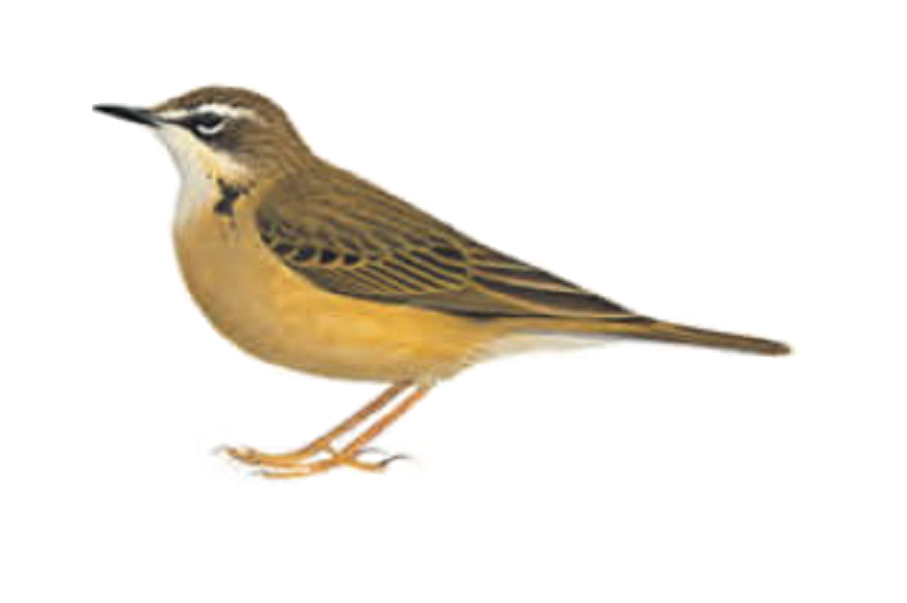
The Pelopon Pipit is a medium-sized pipit with a length of approximately 16 cm and a wingspan reaching up to 26 cm. Adults display a streaked brown and buff plumage, which provides excellent camouflage against the grassy and rocky backgrounds of their habitat. The underparts are pale with distinctive dark streaks running along the breast and flanks. Males and females appear similar, although males might exhibit slightly more vivid plumage during the breeding season. Juvenile Pelopon Pipits resemble adults but tend to have less pronounced streaking. In flight, the Pelopon Pipit shows a characteristic undulating pattern typical of pipits, with rapid wingbeats followed by short glides. Its perching posture is upright, often seen on rocks or low shrubs. This species can be confused with other pipits such as the Meadow Pipit and the Tree Pipit. However, the Pelopon Pipit can be distinguished by its slightly larger size and more robust bill. Additionally, its song and call notes provide further clues for identification, especially during the breeding season when vocal activity increases.
Having trouble telling birds apart? Upload a photo to our bird identification tool for an instant species match.
Pelopon Pipit Habitat and Range
Preferred Habitat
The Pelopon Pipit inhabits a variety of open environments, including grasslands, rocky slopes, and scrublands typical of Mediterranean regions. It prefers elevations ranging from sea level to about 1,500 meters, thriving in areas where vegetation is sparse yet varied. Seasonal habitat shifts are common, with the species moving to lower elevations and southern locales during the winter. While primarily rural, the Pelopon Pipit occasionally ventures into urban fringes where suitable open spaces are available, such as parks and large gardens. Its adaptability to different habitats is a testament to its resilience, though it remains dependent on the availability of suitable nesting sites and ample food resources.
Geographic Range
The Pelopon Pipit breeds predominantly across southern Europe, with significant populations in countries like Greece, Italy, and Spain. During the winter, it migrates to the southern parts of its range, often reaching North Africa, where milder climates prevail. The migration corridors typically include the Mediterranean Basin, where the birds can find stopover sites rich in food. Population density hotspots include the coastal plains of the Peloponnese and the arid landscapes of the Iberian Peninsula. Despite its broad range, the Pelopon Pipit is most densely concentrated in regions with optimal habitat conditions, such as those providing ample nesting opportunities and a rich insect prey base.
Want to know which birds visit your area? Browse our backyard birds by location guides for region-specific species lists.
What Does the Pelopon Pipit Eat?
The diet of the Pelopon Pipit is primarily insectivorous, consisting mainly of beetles, grasshoppers, and caterpillars. During the breeding season, when insect abundance peaks, the pipit increases its intake to support the energy demands of raising young. Insects are gleaned from the ground, a behavior facilitated by the bird's agile movements and keen eyesight. Outside the breeding season, the diet diversifies slightly to include seeds and small fruits, which become necessary when insect availability diminishes. The Pelopon Pipit typically forages alone or in small groups, using a methodical walking pattern to flush out prey. Foraging activity concentrates during dawn and dusk when insect activity peaks, maximizing feeding efficiency.
Pelopon Pipit Behavior and Social Structure
The Pelopon Pipit exhibits a complex social structure, often forming small flocks outside the breeding season to enhance foraging success and predator avoidance. During the breeding season, males establish and defend territories through song and display flights. These aerial displays involve climbing steeply before gliding back down, accompanied by a melodious song that serves to attract females and deter rivals. Courtship includes mutual preening and food exchanges between pairs. The species is primarily diurnal, with peak activity occurring in the early morning and late afternoon. When threatened, the Pelopon Pipit employs a freeze-and-flush strategy, relying on its cryptic plumage to avoid detection before abruptly taking flight.
Pelopon Pipit Nesting and Reproduction
The Pelopon Pipit constructs its nest on the ground, often concealed within tufts of grass or under small shrubs. The nest is a shallow cup made from grass, roots, and moss, lined with finer materials for insulation. A typical clutch consists of 3 to 5 eggs, which are pale with subtle speckles. Both parents partake in incubation, which lasts approximately 12 to 14 days. After hatching, the chicks remain in the nest for about two weeks before fledging. During this period, both parents actively feed and protect the young. The species usually raises one to two broods per year, depending on environmental conditions and food availability.
Pelopon Pipit Sounds and Vocalizations
The song of the Pelopon Pipit is a rich, melodious sequence of trills and chirps, delivered with a rhythmic cadence. It often begins with a series of high-pitched notes that descend into a complex, warbling melody. Call notes are sharp, single 'tsip' sounds used for communication between flock members. Alarm calls are harsher and more rapid, serving to alert others of potential danger. The Pelopon Pipit participates in the dawn chorus, where its song plays a significant role in establishing territory and attracting mates. The sound is reminiscent of other pipits but is distinct in its fluidity and complexity.
Interesting Facts About the Pelopon Pipit
- 1The Pelopon Pipit's aerial song displays can last up to 15 minutes, showcasing its stamina and intricate vocalizations.
- 2Despite its small size, the Pelopon Pipit can cover distances of over 1,000 km during migration, highlighting its endurance.
- 3The Pelopon Pipit has a unique foraging technique, known as 'foot-trembling,' to disturb insects hiding in the ground.
- 4During breeding season, male Pelopon Pipits can sing up to 200 times per day to attract mates and establish territory.
- 5The Pelopon Pipit's cryptic plumage provides excellent camouflage, making it challenging for predators to spot it on the ground.
Pelopon Pipit Conservation Status
Currently, the Pelopon Pipit holds a conservation status of Least Concern according to the IUCN. However, its populations are subject to pressures from habitat loss due to agricultural expansion and urbanization. Climate change poses additional threats by altering the availability of insect prey and suitable habitats. Conservation efforts focus on preserving critical habitats and monitoring population trends to ensure long-term stability. Historically, the species has experienced fluctuations in numbers, but it demonstrates a capacity for resilience if suitable conditions are maintained.
Other Motacillidae Species



Birds Similar to the Pelopon Pipit
These species are often confused with the Pelopon Pipit due to similar appearance or overlapping range.