
Ariel Toucan
Ramphastos ariel
Order: Piciformes / Family: Ramphastidae
Wikimedia Commons
About the Ariel Toucan
The Ariel Toucan (Ramphastos ariel) is a captivating member of the Ramphastidae family, renowned for its large, colorful bill and vibrant plumage. Found primarily in the tropical forests of South America, especially in countries like Brazil and Argentina, the Ariel Toucan plays a vital role in its ecosystem. This species contributes significantly to seed dispersal, as it consumes a variety of fruits and expels the seeds, aiding in forest regeneration. Not restricted to primary forests, the Ariel Toucan adapts well to secondary growth and forest edges, showcasing its ecological flexibility. Seasonal behaviors of the Ariel Toucan include shifts in feeding areas as fruit availability changes, often leading these birds to roam over significant distances in search of food. During the breeding season, which usually aligns with the rainy season, the Ariel Toucan becomes more territorial, defending its chosen nesting sites vigorously. Their presence indicates a healthy, biodiverse environment, making them critical bioindicators in their native regions. They contribute to the forest's health by controlling insect populations, as they occasionally supplement their diet with small invertebrates. Despite being relatively adaptable, the Ariel Toucan faces threats from habitat destruction and the illegal pet trade, which have impacted their populations in certain areas. Conservation efforts aimed at preserving their natural habitat and curbing illegal trade are crucial for maintaining stable populations. Observing the Ariel Toucan in its natural habitat offers a glimpse into the dynamic interactions within tropical ecosystems, highlighting the intricate balance between species and their environment.
The Ariel Toucan belongs to the family Ramphastidae, within the order Piciformes. These birds typically live typically 15-20 years in the wild..
How to Identify a Ariel Toucan
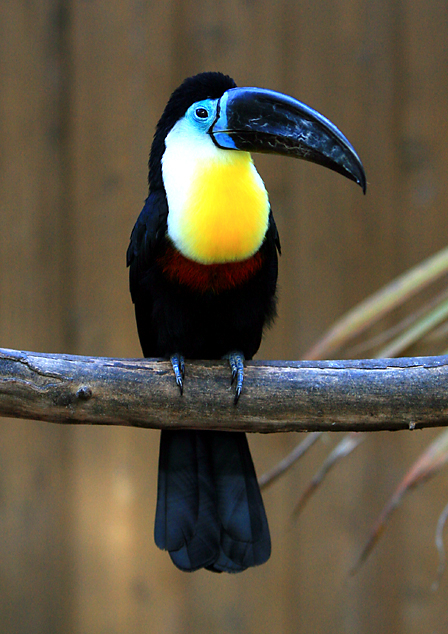
The Ariel Toucan is distinctive with its striking black plumage contrasted by a vibrant orange-yellow bill, making it easy to identify in the field. Adults display a predominantly black body with a white throat and chest, while their eye-catching bill features a mix of orange, yellow, and a hint of green at the base. Juveniles exhibit a duller plumage with a less pronounced bill coloration, which brightens as they mature. Males and females appear similar, although males tend to have slightly larger bills. In flight, the Ariel Toucan presents a unique silhouette with its large bill and short, rounded wings, creating a distinctive profile. When perched, they often adopt an upright posture, using their bill to balance. Confusion may arise with other toucan species, such as the Toco Toucan, but the Ariel Toucan's slightly smaller size and specific bill coloration aid in differentiation.
Having trouble telling birds apart? Upload a photo to our bird identification tool for an instant species match.
Ariel Toucan Habitat and Range
Preferred Habitat
The Ariel Toucan thrives in tropical and subtropical forests, primarily inhabiting lowland rainforests and occasionally venturing into montane regions up to 1,500 meters in elevation. They prefer dense forest canopies but are also found in forest edges and patches of secondary growth. While primarily forest dwellers, Ariel Toucans can adapt to human-altered landscapes, provided there are sufficient trees and fruiting plants available. Seasonal habitat shifts occur as they follow fruiting trees, leading them to explore various forested environments within their range. Despite their adaptability, they remain reliant on forested regions, making habitat preservation essential for their continued survival.
Geographic Range
The Ariel Toucan's range spans several South American countries, predominantly within Brazil and extending into parts of Argentina and Paraguay. They inhabit regions characterized by dense, tropical forests, with significant populations in the Brazilian Amazon and the Atlantic Forest. While not migratory, these toucans may exhibit local movements in response to fruit availability, often covering large areas in search of food. Population densities vary, with higher concentrations noted in well-preserved forest areas. Habitat fragmentation has led to isolated populations in some regions, emphasizing the importance of habitat connectivity for their survival.
Want to know which birds visit your area? Browse our backyard birds by location guides for region-specific species lists.
What Does the Ariel Toucan Eat?
Ariel Toucans primarily consume a fruit-based diet, relying heavily on the availability of diverse fruiting trees. Common dietary staples include figs, palms, and various tropical fruits. Their large bills allow them to reach and consume fruits inaccessible to other species, enabling them to exploit a wide range of food sources. During periods of fruit scarcity, they adapt by incorporating small insects, lizards, and occasionally bird eggs into their diet. Foraging typically occurs in the early morning and late afternoon, with toucans employing their agile movements and keen eyesight to locate ripe fruits. Their role as seed dispersers is critical, as they assist in maintaining the health and diversity of their forest habitats.
Want to attract Ariel Toucans to your yard? See our recommended feeders and seed types for the best results.
Ariel Toucan Behavior and Social Structure
Ariel Toucans exhibit a social structure characterized by small family groups, often seen foraging together. These groups maintain loose territories, marked by vocalizations and displays to deter intruders. During the breeding season, males perform courtship displays, which include bill fencing and fruit exchanges. Ariel Toucans are generally non-aggressive but will defend their nesting sites vigorously. Their daily activities follow a predictable pattern, with peak activity occurring during cooler morning and afternoon hours. In response to predators, they rely on their agility and vocal alarm calls to alert group members. Their movements through the forest canopy are deliberate and calculated, showcasing their adeptness at navigating dense foliage.
Ariel Toucan Nesting and Reproduction
Ariel Toucans prefer nesting in tree cavities, often utilizing abandoned woodpecker holes or natural cavities in large trees. They do not add nesting materials, preferring the simplicity of existing structures. The typical clutch size ranges from 2 to 4 white eggs, with both parents sharing incubation duties over approximately 16 to 18 days. After hatching, the chicks remain in the nest for up to 6 weeks, receiving regurgitated food from both parents. Parental roles are egalitarian, with both contributing to feeding and protection. These toucans generally raise one brood per year, although favorable conditions may allow for a second. Nesting sites are typically well-concealed, minimizing the risk of predation.
Ariel Toucan Sounds and Vocalizations
The Ariel Toucan's vocalizations are distinctive, characterized by a series of sharp, yelping calls often described as yelps or croaks. Their primary call includes a rhythmic pattern of repeated notes, serving both territorial and social functions. Alarm calls are harsher and more rapid, alerting other toucans to potential threats. During the dawn chorus, Ariel Toucans contribute with their resonant calls, creating a lively soundscape within their forest habitats. Their vocalizations differ from those of other birds, resembling a mix of barking and croaking, which can carry over long distances through dense foliage.
Interesting Facts About the Ariel Toucan
- 1The Ariel Toucan's bill, while large, is surprisingly lightweight due to its hollow structure.
- 2These toucans can consume up to 100 different types of fruits, showcasing their dietary versatility.
- 3Despite their size, Ariel Toucans are agile fliers, capable of navigating through dense forest canopies with ease.
- 4Their large bills are not only tools for feeding but also serve as effective thermoregulators.
- 5Ariel Toucans have zygodactyl feet, with two toes facing forward and two backward, aiding in gripping branches.
- 6The species name 'ariel' refers to a character from Shakespeare's 'The Tempest,' symbolizing the toucan's whimsical nature.
- 7Ariel Toucans play a key role in their ecosystem by dispersing seeds, contributing to forest growth and regeneration.
Ariel Toucan Conservation Status
Currently, the Ariel Toucan is classified as Least Concern by the IUCN, although localized population declines have been noted. The primary threats include habitat destruction due to logging, agriculture, and urban expansion. The illegal pet trade also poses a significant risk, as toucans are often captured for their striking appearance. Conservation efforts are crucial, focusing on habitat preservation and law enforcement to curb illegal trade. Historically, population numbers have fluctuated in response to habitat availability, underscoring the importance of sustainable land management practices.
Attracting Ariel Toucans to Your Feeder
The Ariel Toucan is a regular visitor to backyard bird feeders across its range. At the Eye On The Fly feeding station, we observe Ariel Toucans regularly and capture footage with our feeder cameras.
Other Ramphastidae Species


Birds Similar to the Ariel Toucan
These species are often confused with the Ariel Toucan due to similar appearance or overlapping range.
