
Arrowhead Warbler
Setophaga pharetra
Order: Passeriformes / Family: Parulidae
Wikimedia Commons
About the Arrowhead Warbler
The Arrowhead Warbler (Setophaga pharetra) is a striking songbird endemic to Jamaica, found primarily in the island's montane and wet limestone forests. This warbler exhibits a distinctive combination of bold colors and lively behavior, making it a favorite among birdwatchers and ornithologists alike. Its ecological role is significant within its habitat, contributing to the control of insect populations and serving as an indicator of forest health. The Arrowhead Warbler's presence is largely restricted to elevations above 800 meters, where it thrives in the dense foliage and abundant insect life of these forested regions. In the Blue Mountains, as well as the Cockpit Country, these birds are often seen darting through the canopy, weaving through the leaves in search of their next meal. Seasonal behaviors of the Arrowhead Warbler include a slight altitudinal migration, where they may descend to lower elevations during the colder months, although largely remaining within their endemic range. This bird plays a crucial role in the ecosystem by participating in the mutualistic relationships that maintain the balance of its natural habitat. As insectivores, they help regulate insect populations, thus preventing potential outbreaks that could harm the forest's flora. Historically, the Arrowhead Warbler has faced pressures from habitat loss due to deforestation. However, concerted conservation efforts have been aimed at preserving the remaining tracts of Jamaica's montane forests to safeguard this and other endemic species. The forests of Jamaica, particularly those that are protected, continue to be vital sanctuaries for the Arrowhead Warbler, allowing it to flourish and maintain its role in its ecological niche.
The Arrowhead Warbler belongs to the family Parulidae, within the order Passeriformes. These birds typically live average 4-6 years, with a maximum recorded of 7 years..
How to Identify a Arrowhead Warbler
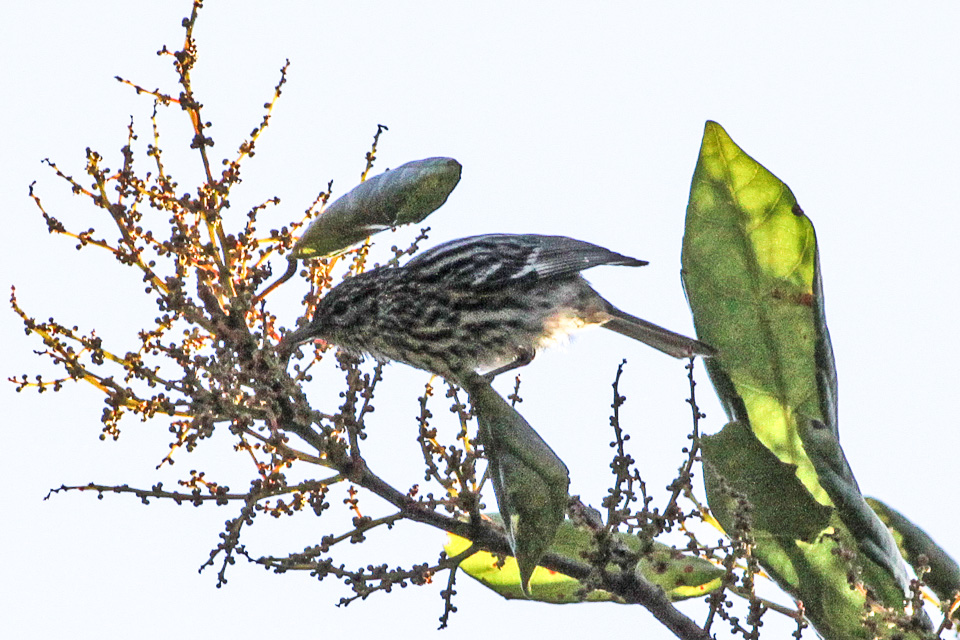
The Arrowhead Warbler can be identified by its vibrant plumage and distinct markings. Adult males showcase a bright yellow breast and belly, contrasted by black streaks on the sides and a striking black head with a white supercilium (eyebrow line) that gives the bird its arrowhead appearance. Females and juveniles exhibit similar patterns but with slightly duller colors and less pronounced markings. Both sexes display a slender build typical of warblers, with a medium-length tail and agile wings suited for rapid maneuvering through dense foliage. When perched, the Arrowhead Warbler often holds its tail slightly cocked, a posture that can help differentiate it from other warblers in its range. Its flight is characterized by quick, undulating bursts, making it well-suited to the forest canopy. Confusion with other species is minimized due to its unique color pattern and restricted geographic range, although it could be initially mistaken for other Setophaga species by less experienced birders. The distinct coloration and behavior of the Arrowhead Warbler make it a standout among Jamaica's avian fauna.
Having trouble telling birds apart? Upload a photo to our bird identification tool for an instant species match.
Arrowhead Warbler Habitat and Range
Preferred Habitat
The Arrowhead Warbler inhabits the montane and wet limestone forests of Jamaica, thriving at elevations between 800 and 2,000 meters. These habitats offer the dense canopy and humid conditions preferred by the species. During the breeding season, the warbler favors areas with ample underbrush for nesting and protection from predators. In contrast, the wetter lowland forests serve as occasional foraging grounds during the non-breeding season, though the bird rarely strays far from its mountainous strongholds. Unlike many birds, the Arrowhead Warbler is not typically found in urban areas, preferring the isolation and rich biodiversity of its forest habitat. Its presence in protected areas like the Blue and John Crow Mountains National Park underscores the importance of conserving these habitats, not only for the warbler but also for the myriad of other species that share this environment.
Geographic Range
The range of the Arrowhead Warbler is confined to the island of Jamaica, making it an endemic species with a limited geographic distribution. Within Jamaica, its breeding and year-round presence are largely concentrated in the montane regions such as the Blue Mountains and Cockpit Country. These areas provide the necessary habitat and food resources for sustaining its populations. Unlike many migratory warblers, the Arrowhead Warbler remains in Jamaica throughout the year, although it may engage in minor altitudinal movements in response to seasonal weather changes. Population density is highest in areas where dense montane forest is preserved, with lower densities observed in degraded or deforested regions. The bird's restricted range highlights the importance of habitat conservation efforts to ensure its continued survival.
Want to know which birds visit your area? Browse our backyard birds by location guides for region-specific species lists.
What Does the Arrowhead Warbler Eat?
The Arrowhead Warbler primarily feeds on insects, which it gleans from foliage in the forest canopy. Its diet includes a variety of arthropods such as caterpillars, beetles, and spiders, with prey size typically ranging from small to medium. During the breeding season, its diet shifts slightly to include more protein-rich insects to support the nutritional demands of raising young. Foraging involves a combination of leaf-gleaning and aerial sallies, where the warbler captures insects in flight with remarkable agility. This method of foraging is particularly effective in the dense canopy of its montane forest habitat. The warbler's feeding activity peaks during the early morning and late afternoon hours, coinciding with periods of increased insect activity. Seasonal variations in diet are minimal due to the bird's year-round residence in its habitat, which consistently provides a rich supply of insects.
Arrowhead Warbler Behavior and Social Structure
The Arrowhead Warbler exhibits a range of interesting behaviors, characteristic of its family. Socially, it tends to be solitary or found in pairs, particularly during the breeding season. These warblers are territorial, with males vigorously defending their territories through song and physical displays. During courtship, males engage in displays that include fluttering flights and vocalizations to attract females. Outside of the breeding season, the Arrowhead Warbler may join mixed-species foraging flocks, which is advantageous for locating food and protection against predators. In response to threats, these warblers rely on their agile flight and dense canopy coverage to evade predators like hawks and owls. Daily activity patterns include peak foraging times in the morning and late afternoon, with periods of rest during the hotter midday hours. The warbler's behavior reflects its adaptation to the dynamic and lush environment of Jamaica's montane forests.
Arrowhead Warbler Nesting and Reproduction
The nesting habits of the Arrowhead Warbler are closely tied to its montane forest habitat. Nests are typically cup-shaped and constructed from grasses, leaves, and moss, often lined with finer materials for insulation and comfort. The warbler prefers to place its nest in dense shrubbery or low tree branches, providing camouflage from predators. Clutch sizes range from 2 to 4 eggs, which are incubated by the female for approximately 12 to 14 days. After hatching, the chicks remain in the nest for about 10 to 12 days before fledging. Both parents participate in feeding the young, ensuring a steady supply of insects. The Arrowhead Warbler generally produces one brood per year, although in favorable conditions, a second brood may occur. The choice of nesting site and timing are crucial for the survival of the offspring in the competitive and biodiverse montane forest environment.
Arrowhead Warbler Sounds and Vocalizations
The Arrowhead Warbler's song is a distinctive series of rapid, high-pitched notes that rise and fall in a melodious pattern. These notes convey both territorial and mating messages, often heard in the early morning as part of the dawn chorus. The bird's call notes are sharp and clear, used to communicate with mates or signal alarm. Alarm calls differ slightly in pitch and urgency, alerting other birds to potential danger. The warbler's vocalizations contribute to the acoustic landscape of its forest habitat, providing cues that aid in the maintenance of territory and social structure. The sounds of the Arrowhead Warbler can often be compared to the tinkling of a small bell, adding a musical element to the Jamaican forest soundscape.
Interesting Facts About the Arrowhead Warbler
- 1The Arrowhead Warbler is endemic to Jamaica, meaning it is found nowhere else in the world.
- 2Despite its small size, the Arrowhead Warbler plays a big role in controlling insect populations in its habitat.
- 3The warbler's name comes from the arrow-like pattern created by its white supercilium and black head.
- 4Arrowhead Warblers are known to participate in mixed-species flocks, a strategy to enhance foraging success and protection.
- 5This warbler is a non-migratory bird, remaining in Jamaica year-round, unlike many of its migratory Setophaga relatives.
- 6The dense montane forests of the Blue and John Crow Mountains are among the best places to observe the Arrowhead Warbler.
- 7The Arrowhead Warbler’s song is one of the earliest heard at dawn, marking the beginning of the forest's daily chorus.
Arrowhead Warbler Conservation Status
The Arrowhead Warbler is currently listed as Least Concern by the IUCN, but its population is vulnerable to habitat loss due to deforestation and land conversion. Conservation efforts are focused on preserving the montane and limestone forests that are crucial for its survival. Initiatives include the establishment of protected areas and reforestation projects aimed at restoring degraded habitats. Historically, population declines have been linked to large-scale deforestation for agriculture and development. Recent trends show a stabilization in population numbers, attributed to increased awareness and protective measures. Long-term conservation success will depend on continued habitat preservation and management, addressing both direct threats and broader environmental challenges that impact the delicate montane ecosystems of Jamaica.


