
Ashy Woodpecker
Mulleripicus fulvus
Order: Piciformes / Family: Picidae
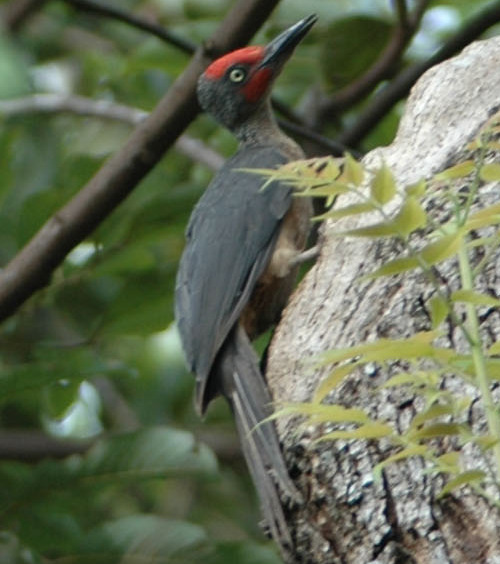
Wikimedia Commons
About the Ashy Woodpecker
The Ashy Woodpecker, or Mulleripicus fulvus, is a striking bird native to the Indonesian islands of Sulawesi and the nearby Talaud Islands. It belongs to the Picidae family, which encompasses a wide range of woodpecker species known for their distinctive drumming and chiseling behaviors. This medium-large woodpecker is particularly notable for its ash-gray plumage, which provides excellent camouflage against the tree bark it frequently inhabits. The Ashy Woodpecker plays a crucial role in its ecosystem by controlling insect populations and aiding in forest regeneration through its feeding habits.
Inhabiting predominantly lowland and montane forests, this woodpecker favors areas with dense tree cover and a rich supply of deadwood. Such environments provide ample foraging opportunities and nesting sites. The Ashy Woodpecker's presence is a good indicator of forest health, as it thrives in mature forests with significant biodiversity. It actively participates in maintaining this biodiversity by creating cavities in trees, which later serve as nesting sites for various bird species and small mammals.
The Ashy Woodpecker is an essential component of its ecological community, serving both as a predator and as prey. Its diet primarily consists of insects, particularly wood-boring beetles and ants, which it extracts from tree trunks using its robust bill. In doing so, it helps to keep insect populations in check, benefiting the overall health of the forest. Additionally, the Ashy Woodpecker contributes to the dispersal of seeds and spores, facilitating forest regeneration.
Seasonal behaviors of the Ashy Woodpecker include variations in its activity patterns and diet. During the breeding season, which typically occurs in the dry months, this woodpecker becomes more territorial and vocal. It uses an array of calls and drumming sequences to communicate with potential mates and rivals. In contrast, during the rainy season, the Ashy Woodpecker may expand its range slightly in search of food, taking advantage of the abundance of insects and fruits available.
The Ashy Woodpecker belongs to the family Picidae, within the order Piciformes. These birds typically live average 7-9 years with the possibility of living up to 13 years..
How to Identify a Ashy Woodpecker
The Ashy Woodpecker is distinguished by its medium to large size, typically measuring 30-35 cm in length. Its most notable feature is the ash-gray coloration covering most of its body, which blends seamlessly with the bark of trees. The underparts are slightly lighter, providing a subtle contrast. Both males and females exhibit this gray plumage, though males can be identified by a small red patch on the nape, which is absent in females.
Juvenile Ashy Woodpeckers resemble adults but display somewhat duller plumage and lack the distinctive red nape patch seen in adult males. This age-related difference in plumage helps birdwatchers and researchers distinguish between younger and mature individuals in the field.
When observing Ashy Woodpeckers, one may note their distinctive flight pattern, characterized by a strong, undulating motion typical of many woodpecker species. In flight, the bird's wings beat rapidly, followed by short glides. While perched, the Ashy Woodpecker maintains a vertical posture, often using its stiff tail feathers for support against tree trunks. This woodpecker can be confused with the Great Slaty Woodpecker due to its size, but the Ashy Woodpecker's uniform gray coloration is a reliable distinguishing mark.
Having trouble telling birds apart? Upload a photo to our bird identification tool for an instant species match.
Ashy Woodpecker Habitat and Range
Preferred Habitat
The Ashy Woodpecker thrives in the lush, dense forests of Sulawesi, typically inhabiting both lowland and montane regions. These forests, rich in biodiversity, provide the ideal conditions for the woodpecker's survival, offering ample food sources and nesting sites. The bird is often found at elevations ranging from sea level up to 1,500 meters, showcasing its adaptability to various forest environments.
While primarily a forest dweller, the Ashy Woodpecker occasionally ventures into secondary forests and plantations, provided that these areas retain a significant number of mature trees and deadwood. Its presence in such areas highlights its role as a crucial component of forest ecosystems. The Ashy Woodpecker's habitat preferences do not vary significantly with the seasons, though it may adjust its range slightly during the rainy season to exploit temporary food abundance.
In contrast to many other woodpecker species, the Ashy Woodpecker is rarely found in urban or suburban settings. Its reliance on mature forests with abundant deadwood limits its presence in heavily altered landscapes, emphasizing the importance of preserving natural forest habitats for its continued survival.
Geographic Range
The Ashy Woodpecker's range is confined to the Indonesian islands of Sulawesi and the adjacent Talaud Islands. Within this range, the species is non-migratory, residing in its chosen habitats year-round. Sulawesi's diverse landscapes, from coastal lowlands to mountainous regions, provide a variety of environments for the Ashy Woodpecker, facilitating its adaptation to different ecological niches.
Population density hotspots for the Ashy Woodpecker are typically found in the central and northern regions of Sulawesi, where extensive primary forests remain. These areas support robust populations due to their rich biodiversity and minimal human disturbance. The Talaud Islands, though smaller in size, also host viable populations of this woodpecker, thanks to the preservation of forested areas.
The Ashy Woodpecker does not undertake long-distance migrations like some other bird species. However, it may exhibit local movements in response to seasonal changes in food availability, particularly during periods of insect abundance in the wet season. Such shifts are typically confined to its established range, ensuring that the Ashy Woodpecker remains a consistent presence in its native habitats.
Want to know which birds visit your area? Browse our backyard birds by location guides for region-specific species lists.
What Does the Ashy Woodpecker Eat?
The Ashy Woodpecker's diet primarily consists of insects, with a particular preference for wood-boring beetles and ants, which it expertly extracts from tree trunks and branches. Its strong bill and barbed tongue are perfectly adapted for prying into bark and excavating tunnels to reach its prey. The woodpecker's feeding technique involves a methodical examination of tree surfaces, often tapping and listening for hollow sounds that indicate insect activity within.
In addition to insects, the Ashy Woodpecker supplements its diet with fruits and seeds, especially during times when insect prey is less abundant. This dietary flexibility allows it to adapt to seasonal variations in food availability, ensuring its survival throughout the year. The bird has been observed foraging in mixed-species flocks, a behavior that may increase its foraging efficiency and reduce the risk of predation.
The Ashy Woodpecker's feeding schedule is diurnal, with peak activity occurring during the cooler morning hours. This timing allows the bird to exploit the heightened activity levels of its insect prey while avoiding the heat of the day. By maintaining a diverse diet and flexible foraging strategies, the Ashy Woodpecker plays a vital role in controlling insect populations and facilitating forest health.
Ashy Woodpecker Behavior and Social Structure
The Ashy Woodpecker exhibits a range of fascinating behaviors that reflect its adaptability and ecological role. Socially, it is primarily solitary or found in pairs, with both sexes participating in territorial defense. The bird establishes territories that it vigorously defends from intruders, using a combination of vocalizations and drumming to communicate its presence and assert dominance.
During the breeding season, the Ashy Woodpecker engages in elaborate courtship displays, with the male showcasing its drumming skills and performing aerial displays to attract a mate. Once paired, the woodpeckers work cooperatively to excavate a nesting cavity, typically selecting a tree with deadwood to facilitate the process. This cooperative behavior extends to raising their young, with both parents sharing responsibilities for feeding and protecting the chicks.
The Ashy Woodpecker is alert to potential threats, employing a series of alarm calls to warn conspecifics of danger. Its response to predators includes a swift retreat to cover, leveraging its excellent climbing skills to navigate tree trunks rapidly. Daily activity patterns of the Ashy Woodpecker are dictated by the availability of food and the necessity to maintain its territory, with active foraging occurring throughout the day.
Ashy Woodpecker Nesting and Reproduction
The Ashy Woodpecker constructs its nest by excavating cavities in dead or decaying trees, a task that requires both ingenuity and effort. This species shows a preference for softwood trees, which are easier to chisel into. The excavation process is a joint venture, with both male and female participating in turns, ensuring the nest is ready for the breeding season.
Typically, the female lays a clutch of 2-4 eggs, which are incubated for approximately 11-14 days. Both parents share incubation duties, reflecting their cooperative breeding strategy. Once hatched, the young woodpeckers grow rapidly, with parents tirelessly feeding them a diet rich in insects. The fledging period is around 24-28 days, during which the chicks develop the necessary skills to leave the nest and forage independently.
The Ashy Woodpecker usually raises one brood per year, though favorable conditions may occasionally allow for a second. Parental care extends beyond fledging, with parents guiding their young in foraging and territory establishment, ensuring they are well-equipped for survival in the challenging forest environment.
Ashy Woodpecker Sounds and Vocalizations
The Ashy Woodpecker's vocal repertoire is diverse, including a series of sharp 'pik' calls used for communication between mates and during territorial disputes. Its primary song consists of rapid drumming sequences on resonant branches or tree trunks, serving both as a display of territoriality and mate attraction.
Alarm calls are harsher and more insistent, designed to alert conspecifics of immediate danger. These sounds are particularly important during the breeding season, as they help protect vulnerable nests from predators. The Ashy Woodpecker's drumming is reminiscent of the rhythmic tapping of a woodworker's hammer.
In the early morning, the Ashy Woodpecker contributes to the forest's dawn chorus with its distinctive calls and drumming, reinforcing its presence in the territory and maintaining social bonds. This behavior exemplifies the woodpecker's role as both a communicator and a guardian of its forest domain.
Interesting Facts About the Ashy Woodpecker
- 1The Ashy Woodpecker is endemic to Sulawesi and the Talaud Islands, meaning it is found nowhere else in the world.
- 2Despite its size, the Ashy Woodpecker can deliver up to 20 drumming beats per second, showcasing its remarkable strength and speed.
- 3The Ashy Woodpecker uses its drumming not only for territory defense but also for attracting mates during the breeding season.
- 4This bird's diet includes not only insects but also a variety of fruits and seeds, demonstrating its dietary flexibility.
- 5The Ashy Woodpecker's nesting cavities provide essential shelter for secondary cavity-nesters like some parrots and owls.
- 6Unlike many woodpeckers, the Ashy Woodpecker does not migrate, instead remaining in its tropical forest habitat year-round.
- 7The red patch on the nape of male Ashy Woodpeckers serves as a key visual cue during courtship displays.
Ashy Woodpecker Conservation Status
The Ashy Woodpecker is currently classified as Least Concern by the IUCN, with stable population trends across its range. However, habitat loss due to logging and agricultural expansion poses significant threats to its long-term survival. Conservation efforts focus on preserving primary forests and promoting sustainable land-use practices. Historical population changes have been minimal, thanks to the woodpecker's adaptability and the relative isolation of its habitat. Continued protection of forested areas is crucial, as this species relies on mature trees for nesting and foraging. Engaging local communities in conservation initiatives has proven effective in safeguarding the Ashy Woodpecker's habitat and ensuring its continued survival.
Other Picidae Species


Birds Similar to the Ashy Woodpecker
These species are often confused with the Ashy Woodpecker due to similar appearance or overlapping range.

