
Athene cretensis
Athene cretensis
Order: Strigiformes / Family: Strigidae
Wikimedia Commons
About the Athene cretensis
The Athene cretensis, commonly known as the Cretan Little Owl, is an intriguing bird endemic to the island of Crete in the Mediterranean Sea. This species is part of the Strigidae family, and like many of its relatives, it plays a crucial role in the ecosystem as a predator of small mammals and insects. The owl's presence is vital for maintaining the balance of the island's food web, controlling populations of rodents and insects that could otherwise become pests. The Athene cretensis thrives in the rocky outcrops, olive groves, and scrublands characteristic of Crete. These habitats provide ample opportunities for hunting and nesting, as well as shelter from predators. The Cretan Little Owl is active primarily at night, when it employs its keen night vision and acute hearing to locate prey. During the breeding season, which occurs in the spring, the Athene cretensis can be observed engaging in elaborate courtship displays. Males perform aerial acrobatics and rhythmic hooting to attract females. Once paired, the couple becomes highly territorial, often returning to the same nesting site year after year. The owl's ecological role extends beyond predation. As a part of the natural landscape, it contributes to the island's biodiversity and serves as an indicator of environmental health. Changes in the Athene cretensis population can signal shifts in the ecosystem, making its conservation a priority for local and international efforts. Despite its limited range, the Cretan Little Owl remains a subject of interest for researchers and birdwatchers alike, who are drawn to its unique adaptations and the mysterious allure of its nocturnal habits.
The Athene cretensis belongs to the family Strigidae, within the order Strigiformes. These birds typically live estimated to be around 8-12 years, with limited data on maximum lifespan..
How to Identify a Athene cretensis
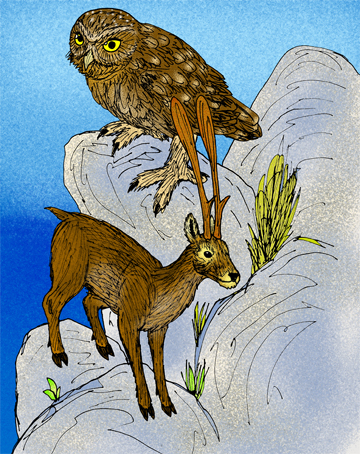
The Athene cretensis, or Cretan Little Owl, is a small, robust bird with a typical length of about 21 to 23 centimeters. Its plumage is predominantly brown with white speckles, providing excellent camouflage against the rocky terrain of Crete. The owl’s yellow eyes are one of its most distinguishing features, set in a facial disk that accentuates its expressive gaze. Males and females appear similar, although females are slightly larger, a common trait among owls. Juveniles resemble adults but exhibit more pronounced streaking on their chest and have a lighter overall coloration. In flight, the Cretan Little Owl has a broad, rounded wing silhouette, which aids in silent flight. While perching, it maintains an upright posture, often bobbing its head when curious or alarmed. Confusion with similar species is minimal due to its restricted range, though it may be superficially similar to other Athene species. The combination of its size, eye color, and habitat helps in accurate identification.
Having trouble telling birds apart? Upload a photo to our bird identification tool for an instant species match.
Athene cretensis Habitat and Range
Preferred Habitat
The Athene cretensis primarily inhabits the diverse landscapes of Crete, including rocky hillsides, scrublands, and olive groves. These areas offer abundant prey and suitable nesting sites. The owl favors elevations from sea level up to 1,500 meters, though it is more commonly found in lower regions where prey is plentiful. Seasonally, some individuals may move to higher elevations during the summer to escape the heat of lower areas. Unlike many other owl species, the Athene cretensis can sometimes be spotted in rural villages and small towns, indicating a degree of adaptability to human presence.
Geographic Range
The Athene cretensis is endemic to Crete, meaning it is found nowhere else in the world. Its range is limited to this island, where it occupies a variety of habitats from sea level to mountainous regions. The owl does not migrate, maintaining a year-round presence across its range. Population density is highest in areas with a mix of agricultural land and natural rock formations, where food sources are abundant. The lack of migration corridors or wintering grounds outside Crete highlights the species’ unique adaptation to its local environment.
Want to know which birds visit your area? Browse our backyard birds by location guides for region-specific species lists.
What Does the Athene cretensis Eat?
The diet of the Athene cretensis consists mainly of small mammals such as mice and voles, which it captures with precision using its sharp talons. Invertebrates, including beetles and grasshoppers, also form a significant part of its diet, particularly during the warmer months when these prey are more abundant. Seasonal variations in food availability influence its diet, with a greater reliance on insects in spring and summer. The owl usually hunts from a perch, utilizing a sit-and-wait strategy to ambush unsuspecting prey. This method is energy-efficient and highly effective in its rugged habitat.
Athene cretensis Behavior and Social Structure
The Athene cretensis exhibits solitary behavior outside the breeding season, with individuals occupying distinct territories marked by vocalizations and physical displays. During courtship, males engage in aerial displays and repetitive hooting to attract females. Once paired, the bond is strong, and both partners participate in defending the territory. The owl is predominantly nocturnal, becoming active at dusk and continuing to hunt throughout the night. Its response to predators includes a range of vocal alarms and, if necessary, physical defense of its nest. Despite its solitary nature, the Athene cretensis may occasionally be observed in loose associations during peak feeding times.
Athene cretensis Nesting and Reproduction
Athene cretensis typically nests in rock crevices, natural cavities, or abandoned structures that provide protection from predators and harsh weather. Nests are minimal, often consisting of a simple lining of feathers and plant material. The typical clutch size ranges from 3 to 5 eggs, with incubation lasting around 28 to 30 days. Both parents share responsibilities, though the female primarily incubates the eggs while the male provides food. After hatching, the chicks remain in the nest for about 30 to 35 days before fledging. The species usually raises one brood per year, with the timing closely linked to prey availability.
Athene cretensis Sounds and Vocalizations
The primary vocalization of the Athene cretensis is a distinctive hoot, characterized by a rhythmic and repetitive pattern. This hoot is used for communication between mates and to establish territorial boundaries. Call notes include a series of short, sharp barks that serve as alarms or signals of distress. During the dawn chorus, the owl's song is most prominent, echoing through the rocky landscapes of Crete. The sound is reminiscent of a distant whistle, clear and penetrating, which helps in locating the bird, especially at night.
Interesting Facts About the Athene cretensis
- 1The Athene cretensis is one of only a few owl species endemic to a single island, highlighting its unique evolutionary path.
- 2Despite its small size, the Cretan Little Owl can take down prey as large as a small rabbit, demonstrating impressive hunting skills.
- 3The owl's yellow eyes are adapted to low-light conditions, allowing it to hunt effectively at night.
- 4Athene cretensis has been part of Cretan folklore for centuries, often symbolizing wisdom and protection.
- 5The call of the Cretan Little Owl is so distinct that local villagers can identify it by sound alone.
- 6The owl's preference for rocky habitats reduces competition with tree-nesting species, securing its niche.
- 7Athene cretensis' ability to thrive in both rural and semi-urban areas suggests a high degree of adaptability.
Athene cretensis Conservation Status
The Athene cretensis is currently classified as Near Threatened on the IUCN Red List due to its limited range and specific habitat requirements. The population trend is stable, but potential threats include habitat destruction and climate change, which could alter its habitat. Conservation efforts focus on habitat preservation and monitoring population trends. Historically, the population has remained relatively stable, but increasing human activity poses a risk. Ongoing research aims to better understand the species’ needs and develop effective conservation strategies.


