
Balicassiao
Dicrurus balicassius
Order: Passeriformes / Family: Dicruridae
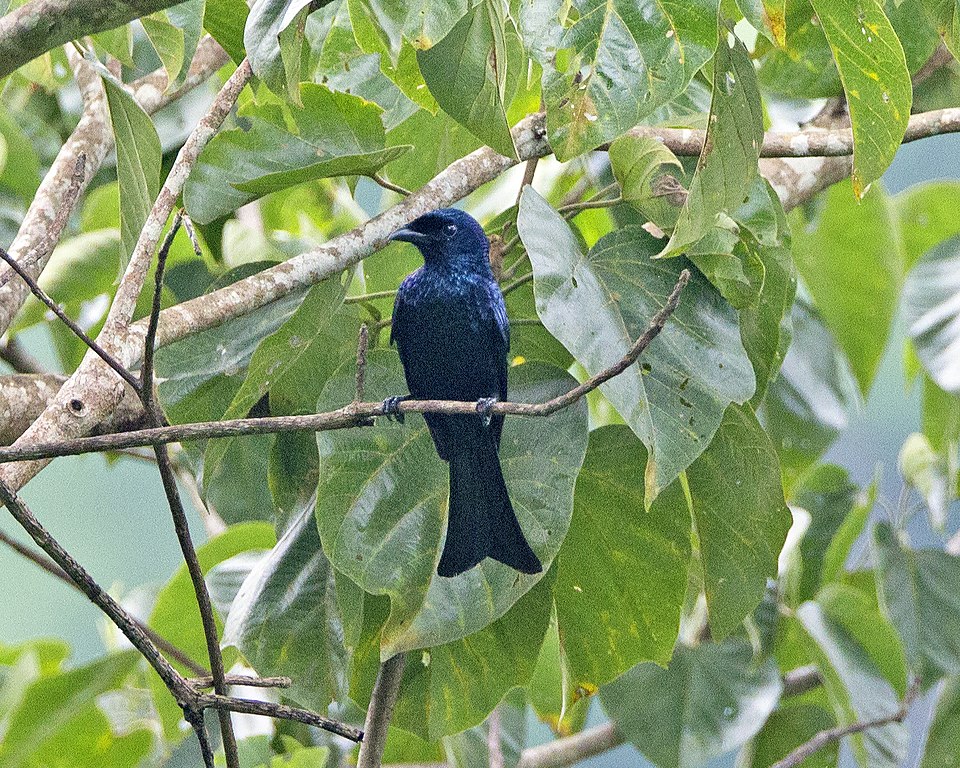
Wikimedia Commons
About the Balicassiao
The Balicassiao (Dicrurus balicassius) is a captivating member of the Dicruridae family, known for its glossy black feathers and deeply forked tail. This species is endemic to the Philippines, where it holds a significant place in the diverse avifauna of the archipelago. Found primarily in forested areas, the Balicassiao thrives in both primary and secondary forests, often observed in lowland and mid-montane regions. Its presence is crucial in the ecosystem as it plays a role in controlling insect populations and seed dispersal. The Balicassiao exhibits fascinating seasonal behaviors, remaining largely sedentary throughout the year but showing slight altitudinal movements depending on food availability. During the breeding season, which coincides with the rainy months in the Philippines, they become more vocal and territorial. The bird's ecological role extends beyond its diet, as it helps maintain the balance of its environment by preying on various insects, thus serving as a natural pest control agent. The Balicassiao is an integral part of the Philippine forests, contributing to the rich biodiversity and ecological health of these habitats. Its adaptability allows it to inhabit a range of forest types, from dense primary forests to more open secondary growths. Despite its resilience, habitat loss due to deforestation poses a significant threat to its population. In various regions, conservation efforts focus on preserving forest habitats to ensure the survival of this and many other endemic species. The Balicassiao's ability to adapt to different forest environments highlights its importance in the Philippine ecosystem, showcasing the delicate balance required to maintain biodiversity in tropical regions.
The Balicassiao belongs to the family Dicruridae, within the order Passeriformes. These birds typically live average 10-14 years with a max recorded of 15 years..
How to Identify a Balicassiao
The Balicassiao is easily recognized by its striking black plumage, which has a distinctive glossy sheen. Adults exhibit a deeply forked tail that enhances their silhouette in flight. Juveniles have a slightly duller appearance, with less sheen on their feathers. Males and females look similar, making sex differentiation in the field challenging without behavioral observation. One of the key features that can lead to confusion with other species is its resemblance to the larger Black Drongo. However, the Balicassiao is smaller, with a more pronounced fork in its tail. This bird's flight silhouette is characterized by its agile, acrobatic movements, often seen flitting through the forest canopy. When perched, the Balicassiao sits upright, often flicking its tail and wings. Its glossy black feathers can appear iridescent in certain lighting conditions, adding to its visual appeal. Observers can distinguish it from similar species by its size and the depth of the fork in its tail, which is a reliable field mark.
Having trouble telling birds apart? Upload a photo to our bird identification tool for an instant species match.
Balicassiao Habitat and Range
Preferred Habitat
The Balicassiao inhabits a variety of forest types across the Philippine archipelago, preferring the dense canopy of primary forests but also thriving in secondary growth areas. These birds are typically found at elevations ranging from sea level to about 1,800 meters. They exhibit a preference for lowland and mid-elevation forests, where they can access abundant food resources and suitable nesting sites. While primarily forest-dwelling, Balicassiaos can occasionally be spotted in more open areas adjacent to forest edges. They are generally absent from urban environments, preferring the secluded and resource-rich forest habitats. Seasonal habitat shifts are minimal, as they are largely resident birds, although slight altitudinal movements may occur in response to food availability throughout the year.
Geographic Range
The Balicassiao is endemic to the Philippines, where it occupies a range of islands including Luzon, Mindoro, and Negros. Its distribution is primarily confined to forested areas within these islands. There is no evidence of long-distance migration in this species, as it is a resident bird. The Balicassiao does not exhibit significant migratory behavior, instead remaining within its established range throughout the year. Population densities tend to be higher in regions where the forest cover is dense and continuous, such as in the Sierra Madre mountain range on Luzon. The bird's presence in these localized hotspots underscores the importance of specific geographic regions in maintaining healthy population levels.
Want to know which birds visit your area? Browse our backyard birds by location guides for region-specific species lists.
What Does the Balicassiao Eat?
The Balicassiao primarily feeds on insects, making it a vital component of the forest ecosystem as a natural pest controller. Its diet includes a wide range of insects such as beetles, caterpillars, and grasshoppers. During the breeding season, the demand for protein-rich food increases, leading the Balicassiao to intensify its foraging efforts. The bird employs a variety of foraging techniques, including hawking and gleaning, to capture its prey. Its ability to catch insects mid-flight demonstrates its agility and keen eyesight. Small fruits and berries supplement its diet, especially when insect availability decreases. The Balicassiao's feeding schedule spans throughout the day, with peak activity during the cooler morning and late afternoon hours.
Balicassiao Behavior and Social Structure
The Balicassiao exhibits intriguing social and territorial behaviors, often observed alone or in pairs, although small family groups can occasionally form. During the breeding season, the bird becomes highly territorial, defending its nesting area with vigor. Its courtship displays involve complex aerial acrobatics and vocal exchanges between potential mates. The Balicassiao responds to predators with alarm calls, alerting other birds to potential danger. Its daily activity pattern includes active foraging sessions interspersed with periods of rest and preening. The bird's alertness and agility allow it to efficiently navigate the forest canopy, exploiting various niches for food and shelter. Though not known for forming large flocks, the Balicassiao's interactions with other species suggest a level of tolerance within mixed-species foraging groups.
Balicassiao Nesting and Reproduction
The Balicassiao constructs cup-shaped nests using a variety of plant materials, such as twigs, grasses, and leaves. Nests are typically located in the fork of a tree branch, well-concealed by surrounding foliage. Clutch sizes usually consist of 2 to 3 eggs, with both parents sharing the responsibilities of incubation and feeding the chicks. The incubation period lasts about 14 to 16 days, during which the parents take turns sitting on the eggs. After hatching, the chicks remain in the nest for approximately 16 to 20 days before fledging. Both parents continue to feed and protect the fledglings for several weeks post-fledging. The Balicassiao may raise one to two broods per year, depending on environmental conditions and food availability.
Balicassiao Sounds and Vocalizations
The Balicassiao's song is a series of melodious whistles interspersed with harsher notes, creating a complex and varied repertoire. Its primary song features a rhythm that fluctuates between slow, clear whistles and faster, chattering sequences. Call notes include sharp, metallic clicks used for communication between mates or as alarm signals. The Balicassiao's alarm calls are short, rapid sequences that alert other birds to nearby predators. During the dawn chorus, the bird's song stands out for its clarity and persistence, often serving as a territorial marker. Its vocalizations bear resemblance to those of other drongos but are distinguished by their unique cadence and tonal quality.
Interesting Facts About the Balicassiao
- 1The Balicassiao, despite being a songbird, displays remarkable mimicry skills, often imitating other bird species' calls.
- 2A Balicassiao's forked tail is not just for show; it provides enhanced maneuverability for catching insects in flight.
- 3In some local cultures, the Balicassiao is considered a symbol of protection due to its vigilant nature and loud alarm calls.
- 4The Balicassiao's iridescent plumage is due to microscopic structures in the feathers, rather than pigments.
- 5Despite their small size, Balicassiaos can be quite aggressive, often chasing off larger birds from their territory.
- 6The Balicassiao can occupy a range of elevations, from sea level up to 1,800 meters, showcasing its adaptability.
- 7Their diet versatility allows them to switch between insects and fruits, depending on seasonal availability.
Balicassiao Conservation Status
The Balicassiao is currently listed as Least Concern on the IUCN Red List, with its population trend considered stable. However, habitat loss due to deforestation poses a significant threat to its long-term survival. Conservation efforts focus on protecting the remaining forest habitats within the Philippines, particularly in areas where the bird's population is most concentrated. Historical data suggests that while the Balicassiao was once more widespread, ongoing habitat degradation has led to localized declines. Continued habitat protection and restoration are vital to ensuring the species' future in its native range. Public awareness and local conservation initiatives are key components in safeguarding this enigmatic bird.

