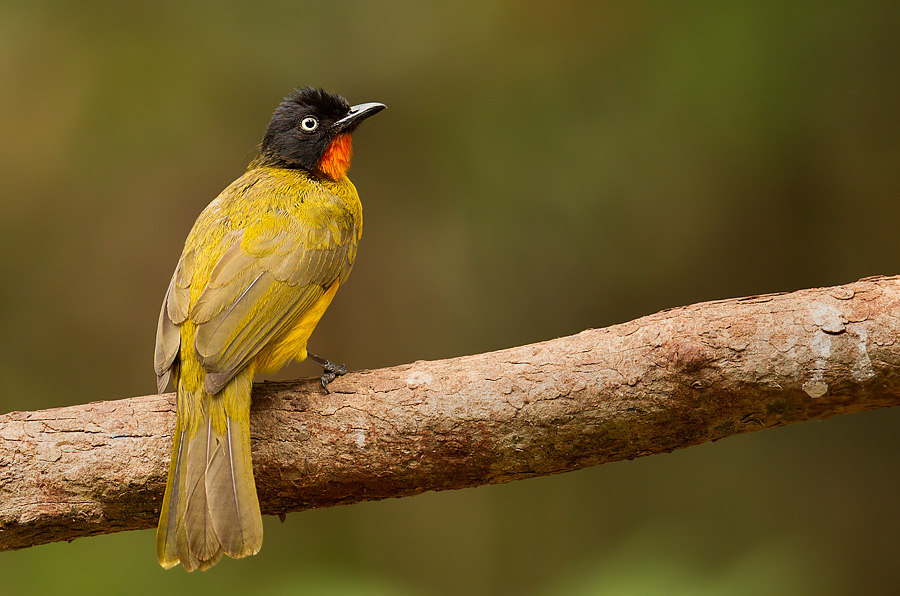
Bare-faced Bulbul
Pycnonotus hualon
Order: Passeriformes / Family: Pycnonotidae

Wikimedia Commons
About the Bare-faced Bulbul
The Bare-faced Bulbul, scientifically known as Pycnonotus hualon, is an intriguing bird species belonging to the Pycnonotidae family. This species is particularly noteworthy due to its bare, featherless face, a unique characteristic among bulbuls, which has piqued the interest of ornithologists since its discovery in 2009. Endemic to the sparsely vegetated limestone karst regions of Laos, the Bare-faced Bulbul thrives in a niche environment, where its unique adaptations enable it to survive and flourish. The discovery of this species was significant, as it was the first new species of bulbul described from Asia in over a century, highlighting the rich biodiversity and the potential for further discoveries in Southeast Asia's remote habitats.
This bulbul plays an essential ecological role in its environment, primarily through seed dispersal. By consuming various fruits, the Bare-faced Bulbul aids in the propagation of plant species across the karst landscapes. This symbiotic relationship supports the regeneration and sustenance of the flora within these unique ecosystems. The bird is also a crucial component of the local food web, serving as prey for larger avian predators.
During the breeding season, which typically occurs in the dry months from November to March, the Bare-faced Bulbul showcases specific behaviors that underscore its adaptability to the karst environment. The species is territorial, with individuals or pairs often defending their chosen areas against intruders. Outside the breeding season, these birds tend to be more social, occasionally forming small flocks to forage. Their presence in these isolated regions underscores the species' adaptability and the ecological richness of the limestone habitats they inhabit.
The Bare-faced Bulbul belongs to the family Pycnonotidae, within the order Passeriformes. These birds typically live estimated 5-8 years.
How to Identify a Bare-faced Bulbul
Identifying the Bare-faced Bulbul involves noting its distinctive bare, grayish-blue face, which stands out starkly against its olive-green plumage. This lack of facial plumage is a rare trait among birds and makes the Bare-faced Bulbul easily recognizable. Adults typically display a uniform olive-green body, with a lighter underbelly and a slightly darker tail. The eyes are dark, and the bill is slender and black, perfectly adapted for its frugivorous diet.
Juveniles resemble adults but may have a slightly duller coloration and a less pronounced blue tinge on their bare skin. There is little sexual dimorphism in this species, so males and females appear similar, with minor differences that are challenging to discern without close observation. When perched, the Bare-faced Bulbul maintains a typical upright posture with a slightly elevated tail, a common characteristic of bulbuls.
In flight, the Bare-faced Bulbul presents a compact silhouette with rapid wingbeats, characteristic of its family. Its flight is usually direct and swift, enabling it to navigate the rugged terrain of its habitat. While its distinctive facial feature minimizes the risk of confusion with other species, its size and shape might otherwise lead to misidentification with other bulbuls if not for the unique facial feature.
Having trouble telling birds apart? Upload a photo to our bird identification tool for an instant species match.
Bare-faced Bulbul Habitat and Range
Preferred Habitat
The Bare-faced Bulbul is intrinsically linked to the limestone karst environments found predominantly in central Laos, particularly around the Phou Hin Poun National Biodiversity Conservation Area. These karst landscapes, characterized by their rugged, rocky terrain and sparse vegetation, provide an ideal habitat for this species. The bulbul favors open areas with scattered shrubs and low trees, where it can easily forage for its fruit-based diet.
Typically found at elevations ranging from 200 to 800 meters, the Bare-faced Bulbul shows a preference for lower slopes and valleys that offer a mix of shrubland and small forest patches. There are no significant seasonal habitat shifts for this bird, as the relatively stable climate of its range offers consistent resources year-round. Unlike many bird species, the Bare-faced Bulbul is not commonly found in urban areas, as it relies on the unique geological features and specific vegetation of the karsts, which urban environments do not provide.
Geographic Range
The range of the Bare-faced Bulbul is highly restricted, confined primarily to central Laos. It is predominantly found within the limestone karst regions of Khammouane Province, with the Phou Hin Poun National Biodiversity Conservation Area being a notable hotspot for its population. The bird's range does not extend beyond these specific geological formations, making its presence in other regions unlikely.
The bird's population density is highest in areas where the karst formations are most developed and where human disturbance is minimal. There are no known migration patterns for the Bare-faced Bulbul, as the species is considered a resident, year-round inhabitant of its range. This non-migratory lifestyle is typical for birds adapted to stable environments with consistent food sources and mild climatic conditions.
Given its restricted range and specific habitat requirements, the Bare-faced Bulbul is absent from neighboring countries and regions. Its concentrated presence in this isolated area makes it a species of particular interest to conservationists and ornithologists studying the biodiversity of Southeast Asia.
Want to know which birds visit your area? Browse our backyard birds by location guides for region-specific species lists.
What Does the Bare-faced Bulbul Eat?
The Bare-faced Bulbul primarily subsists on a diet of fruits, making it a frugivore. This dietary preference aligns well with the sparse but varied fruit-bearing shrubs and trees found within its karst habitat. It shows a particular affinity for figs, berries, and other small fruits, which provide essential nutrients and energy.
During the wet season, the abundance of fruit increases, allowing the Bare-faced Bulbul to feed more opportunistically. In contrast, the dry season may compel the bird to travel further within its territory to locate adequate food sources. Despite these seasonal variations, the bird remains adept at exploiting available resources, thus maintaining a consistent diet throughout the year.
The bulbul employs a foraging technique that involves short flights between perches, scanning for ripe fruits. Once identified, it deftly plucks the fruit with its slender bill, often swallowing it whole or tearing it into manageable pieces. This efficient feeding strategy ensures minimal time spent vulnerable to predators. Its diet occasionally includes insects, which provide supplementary protein, particularly during the breeding season when energy demands are higher.
Bare-faced Bulbul Behavior and Social Structure
The social structure of the Bare-faced Bulbul is predominantly solitary or in pairs during the breeding season, with individuals defending their territories vigorously. During this time, they exhibit territorial behaviors such as chasing intruders and vocalizing to assert their presence. The courtship displays are subtle, primarily involving mutual feeding and synchronized movements between partners.
Outside the breeding season, the Bare-faced Bulbul becomes more gregarious, forming small foraging flocks. These groups enhance their ability to locate food and provide increased vigilance against predators. The species exhibits diurnal activity patterns, with peak feeding occurring in the early morning and late afternoon, aligning with the availability of ripe fruits and cooler temperatures.
When faced with threats, the Bare-faced Bulbul employs a range of responses, from freezing in place to avoid detection to engaging in rapid flights to denser cover. Its alertness and quick reflexes are crucial for survival in the predator-rich environments of the karst landscapes. Despite its reclusive nature, the Bare-faced Bulbul remains a vital component of its ecosystem, contributing to seed dispersal and maintaining the ecological balance of its habitat.
Bare-faced Bulbul Nesting and Reproduction
The nesting habits of the Bare-faced Bulbul are adapted to its unique karst environment. This bird constructs cup-shaped nests using a variety of natural materials, including grass, twigs, and leaves. These nests are typically positioned in shrubs or low trees, providing cover and protection from predators.
A typical clutch consists of two to three eggs, which the female incubates for about 12-14 days. The male plays a supportive role, often bringing food to the nesting female and taking part in territorial defense. Once hatched, the chicks remain in the nest for approximately 10-12 days before fledging.
During this fledgling period, both parents are actively involved in feeding and protecting the young. The Bare-faced Bulbul generally raises one to two broods per year, depending on food availability and environmental conditions. This reproductive strategy ensures that enough offspring reach maturity to maintain the population despite the challenges posed by their specialized habitat.
Bare-faced Bulbul Sounds and Vocalizations
The primary song of the Bare-faced Bulbul is a melodious series of whistles and warbles, delivered with a clear and somewhat plaintive quality. These vocalizations are often heard during the early morning hours, coinciding with the dawn chorus, as males establish territories and attract mates.
In addition to its song, the Bare-faced Bulbul emits distinct call notes characterized by short, sharp chirps used to maintain contact with partners or signal alarm. These alarm calls are particularly important in alerting others to the presence of predators. The bird's vocal repertoire, while not as extensive as some songbirds, is nonetheless effective in its communication within the dense karst environment.
Compared to more urban or widespread bulbuls, the Bare-faced Bulbul's song is less complex but well-suited to the acoustics of its rocky habitat, where sound can easily be distorted by the landscape.
Interesting Facts About the Bare-faced Bulbul
- 1The Bare-faced Bulbul was discovered in 2009, making it the first new bulbul species described from Asia in over 100 years.
- 2Its bare face is an unusual trait among bulbuls, possibly providing advantages in heat dissipation in its warm, rocky habitat.
- 3The Bare-faced Bulbul's habitat is limited to the limestone karsts of central Laos, making it a true ecological specialist.
- 4Despite its restricted range, the Bare-faced Bulbul plays a crucial role in seed dispersal, supporting the regeneration of local flora.
- 5The Bare-faced Bulbul's discovery highlighted the potential for finding more undiscovered species in Southeast Asia's isolated regions.
- 6The bird's distinctive song can often be heard echoing through the karst valleys, especially during the dawn chorus.
- 7The Bare-faced Bulbul's unique adaptations make it a subject of interest for researchers studying evolutionary biology and ecology.
Bare-faced Bulbul Conservation Status
The IUCN currently lists the Bare-faced Bulbul as Near Threatened, with its population trend considered stable but vulnerable due to its restricted range and specialized habitat requirements. The primary threats to its survival include habitat destruction from limestone quarrying and deforestation, which can significantly reduce the availability of suitable nesting and foraging sites. Conservation efforts are underway to mitigate these threats, focusing on habitat protection and the establishment of conservation areas such as the Phou Hin Poun National Biodiversity Conservation Area. These initiatives aim to preserve the unique limestone karst ecosystems that the Bare-faced Bulbul and numerous other species rely upon. Historically, the bulbul's population has remained relatively stable due to the inaccessibility of its habitat, which offers some protection from human encroachment. However, increased economic development in the region poses new challenges that require ongoing monitoring and conservation action.
Other Pycnonotidae Species


Birds Similar to the Bare-faced Bulbul
These species are often confused with the Bare-faced Bulbul due to similar appearance or overlapping range.