Black-billed Peppershrike
Cyclarhis nigrirostris
Order: Passeriformes / Family: Vireonidae

Wikimedia Commons
About the Black-billed Peppershrike
The Black-billed Peppershrike, scientifically known as Cyclarhis nigrirostris, is a captivating songbird belonging to the Vireonidae family. This small bird is primarily found in the montane forests of the Andes, stretching from Venezuela to Bolivia. Its preference for subtropical or tropical moist montane forests makes it a critical component of these biodiverse ecosystems. The bird plays a crucial role in insect control, helping maintain the balance of the local environment by preying on a range of insects and other small invertebrates. During the breeding season, which typically occurs from September to January, the Black-billed Peppershrike can be found actively defending its territory. Its vibrant song echoes through the dense forest canopy, a melodious yet complex series of notes that are distinctive to this species. The bird's presence in these environments highlights the ecological significance of montane forests as hubs of biodiversity and as critical habitats for numerous bird species. As a year-round resident, the Black-billed Peppershrike does not migrate, choosing instead to adapt to the seasonal changes within its home range. This adaptability is crucial for its survival in the dynamic environments of the Andes. The species' resilience underscores the importance of conserving its natural habitats, which face threats from deforestation and climate change. As a sentinel of the montane forest ecosystems, the Black-billed Peppershrike's health reflects the overall well-being of its habitat.
The Black-billed Peppershrike belongs to the family Vireonidae, within the order Passeriformes. These birds typically live average 5 years; max recorded 8 years.
How to Identify a Black-billed Peppershrike
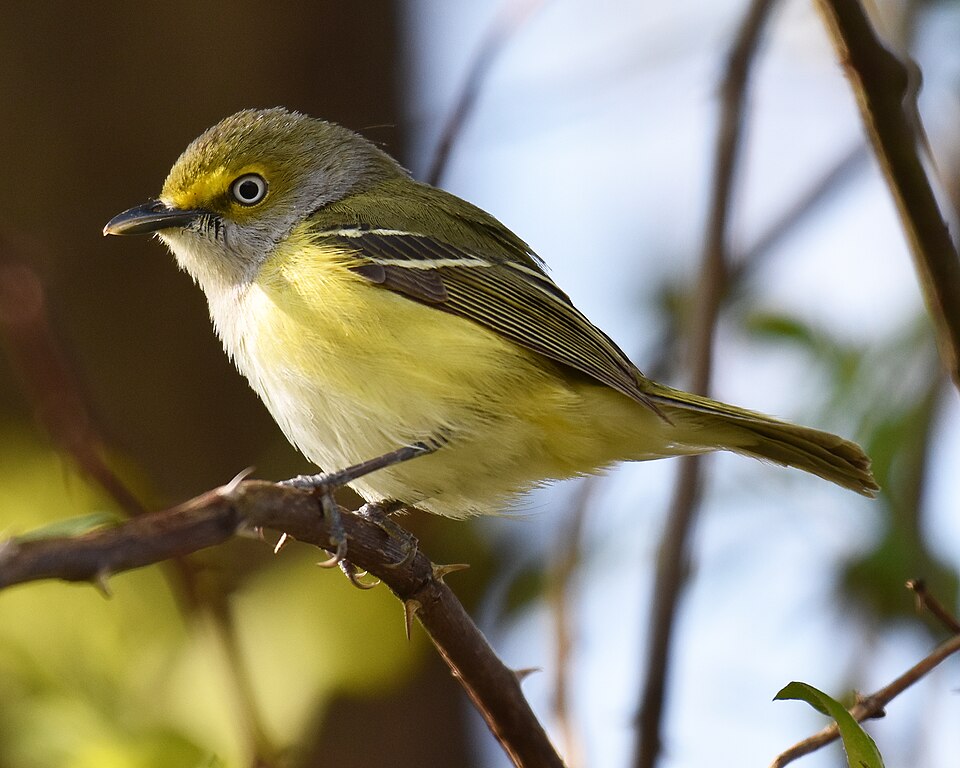
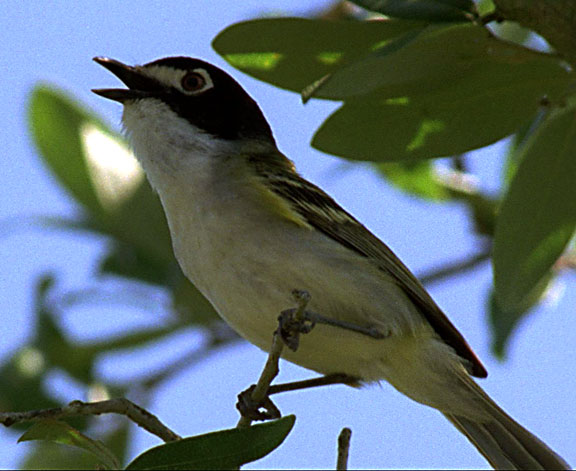
The Black-billed Peppershrike is a small, robust songbird with a length of about 15 centimeters. Its most identifiable feature is its black bill, which contrasts sharply with its olive-green upperparts and yellow underparts. The head is adorned with a distinctive gray cap, which sets off the bright white eye stripe that extends from the bill to the nape. Juvenile birds exhibit duller plumage, with a more muted olive-green hue and less pronounced eye stripes, making them somewhat trickier to identify. There is little sexual dimorphism, so males and females appear similar, although males may have slightly brighter plumage during the breeding season. In flight, the Black-billed Peppershrike's silhouette is compact, with rounded wings and a short, narrow tail. Its perching posture is typically upright, often seen flitting among the mid-level canopy branches. The bird can be confused with similar species such as the Rufous-browed Peppershrike, but the latter lacks the striking black bill and has a more rufous tint to its plumage. Birders should focus on these key features to distinguish the Black-billed Peppershrike in the field.
Having trouble telling birds apart? Upload a photo to our bird identification tool for an instant species match.
Black-billed Peppershrike Habitat and Range
Preferred Habitat
The Black-billed Peppershrike thrives in subtropical and tropical moist montane forests, primarily within the elevation range of 1,500 to 3,000 meters. These forests provide the dense canopy cover and abundant insect life that the species depends on for survival. The bird is particularly associated with the cloud forests of the Andes, where the high humidity and lush vegetation create an ideal environment. During the non-breeding season, it remains in these montane habitats, showing little inclination to venture into lower elevations or more urbanized areas. The species' reliance on such specific habitats highlights its vulnerability to habitat destruction, emphasizing the need for conservation efforts focused on preserving montane forest ecosystems.
Geographic Range
The Black-billed Peppershrike's range extends across the Andes, from Venezuela in the north through Colombia, Ecuador, Peru, and into Bolivia. It is a non-migratory species, inhabiting these regions year-round. The bird shows a preference for the Andean montane forests, which provide a stable environment despite seasonal changes. Population density is generally highest in areas with intact forest cover and minimal human disturbance, such as national parks and reserves. Due to its restricted range, the Black-billed Peppershrike is less commonly seen in areas outside its montane forest habitats, making conservation of these regions crucial for its continued survival.
Want to know which birds visit your area? Browse our backyard birds by location guides for region-specific species lists.
What Does the Black-billed Peppershrike Eat?
The Black-billed Peppershrike primarily feeds on insects and other small invertebrates, making it an important insectivore within its habitat. Its diet includes beetles, caterpillars, and spiders, which it skillfully gleans from leaves and branches. During the breeding season, the bird increases its intake of protein-rich insects to support the demands of raising young. Occasionally, it may also consume small fruits and seeds, particularly in times of insect scarcity. The bird forages actively, often moving methodically through the forest canopy in search of prey. Its foraging behavior involves both visual and auditory cues to locate insects, demonstrating a high level of adaptability in its feeding strategies.
Black-billed Peppershrike Behavior and Social Structure
The Black-billed Peppershrike exhibits a solitary and territorial nature, particularly during the breeding season. Males establish and defend territories through vocal displays, using their melodious and complex song to deter rivals and attract mates. Courtship involves both vocalizations and physical displays, with males often seen performing fluttering flights and postures to impress females. Outside the breeding season, the bird may form loose associations with mixed-species flocks, benefiting from the increased foraging efficiency and protection from predators. Its response to threats includes loud alarm calls and evasive maneuvers, often retreating to dense foliage when disturbed. Daily activity patterns are diurnal, with peak foraging activity occurring in the early morning and late afternoon.
Black-billed Peppershrike Nesting and Reproduction
The nesting habits of the Black-billed Peppershrike reflect its adaptation to the montane forest environment. The bird constructs a cup-shaped nest, intricately woven from grasses, twigs, and other plant materials, and typically located in dense shrubbery or small trees at a height of 2 to 5 meters. The female lays a clutch of 2 to 3 eggs, which she incubates for about 14 to 16 days. Both parents participate in feeding the chicks, which fledge approximately 14 to 18 days after hatching. The species typically raises one brood per year, with the potential for a second brood if conditions are favorable. Parental roles are well-defined, with both male and female contributing to the care and protection of the young.
Black-billed Peppershrike Sounds and Vocalizations
The Black-billed Peppershrike is renowned for its rich, melodious song, which consists of a series of clear, whistled notes delivered in a rhythmic pattern. This song is often described as a cascading series of phrases, each varying slightly in pitch and tempo. The bird's call notes are sharp and distinctive, serving as communication between mates or as alarm signals in response to predators. During the dawn chorus, the Black-billed Peppershrike's song is especially prominent, contributing to the vibrant soundscape of the Andean forests. Its vocalizations are crucial for maintaining territory and social bonds within the species.
Interesting Facts About the Black-billed Peppershrike
- 1The Black-billed Peppershrike's song can be heard from up to 100 meters away in dense forest habitats.
- 2Despite its striking appearance, the Black-billed Peppershrike is notoriously elusive and often remains hidden in thick foliage.
- 3The bird's diet of insects aids in controlling pest populations in its forest habitat.
- 4Black-billed Peppershrikes do not migrate, remaining in their Andean homes throughout the year.
- 5Their nests are crafted with such precision that they withstand heavy rainfall typical of montane regions.
- 6The species was first described in 1847, highlighting its long history of intrigue among ornithologists.
- 7Black-billed Peppershrikes are often seen flitting among mid-canopy branches in search of their insect prey.
Black-billed Peppershrike Conservation Status
The Black-billed Peppershrike is currently listed as Least Concern by the IUCN, with a population trend considered stable. However, the species faces threats from habitat loss due to deforestation and agricultural expansion in the Andes. Conservation efforts focus on protecting montane forest habitats through the establishment of protected areas and sustainable land-use practices. Historical population changes have been minimal, but ongoing environmental pressures could impact future distribution and abundance. Continued monitoring and habitat conservation are essential to ensure the long-term survival of the Black-billed Peppershrike.