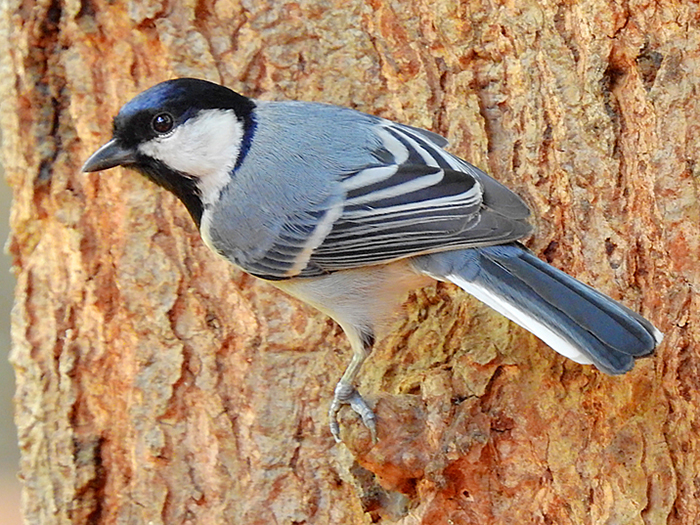
Black-browed Bushtit
Aegithalos bonvaloti
Order: Passeriformes / Family: Aegithalidae

Wikimedia Commons
About the Black-browed Bushtit
The Black-browed Bushtit, scientifically known as Aegithalos bonvaloti, is a small passerine bird belonging to the family Aegithalidae. This species thrives in montane forests across parts of Asia, particularly in countries such as China, Myanmar, and Thailand. The bird's distinctive black brow line, which gives it its common name, serves as a key identification feature. These bushtits play a significant role in their ecosystem by controlling insect populations, which is crucial for maintaining the ecological balance of their habitats.
The Black-browed Bushtit is highly adapted to life in dense forest environments. It is often found in mixed-species foraging flocks, which provide safety in numbers and enhance foraging efficiency. During the breeding season, which typically occurs from April to June, these birds become more territorial. Outside of the breeding season, they are highly social and can be observed in large flocks. This seasonal behavioral shift is influenced by the availability of food resources and the need to raise young.
Ecologically, the Black-browed Bushtit plays a vital role as both a predator and prey. Its diet consists primarily of insects and other small invertebrates, which helps control pest populations. Additionally, it serves as prey for larger avian predators, thus contributing to the food web. The presence of the Black-browed Bushtit in a forested area often indicates a healthy, biodiverse ecosystem. Conservation efforts aimed at preserving its habitat are essential, as deforestation and habitat degradation pose significant threats to its population.
In summary, the Black-browed Bushtit is an integral part of the montane forest ecosystems of Asia. Its interactions with other species and its habitat underline the importance of conservation measures to ensure the continued survival of this species. The Black-browed Bushtit's adaptability to different forest conditions highlights its resilience, yet ongoing habitat destruction necessitates vigilant conservation strategies.
The Black-browed Bushtit belongs to the family Aegithalidae, within the order Passeriformes. These birds typically live typically 3-5 years, with some reaching up to 6 years..
How to Identify a Black-browed Bushtit
Adult Black-browed Bushtits are easily recognized by their contrasting coloration. The most distinctive feature is their black brow line, which runs across their pale face, creating a striking appearance. Their plumage is generally a soft gray color, with lighter underparts and darker wings and tail. The species exhibits little sexual dimorphism, meaning males and females look similar, although males may have slightly brighter plumage.
Juvenile Black-browed Bushtits resemble adults but tend to have duller colors and a less pronounced black brow. This subtlety in the juvenile plumage can make it more challenging to distinguish them from similar species. When comparing with similar species, such as the Long-tailed Tit (Aegithalos caudatus), the Black-browed Bushtit is slightly smaller and lacks the long tail characteristic of its relative.
In flight, the Black-browed Bushtit displays a rounded silhouette with rapid, fluttering wingbeats. When perching, it often adopts an upright posture and moves in short, quick hops. This behavior, combined with its distinctive facial markings, makes it easier to identify in its natural habitat.
Having trouble telling birds apart? Upload a photo to our bird identification tool for an instant species match.
Black-browed Bushtit Habitat and Range
Preferred Habitat
The Black-browed Bushtit predominantly inhabits montane forests, where it finds ample food and shelter. These forests are often at elevations ranging from 1,500 to 3,500 meters, providing the cool, moist conditions the species favors. In China, it is commonly found in the Yunnan province's mixed coniferous and broadleaf forests. In Myanmar and northern Thailand, it also favors similar montane forest environments.
Seasonal habitat shifts are not prominent in this species, as it typically remains within its preferred forested regions year-round. However, slight altitudinal movements might occur depending on food availability and climatic conditions. Although primarily a forest-dwelling bird, the Black-browed Bushtit occasionally ventures into more open areas bordering forests, especially during foraging expeditions.
The species shows little inclination towards urban environments, preferring the dense foliage and complex structure of forest habitats. This preference emphasizes the importance of preserving forested areas to maintain healthy Black-browed Bushtit populations.
Geographic Range
The Black-browed Bushtit has a relatively restricted range within Asia, primarily found in the montane regions of southern China, northern Myanmar, and northern Thailand. The breeding range largely overlaps with its year-round habitat, as this species is not known for long-distance migrations. Instead, it remains in its montane forest environment throughout the year, showing limited altitudinal movements in response to climatic changes.
Population density hotspots occur in areas where suitable forest habitats are abundant, such as the expansive woodlands of Yunnan province in China. Here, the species is relatively common, taking advantage of the diverse forest structures for feeding and nesting. In Myanmar and Thailand, its presence is more sporadic, largely dependent on localized forest patches that have not been heavily impacted by deforestation.
Due to its preference for higher elevations, the Black-browed Bushtit is less likely to be found in lowland areas or outside its specific range, making it a species of interest for conservation in montane forest regions.
Want to know which birds visit your area? Browse our backyard birds by location guides for region-specific species lists.
What Does the Black-browed Bushtit Eat?
The Black-browed Bushtit primarily subsists on a diet of insects and other small invertebrates. Its foraging technique involves agile movements through foliage, where it picks insects from leaves, branches, and bark. Small caterpillars, beetles, and spiders constitute the main components of its diet, with the bird expertly using its petite beak to glean these prey items from their hiding spots.
During the breeding season, the demand for high-protein food increases, driving the birds to focus more on caterpillars, which serve as an essential food source for growing nestlings. In other seasons, the diet may include a higher proportion of spiders and beetles, reflecting changes in prey availability.
The Black-browed Bushtit's feeding schedule is largely diurnal, with peak activity occurring in the early morning and late afternoon. This pattern allows it to take advantage of cooler temperatures and reduced competition from other foraging species. Its small size enables it to exploit a niche that larger birds cannot, maneuvering deftly among twigs and leaves to capture its prey.
Black-browed Bushtit Behavior and Social Structure
The Black-browed Bushtit exhibits a highly social structure, often forming large flocks, especially outside the breeding season. These flocks, sometimes consisting of dozens of individuals, move cohesively through the forest, providing safety in numbers and improving foraging efficiency. During the breeding season, however, pairs become more territorial, focusing on nesting and rearing young.
Courtship displays in this species are subtle but involve mutual preening and soft vocalizations between mates. These behaviors help strengthen pair bonds and coordinate breeding efforts. Territorial disputes are generally rare, as the species prefers to avoid confrontation.
Flocking patterns change with the seasons. As food resources become more scattered, the Black-browed Bushtit joins mixed-species flocks, gaining protection and foraging opportunities alongside other small insectivorous birds. In response to predators, such as raptors, the bushtits exhibit mobbing behavior, whereby they collectively harass and drive away the threat.
Daily activity patterns include periods of intense feeding interspersed with rest and social interaction. The birds are most active during the cooler parts of the day, minimizing exposure to midday heat.
Black-browed Bushtit Nesting and Reproduction
The Black-browed Bushtit constructs intricate, dome-shaped nests, primarily using moss, lichen, and spider silk to weave a well-insulated structure. These nests are usually suspended from tree branches, often at a height of 3 to 5 meters, providing protection from ground predators and concealment among the foliage.
A typical clutch consists of 4 to 7 eggs, with both parents sharing incubation duties. The incubation period lasts approximately 14 days, after which the eggs hatch into altricial chicks that require significant parental care. Both parents participate in feeding the nestlings, delivering a steady supply of insects to ensure rapid growth.
Fledging occurs about 16 days post-hatching, with young birds remaining dependent on their parents for several weeks as they learn essential survival skills. The Black-browed Bushtit typically raises one brood per year, although favorable conditions may allow for a second brood in some regions. This breeding strategy aligns with the availability of resources in their montane forest habitats.
Black-browed Bushtit Sounds and Vocalizations
The Black-browed Bushtit's vocal repertoire includes a primary song characterized by a series of soft, rapid notes that sound like "tsee-tsee-tsee." These notes are often repeated in quick succession, creating a rhythmic pattern that carries well through dense foliage.
Call notes are similarly soft but more varied, including gentle "sip" and "tsip" sounds used in contact calls within flocks. Alarm calls are sharper and more insistent, serving to alert other flock members of potential danger.
During the dawn chorus, the Black-browed Bushtit's song can be heard as part of the complex symphony of forest birdlife. Its calls, while not as loud as some other species, add a distinct layer to the acoustic environment, providing cues for flock cohesion and predator detection.
Interesting Facts About the Black-browed Bushtit
- 1The Black-browed Bushtit constructs its nests with an impressive use of spider silk, which provides both strength and flexibility.
- 2Despite their small size, Black-browed Bushtits can be found in flocks of 20 or more, showcasing their highly social nature.
- 3This species' nests are often so well-camouflaged that they are challenging for predators and birdwatchers alike to spot.
- 4The Black-browed Bushtit's diet shifts significantly during breeding season to include more caterpillars, crucial for chick development.
- 5Their rapid, fluttering flight and small size allow Black-browed Bushtits to maneuver easily through dense forest canopies.
- 6The Black-browed Bushtit is often found in mixed-species flocks, benefiting from the company of other insectivorous birds.
- 7Despite being a forest specialist, the Black-browed Bushtit occasionally ventures into more open areas during foraging.
Black-browed Bushtit Conservation Status
The Black-browed Bushtit is currently listed as Least Concern by the IUCN, indicating a stable population trend. However, the primary threat to this species is habitat loss due to deforestation and land conversion for agriculture and development. Conservation efforts focus on preserving and restoring montane forest habitats critical to the bird's survival. Historical population changes have not shown significant declines, but ongoing habitat degradation requires vigilance. Protected areas in China, Myanmar, and Thailand play a crucial role in conserving suitable habitats for the species. Efforts to raise awareness about the importance of conserving montane forests benefit not only the Black-browed Bushtit but also the myriad other species that share its habitat. Continued research and monitoring are essential to ensure this species remains a stable component of its ecosystem.
Other Aegithalidae Species


Birds Similar to the Black-browed Bushtit
These species are often confused with the Black-browed Bushtit due to similar appearance or overlapping range.