
Black-eared Shrike-Babbler
Pteruthius melanotis
Order: Passeriformes / Family: Vireonidae

Wikimedia Commons
About the Black-eared Shrike-Babbler
The Black-eared Shrike-Babbler (Pteruthius melanotis) is a small passerine bird primarily found in the montane forests of Southeast Asia. Members of the Vireonidae family, these birds are known for their distinct plumage and melodious calls. The shrike-babbler's significance extends beyond its vibrant appearance; it plays a crucial role in its ecosystem by controlling insect populations and aiding in seed dispersal. Found across Bhutan, India, Nepal, China, and Myanmar, this species favors the subtropical and temperate forests that blanket the Himalayan foothills and Southeast Asian highlands. The dense foliage of these habitats provides ample cover and foraging opportunities. Although primarily a resident bird, some populations exhibit altitudinal migrations, moving to lower elevations during the winter months to escape harsher climatic conditions and find food more easily. This seasonal movement ensures that Black-eared Shrike-Babblers can exploit different ecological niches throughout the year, contributing to their adaptability and resilience. The bird's diet consists mainly of insects and their larvae, which it captures through a combination of foraging tactics such as gleaning from leaves and branches. This dietary preference helps in maintaining a balance in the forest's insect population, allowing other flora and fauna to thrive. In addition to insects, the Black-eared Shrike-Babbler occasionally consumes fruits and seeds, facilitating seed dispersal for various plant species. This dual role as both predator and seed disperser underscores its fundamental ecological role. The bird's presence is often an indicator of the health of the forest ecosystem, with declines potentially signaling broader environmental issues.
The Black-eared Shrike-Babbler belongs to the family Vireonidae, within the order Passeriformes. These birds typically live average 5-6 years, with a maximum recorded of 9 years..
How to Identify a Black-eared Shrike-Babbler
The Black-eared Shrike-Babbler is easily recognized by its striking plumage and distinctive markings. Adult males boast a striking combination of colors: a bright olive-green back, contrasting with a white belly and a chestnut-colored crown. The namesake black ear patch is a key feature, setting it apart from other shrike-babblers. Females and juveniles exhibit slightly duller plumage, with the females having a more subdued chestnut crown and less pronounced black ear patch. Juveniles can be identified by their paler and more muted overall coloration. The Black-eared Shrike-Babbler's short, stout bill and compact body are well-adapted for its insectivorous diet. In flight, the bird's silhouette is characterized by its short, rounded wings and a moderately long tail. When perched, it adopts an upright posture, often flicking its tail and wings. This behavior, combined with its distinctive plumage, makes it relatively easy to identify when observed closely. While the Black-eared Shrike-Babbler shares some similarities with other shrike-babblers and certain vireos, its unique combination of ear patch, chestnut crown, and olive-green back are reliable distinguishing features.
Having trouble telling birds apart? Upload a photo to our bird identification tool for an instant species match.
Black-eared Shrike-Babbler Habitat and Range
Preferred Habitat
The Black-eared Shrike-Babbler inhabits subtropical and temperate forests, typically within an elevation range of 1,500 to 3,000 meters. It is closely associated with montane and hill forests, where dense vegetation provides both feeding opportunities and protection from predators. These birds prefer areas with abundant foliage, often frequenting the mid to upper canopy levels. During the breeding season, they may move to slightly lower elevations in search of optimal nesting sites, while in winter, they sometimes descend further into foothill regions to avoid harsher weather conditions. Though primarily a forest species, the Black-eared Shrike-Babbler occasionally ventures into adjacent rural landscapes, particularly where these border extensive forest tracts. It is rarely found in urban areas, favoring the seclusion and resource-rich environments of remote mountainous forests.
Geographic Range
The breeding range of the Black-eared Shrike-Babbler extends across several countries in Southeast Asia, including Bhutan, northeastern India, Nepal, and parts of southern China. These regions, especially the eastern Himalayas, serve as the primary habitat for breeding populations. During the non-breeding season, some populations undertake altitudinal migrations, moving to lower elevations within the same geographic range. This seasonal movement helps them access better resources and more temperate climates during colder months. While not considered a long-distance migratory bird, its altitudinal shifts are significant enough to influence its presence in various parts of its range throughout the year. Notably, the Black-eared Shrike-Babbler is absent from lowland tropical forests, indicating its preference for cooler, montane environments. Population density hotspots are typically found in areas where forest conservation is strong, ensuring a stable habitat for these birds.
Want to know which birds visit your area? Browse our backyard birds by location guides for region-specific species lists.
What Does the Black-eared Shrike-Babbler Eat?
The Black-eared Shrike-Babbler's diet primarily consists of insects, which it actively forages from foliage and branches. It employs a variety of feeding techniques, including gleaning and hovering, to capture prey. Key insect prey includes caterpillars, beetles, and various arthropods, which provide essential protein, especially during the breeding season when energy demands are high. In addition to insects, the shrike-babbler occasionally feeds on fruits and seeds, particularly in winter when insects are less abundant. This dietary flexibility enables it to survive seasonal fluctuations in food availability. The bird typically forages alone or in pairs, although it may join mixed-species flocks during certain times of the year. This behavior increases foraging efficiency and reduces the risk of predation. Its feeding schedule is diurnal, with peak activity during the early morning and late afternoon, coinciding with periods of increased insect activity.
Black-eared Shrike-Babbler Behavior and Social Structure
The Black-eared Shrike-Babbler exhibits fascinating social and territorial behaviors. It is often seen in pairs or small family groups, especially during the breeding season. These birds maintain territories which they defend vigorously against intruders. Courtship displays involve vocalizations and mutual preening, strengthening pair bonds. Outside the breeding season, the shrike-babbler may join mixed-species flocks, a behavior that provides safety in numbers and enhances foraging opportunities. The bird's response to predators includes alarm calls and evasive flight, often retreating to dense foliage for cover. Daily activity patterns show peak periods during early morning and late afternoon, aligning with optimal foraging conditions. The Black-eared Shrike-Babbler is generally non-migratory, but some populations exhibit altitudinal movements in response to seasonal changes. This adaptability is a key factor in its survival across varied environments.
Black-eared Shrike-Babbler Nesting and Reproduction
Black-eared Shrike-Babblers construct cup-shaped nests, expertly camouflaged with surrounding vegetation. They typically select sites in dense foliage, often located in the mid to upper canopy to reduce predation risk. The nest materials include moss, lichen, and plant fibers, woven into a secure structure. Females lay clutches of 2 to 4 eggs, with an incubation period of approximately 14 to 16 days. Both parents share incubation duties and subsequently feed the nestlings. Fledging occurs around 14 days after hatching, at which point the young are ready to leave the nest. Parental care continues for some time post-fledging, ensuring the juveniles learn essential survival skills. Black-eared Shrike-Babblers typically raise one brood per year, although in favorable conditions, they may attempt a second.
Black-eared Shrike-Babbler Sounds and Vocalizations
The Black-eared Shrike-Babbler is known for its melodious song, which consists of a series of clear, whistling notes. These notes are often repeated in sequences, creating a rhythmic and pleasant soundscape in its forest habitat. The primary song serves both territorial and mate attraction purposes. In addition to its song, the bird emits various call notes, including short, sharp 'chip' sounds used for communication between mates or group members. Alarm calls are more abrupt and harsh, intended to warn of nearby predators. The Black-eared Shrike-Babbler participates in the dawn chorus, with its song being one of the first to be heard at daybreak, signaling the start of its daily activities.
Interesting Facts About the Black-eared Shrike-Babbler
- 1The Black-eared Shrike-Babbler can mimic the calls of other bird species, adding to its vocal repertoire.
- 2This bird is often found in mixed-species foraging flocks, which enhances its foraging success.
- 3Despite being a songbird, the Black-eared Shrike-Babbler's diet includes high-energy fruits and seeds.
- 4The Black-eared Shrike-Babbler's altitudinal movements are a response to seasonal food availability.
- 5It uses its strong, hooked bill to expertly pluck insects from foliage, showcasing its insectivorous adaptation.
- 6The bird's territorial song is a key part of its breeding behavior, used to defend its territory and attract mates.
- 7The Black-eared Shrike-Babbler has a relatively broad range in Southeast Asia, reflecting its adaptability to different forest types.
Black-eared Shrike-Babbler Conservation Status
According to the IUCN Red List, the Black-eared Shrike-Babbler is currently classified as Least Concern. Despite this favorable status, its population trend is not well-documented, with some evidence suggesting potential declines in certain areas due to habitat loss. The primary threats to this species include deforestation and habitat fragmentation, driven by logging and agricultural expansion. Conservation efforts focus on protecting montane forest habitats, which are critical for the survival of the Black-eared Shrike-Babbler and other forest-dependent species. Historical population changes are not well-recorded, but ongoing habitat monitoring is crucial to ensure this bird's continued stability.
Other Vireonidae Species
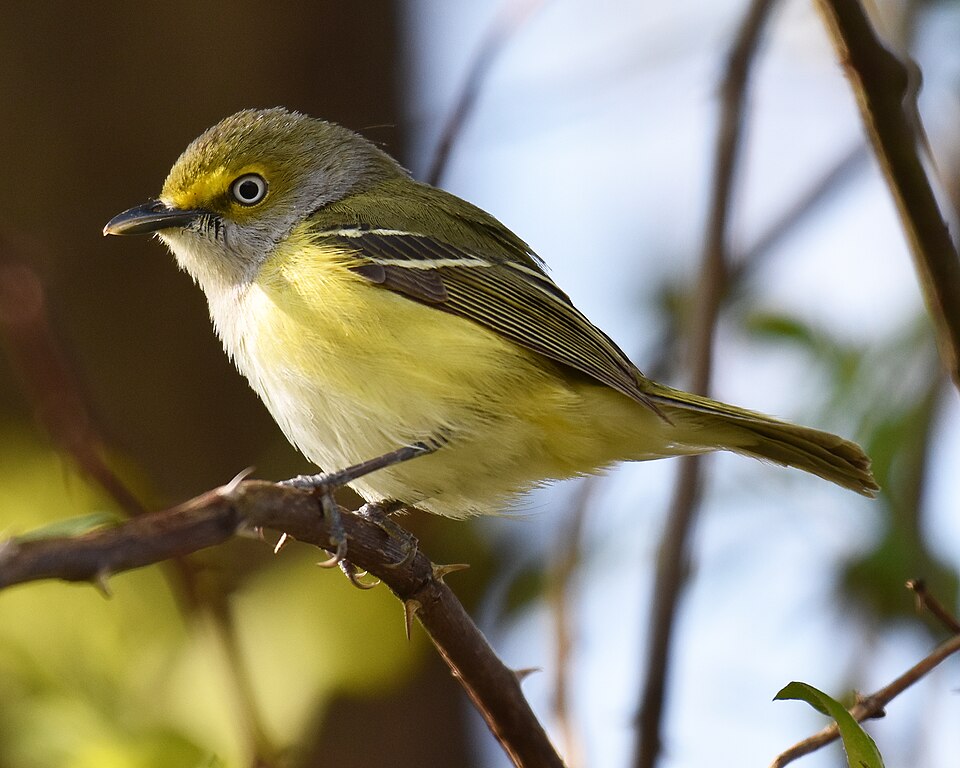

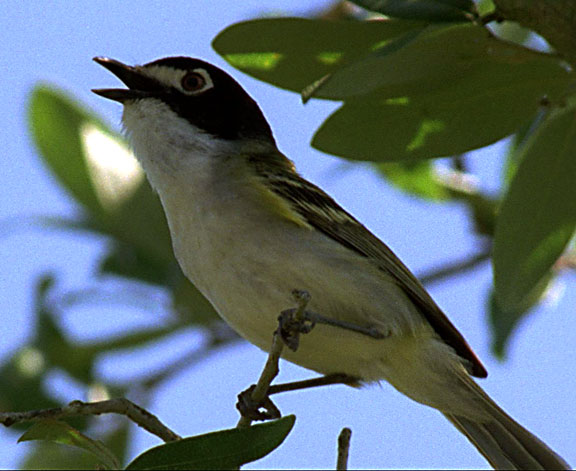

Birds Similar to the Black-eared Shrike-Babbler
These species are often confused with the Black-eared Shrike-Babbler due to similar appearance or overlapping range.

