Black-headed Shrike-Babbler
Pteruthius rufiventer
Order: Passeriformes / Family: Vireonidae

Wikimedia Commons
About the Black-headed Shrike-Babbler
The Black-headed Shrike-Babbler (Pteruthius rufiventer) is a remarkable member of the Vireonidae family, inhabiting the montane forests of South and Southeast Asia. This small passerine bird is notable for its vibrant plumage and unique structure, which has captivated ornithologists and birdwatchers alike. The species is primarily found in the lush forests of the Himalayas, extending across northern India, Bhutan, Nepal, and into Myanmar and northern Thailand. Its affinity for mid to high elevation forests, typically between 1,500 and 3,000 meters, underscores its preference for cooler, dense canopies where it can forage and breed. The ecological role of the Black-headed Shrike-Babbler is crucial in these biodiverse regions. As an insectivore, it helps control insect populations, impacting the broader ecosystem's health. Seasonal behaviors include altitudinal migrations, where the bird may descend to lower elevations during harsh winter months. This movement ensures access to food resources and suitable environmental conditions year-round. Despite its vibrant appearance, the Black-headed Shrike-Babbler sometimes goes unnoticed due to its secretive nature and preference for the dense foliage of upper canopy layers. Its presence often indicates a healthy forest ecosystem, as it thrives in undisturbed habitats with rich insect populations. The bird's significance extends beyond its ecological role, contributing to the rich avian diversity that attracts birdwatchers and researchers to its habitats. Observing the Black-headed Shrike-Babbler provides insight into the intricate dynamics of montane forest ecosystems.
The Black-headed Shrike-Babbler belongs to the family Vireonidae, within the order Passeriformes. These birds typically live average 4-6 years with the longest recorded at 8 years..
How to Identify a Black-headed Shrike-Babbler
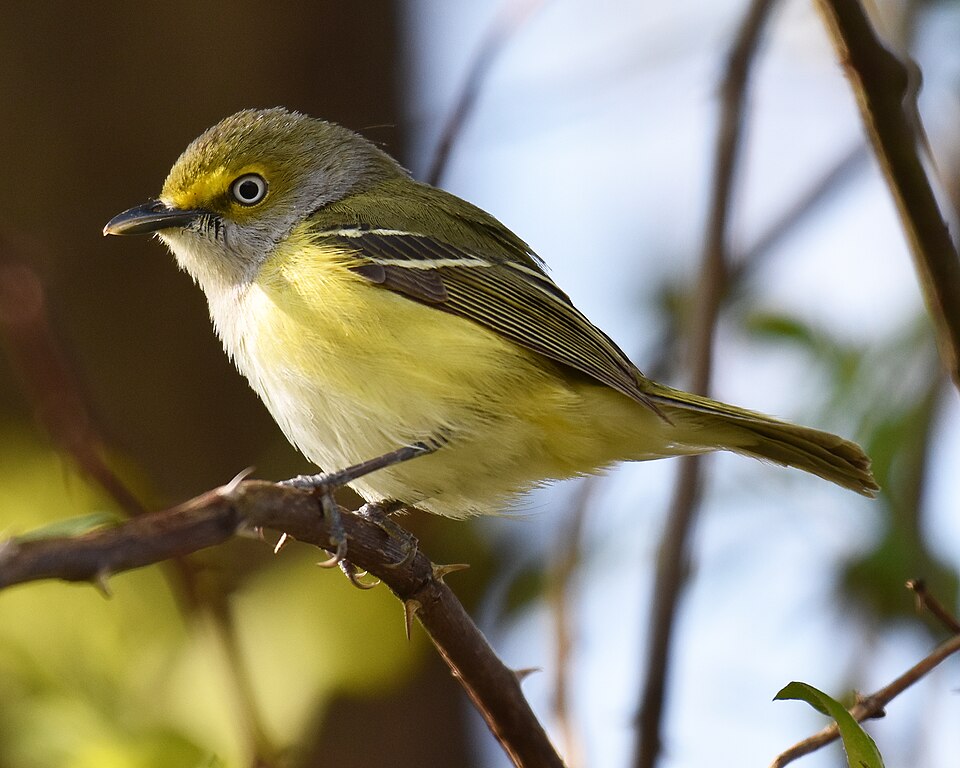
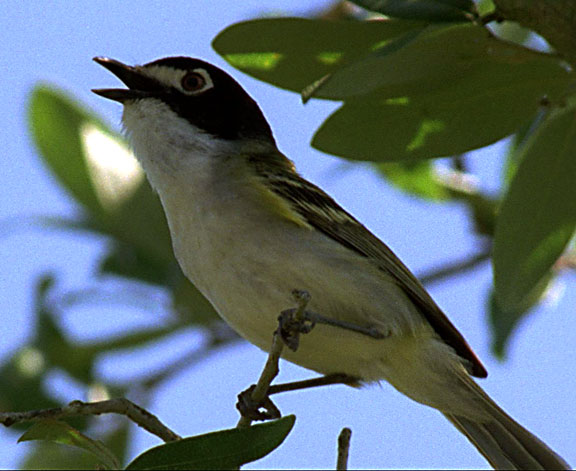
The Black-headed Shrike-Babbler is a small bird, measuring around 14 to 16 centimeters in length. Adult males are easily recognized by their namesake black head, contrasted strikingly against a white throat and chest. Their back is a rich olive-green, transitioning to a bright rufous on the wings and tail. Females, while similar, usually have a slightly duller plumage with a more olive-tinged head and less intense rufous on the wings. Juveniles resemble females but with even more muted tones. In flight, the bird displays a compact silhouette with rapid wing beats, typical of shrike-babblers. Perched, it often exhibits an upright posture, alert and agile. Similar species, such as the White-browed Shrike-Babbler, can cause confusion; however, the Black-headed Shrike-Babbler's lack of a pronounced white brow and its distinctive black head are reliable differentiators. Its striking plumage and active behavior make it a delightful sight for bird enthusiasts.
Having trouble telling birds apart? Upload a photo to our bird identification tool for an instant species match.
Black-headed Shrike-Babbler Habitat and Range
Preferred Habitat
The Black-headed Shrike-Babbler thrives in subtropical and tropical montane forests, favoring elevations between 1,500 and 3,000 meters. These forests, often shrouded in mist, provide dense canopy cover, ideal for the bird's insectivorous diet. In particular, the species is prevalent in the forests of the Eastern Himalayas, such as those in Arunachal Pradesh, extending through Bhutan and into the lush regions of northern Myanmar and Thailand. Seasonal shifts may occur, with the bird descending to slightly lower elevations during colder months to access more abundant food sources. While primarily a forest dweller, it occasionally ventures into adjacent plantations or wooded urban parks, but true urban adaptation is rare, underscoring its preference for natural, dense habitats.
Geographic Range
The Black-headed Shrike-Babbler's range spans across the steep, forested slopes of the Himalayas, including regions of India, Nepal, and Bhutan. It extends eastward into the mountainous areas of northern Myanmar and Thailand. Breeding occurs primarily in the higher elevations of these regions, where the bird finds ample nesting sites and food. During non-breeding seasons, it may move to lower elevations within its range, but it does not undertake long-distance migrations. Within its range, population density is highest in areas with undisturbed, mature forest cover, such as the Eastern Himalayan broadleaf forests. Conservation of these habitats is crucial for maintaining its populations.
Want to know which birds visit your area? Browse our backyard birds by location guides for region-specific species lists.
What Does the Black-headed Shrike-Babbler Eat?
The primary diet of the Black-headed Shrike-Babbler consists of insects and other small invertebrates, which it gleans from foliage and bark in the forest canopy. It employs a methodical foraging technique, often seen hopping along branches or flitting between leaves as it searches for prey. Common food items include caterpillars, beetles, and spiders. During the breeding season, its diet may expand to include small fruits and berries, providing additional energy and nutrition. The bird tends to feed during daylight hours, with peak activity in the morning and late afternoon when insect activity is high. Its precise and agile foraging behavior is a testament to its adaptation to the montane forest environment.
Black-headed Shrike-Babbler Behavior and Social Structure
The Black-headed Shrike-Babbler exhibits a social structure that often includes small family groups or loose flocks, especially outside the breeding season. Its territorial behavior becomes more pronounced during breeding, with pairs defending nesting sites vigorously. Courtship displays involve mutual preening and vocal exchanges, strengthening pair bonds. The species tends to be more solitary during the breeding season, focusing on nesting and raising young. In response to predators, it employs alarm calls and may engage in mobbing behavior to deter threats. Its daily activity patterns align closely with daylight hours, with most foraging and social interactions occurring during early morning and late afternoon.
Black-headed Shrike-Babbler Nesting and Reproduction
The Black-headed Shrike-Babbler constructs its nest in the dense foliage of montane forests, often choosing the fork of a tree branch for security and concealment. The nest is cup-shaped and woven from twigs, moss, and lichen, providing both camouflage and insulation. A typical clutch consists of two to four eggs, with both parents sharing incubation duties over approximately two weeks. After hatching, both parents continue to feed and care for the chicks, which fledge about another two weeks later. The pair usually raises one brood per year, although favorable conditions may allow for a second brood.
Black-headed Shrike-Babbler Sounds and Vocalizations
The Black-headed Shrike-Babbler's song is a melodious series of clear, whistled notes, often delivered in a rhythmic pattern. Its call notes include a sharp 'chip' and more complex phrases used in communication between mates or during territorial disputes. Alarm calls are harsher and more abrupt, serving as warnings to conspecifics. During the dawn chorus, its song contributes to the vibrant auditory tapestry of the montane forest, often resonating through the canopy.
Interesting Facts About the Black-headed Shrike-Babbler
- 1The Black-headed Shrike-Babbler's striking plumage has earned it a place in several local folklore tales throughout the Himalayas.
- 2Unlike many songbirds, both male and female Black-headed Shrike-Babblers participate equally in nesting duties.
- 3The species can often be heard before it is seen, thanks to its distinctive and far-carrying song.
- 4The Black-headed Shrike-Babbler's diet expansion to include fruits during breeding season is an adaptation to ensure energy efficiency.
- 5This bird's altitudinal migration allows it to exploit different ecological niches throughout the year.
- 6Its nesting sites are often selected with precision to avoid predation, using natural camouflage to blend into the forest.
- 7The bird's name, 'Shrike-Babbler', reflects its unique combination of shrike-like hunting and babbler-like social behavior.
Black-headed Shrike-Babbler Conservation Status
Currently, the Black-headed Shrike-Babbler holds a status of Least Concern on the IUCN Red List, with populations considered stable. However, its reliance on pristine montane forests makes it vulnerable to habitat destruction and fragmentation due to logging and agricultural expansion. Conservation efforts focus on preserving these critical habitats, with some regions benefiting from protected area status. Continued monitoring is essential to ensure that population levels remain stable in the face of ongoing environmental pressures.