
Blue-eared Lory
Eos semilarvata
Order: Psittaciformes / Family: Psittacidae
Wikimedia Commons
About the Blue-eared Lory
The Blue-eared Lory (Eos semilarvata), a member of the Psittacidae family, stands out with its vivid coloration and unique ecological niche. This species inhabits the montane forests of Indonesia, specifically found in the highland regions of Seram and its surrounding islands in the Maluku archipelago. The Blue-eared Lory's ecological role is significant, as it contributes to the pollination of various native plants, ensuring the health and sustainability of its forest ecosystem. These lories are crucial for the dispersal of seeds that help maintain the diversity and structure of their forest habitats. The Blue-eared Lory thrives in these forest environments, where the thick canopy provides ample food resources and protection from predators.
This species is particularly noteworthy for its seasonal behaviors, which are closely tied to the flowering and fruiting cycles of its habitat. During the wet season, the abundance of blossoms influences the lory's feeding and breeding behaviors. The Blue-eared Lory is a non-migratory bird, but it does exhibit some altitudinal movements in response to food availability. This bird's presence in highland forests underscores its adaptability and specialized role in its natural environment. The lory's behaviors and life cycle are intricately connected to the ecological dynamics of its surroundings, highlighting its importance in the forest ecosystem.
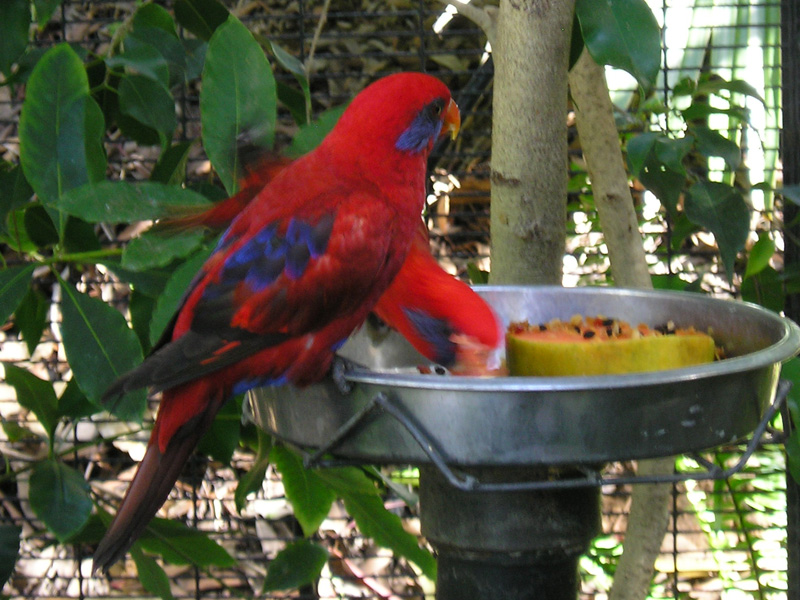
The Blue-eared Lory's bright plumage not only aids in identification but also plays a role in social interactions and mate selection. The striking blue around its ears, combined with the red body, makes it a visually arresting bird. This lory's significance extends beyond its ecological role, as it is also a subject of interest for avian enthusiasts and conservationists. Efforts to preserve its habitat are crucial for maintaining the biodiversity of the Maluku archipelago, ensuring that the Blue-eared Lory continues to thrive in its native environment.
The Blue-eared Lory belongs to the family Psittacidae, within the order Psittaciformes. These birds typically live 10-15 years in the wild, with some living over 20 years in captivity..
How to Identify a Blue-eared Lory
The Blue-eared Lory is a medium-sized parrot, measuring about 28 cm in length. Its most striking feature is the intense blue coloration of the ear-coverts, contrasting sharply with its predominantly red plumage. The wings and tail are also red, but they may display slight blue tinges, particularly noticeable in good lighting. The bird's beak is orange, and the eyes are a deep brown, providing further contrast against its vivid feathers. Juveniles are generally duller in color compared to adults, with less pronounced blue on the ear-coverts and a paler beak.
Both male and female Blue-eared Lories appear similar, which can make sexing challenging in the field. However, subtle differences might occur in the intensity of plumage coloration, with males sometimes exhibiting slightly brighter hues. This species can be confused with other red-plumaged parrots within its range, such as the Red Lory (Eos bornea), but the distinctive blue ear-coverts of the Blue-eared Lory are a reliable field mark for identification.
In flight, the Blue-eared Lory shows a rapid and direct flight pattern, often emitting calls that help locate and identify the bird. Its flight silhouette is characterized by broad, rounded wings and a relatively short, squared tail. When perching, these lories maintain an upright posture, often seen in pairs or small flocks, enhancing their vibrant colors against the forest backdrop.
Having trouble telling birds apart? Upload a photo to our bird identification tool for an instant species match.
Blue-eared Lory Habitat and Range
Preferred Habitat
The Blue-eared Lory inhabits tropical montane forests, predominantly found at elevations ranging from 800 to 1,800 meters. These forests are dense, with a closed canopy that provides a rich supply of nectar and fruit, the primary components of the lory's diet. The bird prefers areas with abundant flowering and fruiting trees, which are crucial for its feeding and breeding activities.
Seasonal habitat shifts occur minimally, as the lory is non-migratory. However, slight altitudinal movements may happen in search of food, particularly during times when certain trees are in bloom. Despite its preference for dense forests, the Blue-eared Lory occasionally ventures into adjacent forest edges and clearings, though it is rarely found in open or urban settings. Its reliance on intact forest ecosystems makes it vulnerable to habitat destruction, emphasizing the need for conservation efforts to preserve its natural environment.
Geographic Range
The Blue-eared Lory is endemic to Indonesia, specifically the islands of Seram and its neighboring islands in the Maluku archipelago. Its range is relatively limited, confined to the highland regions where it finds suitable habitat. This bird does not undertake long-distance migrations, but it may exhibit local movements within its confined range in response to food resource availability.
Breeding and foraging activities occur primarily within these montane forests, making the Blue-eared Lory a year-round resident of its native islands. Its population density is higher in areas with abundant flowering trees, particularly during the wet season when food is plentiful. Although the lory's range is restricted, it remains an integral part of the biodiversity of the Maluku archipelago, where it plays a crucial role in the forest ecosystem.
Want to know which birds visit your area? Browse our backyard birds by location guides for region-specific species lists.
What Does the Blue-eared Lory Eat?
The diet of the Blue-eared Lory primarily consists of nectar and fruit, which it sources from the diverse array of flowering and fruiting trees in its habitat. This diet provides the necessary energy for their high metabolism and active lifestyle. The lory uses its specialized brush-tipped tongue to extract nectar from flowers, an adaptation that allows efficient feeding while promoting pollination.
Seasonal changes in diet occur based on the availability of different flowering plants, with certain tree species providing abundant resources during specific times of the year. The lory also consumes small insects and larvae, supplementing its diet with additional protein when available. Foraging typically occurs in the early morning and late afternoon, when the birds actively seek out the freshest blooms. The Blue-eared Lory is an adept forager, capable of covering large areas quickly to locate food, and often feeds in flocks to maximize efficiency and reduce the risk of predation.
Blue-eared Lory Behavior and Social Structure
The Blue-eared Lory exhibits a highly social structure, often seen in pairs or small flocks that can number up to 20 individuals. These flocks are cohesive, engaging in collective feeding and roosting, which enhances their social bonds and provides protection against predators. The lories are territorial, defending their feeding and nesting areas vigorously from other birds and potential threats.
Courtship displays involve mutual preening and vocalizations, with pairs often engaging in synchronized movements that strengthen pair bonds. During the breeding season, these displays become more pronounced, as mating pairs establish and defend their territories. The Blue-eared Lory is active during the day, with peak activities occurring in the morning and late afternoon. Its response to predators includes loud alarm calls and rapid flight to the dense cover of the forest canopy, where it finds safety among the branches.
Blue-eared Lory Nesting and Reproduction
The Blue-eared Lory nests in tree cavities, often selecting holes in tall, mature trees where they find protection from the elements and predators. Nesting materials include shredded leaves, bark, and other plant fibers, which the lories diligently arrange to create a suitable environment for their eggs.
A typical clutch consists of two to three eggs, which the female incubates for approximately 24 to 26 days. During this period, the male plays a crucial role, providing food and protection for the female and the nest site. After hatching, both parents participate in feeding and caring for the chicks, which fledge after about 8 to 10 weeks. The Blue-eared Lory typically raises one brood per year, although favorable conditions may occasionally allow for a second.
The nesting period is a vulnerable time for the lories, as they must defend their young from predators and ensure a steady supply of food to meet the nutritional demands of growing chicks. Their choice of nesting site and materials reflects an adaptation to their specific forest environment, which offers the resources necessary for successful breeding.
Blue-eared Lory Sounds and Vocalizations
The Blue-eared Lory produces a variety of vocalizations, including a primary song characterized by a series of rapid, high-pitched notes that rise and fall melodically. These calls are clear and piercing, serving as a means of communication between flock members and a mechanism for territory defense.
Call notes include sharp, repeated squawks and whistles, often used in flight or when feeding. Alarm calls are harsher and louder, providing a warning to other lories of potential threats. The dawn chorus, a common behavior among lories, features an increase in vocal activity as the birds greet the morning with a symphony of calls and songs. Compared to other parrots, the Blue-eared Lory's vocalizations are distinctive, aiding in its identification in the dense forests where it resides.
Interesting Facts About the Blue-eared Lory
- 1The Blue-eared Lory can hover briefly like a hummingbird while feeding on nectar, showcasing its agility.
- 2Unlike many parrots, the Blue-eared Lory has a highly specialized brush-tipped tongue adapted for nectar feeding.
- 3This species plays a crucial role in pollinating native flowers, acting as both predator and pollinator.
- 4The Blue-eared Lory is endemic to Indonesia, confined to a small range, making it unique to the Maluku region.
- 5Their bright plumage helps them blend into the vibrant flowers they feed on, offering camouflage from predators.
- 6Lories in the Eos genus, including the Blue-eared Lory, are notable for their vivid red and blue coloration.
- 7The Blue-eared Lory's call is often compared to the sound of a mechanical whistle, distinct in its habitat.
Blue-eared Lory Conservation Status
The Blue-eared Lory is currently listed as Near Threatened on the IUCN Red List, with its population trend considered to be decreasing. The primary threats to this species include habitat loss due to deforestation and land conversion for agriculture, which reduce the availability of suitable nesting and feeding sites. Conservation efforts focus on protecting the montane forest habitats on Seram and the surrounding islands, with initiatives aimed at curbing deforestation and promoting sustainable land management practices. Historical population changes have seen declines due to habitat fragmentation, emphasizing the importance of concerted conservation actions to ensure the survival of the Blue-eared Lory. Continued monitoring and habitat restoration are essential to mitigate the impacts of human activities and maintain the ecological balance of the Maluku archipelago.


