
Boat-billed Heron
Cochlearius cochlearius
Order: Pelecaniformes / Family: Ardeidae
Wikimedia Commons
About the Boat-billed Heron
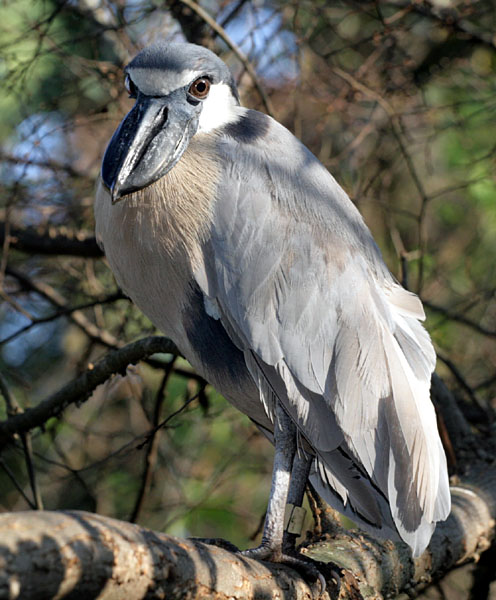
The Boat-billed Heron, scientifically named Cochlearius cochlearius, is a fascinating wading bird belonging to the family Ardeidae and order Pelecaniformes. This bird is easily recognized by its prominent, wide bill, which resembles an overturned boat, a feature that not only gives the species its common name but also serves a functional role in its feeding habits. The Boat-billed Heron primarily inhabits the dense, mangrove-lined estuaries, lagoons, and wetland forests stretching from Mexico to northern Argentina. This range includes numerous countries such as Belize, Costa Rica, and Brazil. Its presence in these environments underscores its ecological importance as both a predator of aquatic organisms and a prey species for larger carnivores. The ecological role of the Boat-billed Heron is significant in maintaining the balance of the ecosystems it inhabits. By preying on fish, crustaceans, and insects, it helps regulate the populations of these species, while also serving as prey for larger birds of prey and mammals. The Boat-billed Heron engages in seasonal behaviors, often displaying increased activity during the breeding season, which coincides with the rainy season in many of its habitats. During this time, it becomes more vocal and visible as it establishes territories and attracts mates. The Boat-billed Heron's adaptability to both freshwater and saltwater environments is another testament to its evolutionary success. While largely nocturnal, the Boat-billed Heron may adjust its activity patterns to capitalize on food availability, demonstrating its flexible approach to survival. As a species, it is intrinsically linked to the health of tropical wetlands, highlighting the importance of conserving these critical habitats not only for the heron but for the myriad species that share its environment.
The Boat-billed Heron belongs to the family Ardeidae, within the order Pelecaniformes. These birds typically live average 8-10 years, with a maximum recorded of 12 years..
How to Identify a Boat-billed Heron
Adult Boat-billed Herons are medium-sized birds with a distinctive appearance that sets them apart from other heron species. Their plumage is predominantly gray, with a striking contrast between their dark crown and lighter underparts. The most notable feature of this bird is its large, scoop-shaped bill, which is much broader than those of other herons. Juvenile Boat-billed Herons display similar plumage patterns to adults but with a more mottled and streaked appearance, which aids in camouflage among the dappled light of their forest habitats. Males and females appear similar, although males can be slightly larger. In flight, the Boat-billed Heron presents a compact silhouette with rounded wings and a slow, deliberate wingbeat. When perching, they often adopt a hunched posture, drawing their head into their shoulders, which can make their broad bill appear even more pronounced. This bird can be confused with the Black-crowned Night Heron due to its nocturnal habits and similar size, but the unique bill shape of the Boat-billed Heron is an unmistakable distinguishing feature.
Having trouble telling birds apart? Upload a photo to our bird identification tool for an instant species match.
Boat-billed Heron Habitat and Range
Preferred Habitat
The Boat-billed Heron primarily inhabits tropical wetland environments, including mangroves, swamps, lagoons, and forested riverbanks. These habitats provide the necessary food resources and nesting sites crucial for their survival. The bird is typically found at low elevations, from sea level to about 600 meters, where it can easily access its preferred aquatic prey. Seasonal habitat shifts are observed as water levels and food availability change, particularly during the breeding season when birds may move to areas with abundant nesting sites. While typically avoiding urban areas, the Boat-billed Heron can occasionally be found in rural landscapes where suitable wetland habitats exist, demonstrating a degree of flexibility in its habitat preferences.
Geographic Range
The breeding range of the Boat-billed Heron extends from southern Mexico through Central America, including countries like Panama and Nicaragua, down into South America as far south as northern Argentina. It is a resident species throughout most of its range, with populations found in Colombia, Venezuela, and the Amazon basin. The Boat-billed Heron does not commonly undertake long migrations, although some local movements occur in response to seasonal changes in water levels and food availability. Population density hotspots are often found in regions with extensive mangrove forests and protected wetland reserves, where human disturbance is minimal.
Want to know which birds visit your area? Browse our backyard birds by location guides for region-specific species lists.
What Does the Boat-billed Heron Eat?
The diet of the Boat-billed Heron consists primarily of fish, crustaceans, and insects, which it captures using its broad, scoop-like bill. This bird is an opportunistic feeder, foraging primarily at night when it can exploit its nocturnal vision to locate prey. During the rainy season, when aquatic life is abundant, the Boat-billed Heron may consume larger prey items, including small amphibians and reptiles, adjusting its diet as necessary to reflect the availability of resources. Its foraging technique involves slow, deliberate movements through shallow water, often followed by a sudden strike to catch prey. The size of prey captured by the Boat-billed Heron varies but typically ranges from small fish to medium-sized crustaceans, highlighting its role as a versatile predator in its ecosystem.
Boat-billed Heron Behavior and Social Structure
Boat-billed Herons are primarily solitary and territorial, especially during the breeding season when males become more vocal and engage in displays to attract mates. These birds exhibit a range of behaviors, from quiet stalking of prey to more conspicuous courtship displays involving raised crest feathers and calls. While generally non-migratory, they may form loose flocks during the non-breeding season, particularly in areas with abundant food resources. The Boat-billed Heron remains vigilant against predators, using its cryptic plumage and stillness to avoid detection. Its daily activity pattern is largely nocturnal, foraging during the night and resting during the day, often tucked away in dense vegetation.
Boat-billed Heron Nesting and Reproduction
Boat-billed Herons build their nests in trees or shrubs, often near water, using sticks and twigs to construct a platform-like structure. They prefer locations that offer some concealment and protection from predators, such as dense mangrove branches or thickets. The clutch size typically ranges from two to four eggs, which both parents incubate over a period of about 21 to 26 days. Upon hatching, the chicks are altricial and require constant care and feeding from both parents. Fledging occurs approximately 5 to 6 weeks after hatching, with young herons remaining dependent on parental care for an additional few weeks. Typically, the Boat-billed Heron raises one brood per year, timed to coincide with periods of high food availability.
Boat-billed Heron Sounds and Vocalizations
The Boat-billed Heron produces a variety of vocalizations, with its primary song being a series of low, croaking sounds that resonate through its wetland habitat. These calls are often heard at night, reflecting the bird's nocturnal nature. Alarm calls are more abrupt and louder, serving to warn of nearby predators. During the dawn chorus, the Boat-billed Heron's calls blend with those of other wetland birds, creating a symphony of sounds that can be likened to a low rumble interspersed with sharper notes. Its vocalizations, while not as melodic as songbirds, are distinctive and play a crucial role in communication, especially during the breeding season.
Interesting Facts About the Boat-billed Heron
- 1The Boat-billed Heron's bill is not only broad but also highly sensitive, allowing it to detect prey by touch in murky waters.
- 2Despite its distinctive appearance, the Boat-billed Heron is more closely related to the night herons than to other broad-billed birds.
- 3This species has a wingspan of about 76 to 88 cm, allowing it to glide silently through its dense wetland habitat.
- 4The Boat-billed Heron is one of the few herons that primarily forages at night, taking advantage of its excellent night vision.
- 5In some regions, the Boat-billed Heron is known as the 'Canoe Bird' due to the shape of its bill resembling a small boat.
- 6Juvenile Boat-billed Herons are more camouflaged than adults, with a streaked plumage that helps them blend into their forested environment.
- 7The Boat-billed Heron is often seen alone or in pairs, rarely forming large flocks except during the non-breeding season.
Boat-billed Heron Conservation Status
The IUCN currently lists the Boat-billed Heron as Least Concern, although its population trends are not well-documented. The primary threats to this species include habitat destruction due to the drainage of wetlands and deforestation, which reduce the availability of nesting and feeding sites. Conservation efforts focus on protecting wetlands and mangrove forests, vital to the survival of the Boat-billed Heron and many other species. Over recent decades, the establishment of protected areas and increased awareness of wetland conservation have helped stabilize some populations, though continuous monitoring is necessary to ensure long-term viability.


