
Bornean Whistler
Pachycephala hypoxantha
Order: Passeriformes / Family: Pachycephalidae
Wikimedia Commons
About the Bornean Whistler
The Bornean Whistler, Pachycephala hypoxantha, is a captivating songbird native to the lush, mountainous regions of Borneo. Its presence is a key indicator of healthy forest ecosystems, as this species thrives in dense montane and submontane forests, typically between 600 and 2,600 meters above sea level. Found primarily in Sabah and Sarawak in Malaysia, as well as the Indonesian province of Kalimantan, the Bornean Whistler plays a significant role in the local avian biodiversity. This species is particularly noted for its vibrant yellow plumage and its sweet, melodious song that resonates through the misty forested slopes. The Bornean Whistler is an important part of the ecological community, contributing to seed dispersal and insect population control. Seasonally, the bird's behavior adjusts slightly, although it generally remains a year-round resident of its mountainous habitat. During the breeding season, from March to August, the Bornean Whistler becomes more vocal, with males often heard advertising their territories through song. In terms of ecological impact, this whistler helps maintain the balance of its habitat, preying on insects that might otherwise grow unchecked. Its role in the ecosystem, alongside its striking appearance and song, makes the Bornean Whistler a bird of considerable interest to ornithologists and nature enthusiasts alike.
The Bornean Whistler belongs to the family Pachycephalidae, within the order Passeriformes. These birds typically live typically around 5 years with a maximum recorded of 8 years..
How to Identify a Bornean Whistler
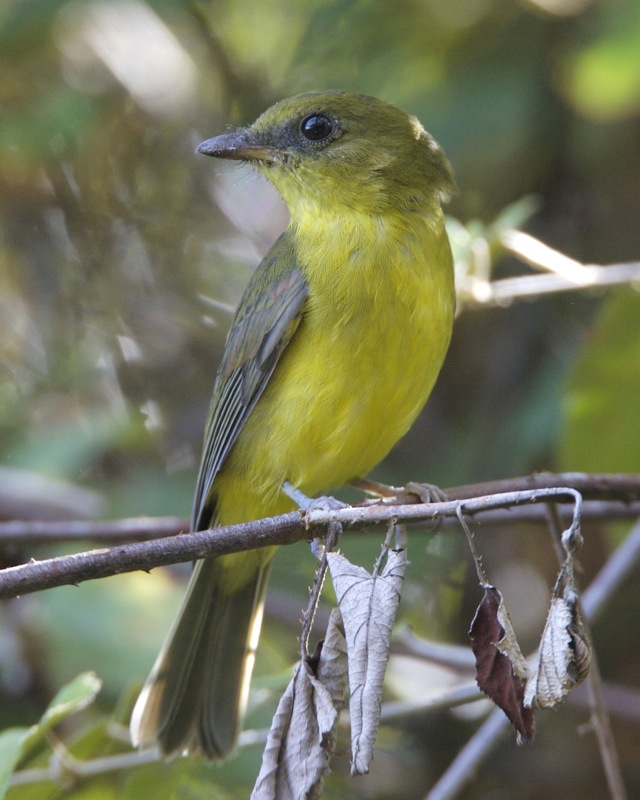
The Bornean Whistler is easily identifiable by its bright yellow underparts and olive-green upperparts. Adult males and females exhibit similar plumage, though males tend to have slightly more vibrant coloration. Juvenile Bornean Whistlers may appear duller, with less pronounced yellow and a more brownish tone on their undersides. The bird's head and throat are marked by a subtle grayish hue, which contrasts with its vivid yellow breast. Its eyes are dark and beady, set off by a thin white eye-ring that can aid in identification. When observing the Bornean Whistler in flight, look for its broad, rounded wings and relatively short tail, which give it a distinct silhouette. While perched, it often adopts an upright posture, making its yellow breast conspicuous among the foliage. Confusion with other species is rare due to its unique combination of colors and its distinct song, although novice birders might initially mistake it for other yellow-breasted songbirds in the region. However, the Bornean Whistler's consistent habitat choice and distinct vocalizations help differentiate it from similar species.
Having trouble telling birds apart? Upload a photo to our bird identification tool for an instant species match.
Bornean Whistler Habitat and Range
Preferred Habitat
The Bornean Whistler is primarily found in the montane and submontane forests of Borneo. These dense, evergreen forests provide ideal shelter and abundant food resources. It favors altitudes ranging from 600 to 2,600 meters, thriving in the cooler, mist-laden environments that characterize mountain regions. The bird shows a strong preference for primary forests, though it can occasionally be seen in secondary growth areas if they provide adequate cover and food. Seasonal shifts in habitat are minimal, as the Bornean Whistler is a resident species, maintaining its presence throughout the year. Urban and heavily disturbed areas are generally unsuitable for this species, which tends to avoid human-altered landscapes in favor of more pristine environments. The forests of Kinabalu National Park and Crocker Range National Park are notable strongholds for the species, providing critical habitat protection.
Geographic Range
The Bornean Whistler is endemic to the island of Borneo, with a range that encompasses the Malaysian states of Sabah and Sarawak as well as the Indonesian province of Kalimantan. It occupies a relatively narrow altitudinal band, favoring elevations from 600 to 2,600 meters. Unlike many other bird species, the Bornean Whistler does not engage in long-distance migrations, instead remaining within its montane forest home year-round. This restricted range makes it particularly sensitive to habitat disturbance, although it is locally common where suitable habitat remains intact. Population density is highest in protected areas such as Kinabalu National Park, where conservation efforts help to preserve the bird's natural environment.
Want to know which birds visit your area? Browse our backyard birds by location guides for region-specific species lists.
What Does the Bornean Whistler Eat?
The diet of the Bornean Whistler primarily consists of insects and other small invertebrates, which it forages actively among the forest foliage. It employs a variety of techniques to capture prey, including gleaning from leaves and twigs, and occasionally sallying to catch insects in mid-air. The bird's sharp eyesight and agile movements make it an effective predator of small arthropods, such as beetles, caterpillars, and spiders. Seasonal changes in diet are minimal, though there may be slight shifts in prey availability throughout the year. The Bornean Whistler feeds at various times of the day, taking advantage of peak insect activity during the early morning and late afternoon. Its foraging behavior contributes to the control of insect populations, helping to maintain the ecological balance within its habitat.
Bornean Whistler Behavior and Social Structure
The Bornean Whistler exhibits a variety of social behaviors, often seen singly or in pairs, particularly during the breeding season. However, it may join mixed-species feeding flocks outside of the breeding period, benefiting from the safety and increased foraging opportunities provided by group dynamics. This species is territorial, with males singing frequently to defend their area and attract mates. Their song is not only a mating call but also serves as a deterrent to potential rival males. Courtship displays include fluttering flights and the presentation of food by the male to the female. In response to predators, the Bornean Whistler typically employs a strategy of concealment, using its adeptness at navigating dense foliage to evade threats. The bird is diurnal, engaging in most of its activities during daylight hours, with a particular flourish of activity and song during the dawn chorus.
Bornean Whistler Nesting and Reproduction
Nesting for the Bornean Whistler occurs during its breeding season, which spans from March to August. The nest is typically a cup-shaped structure constructed from fine grasses, rootlets, and leaves, often lined with softer materials such as moss or feathers. It is usually situated in a low shrub or tree branch, concealed within the dense foliage to protect from predators. Clutch size generally ranges from two to three eggs, which are bluish-white with brown speckling. Both parents share in the incubation duties, which last approximately 14 days. After hatching, the fledglings remain in the nest for about two weeks before taking their first flight. Parental care continues for several weeks post-fledging, as the young birds learn to forage and navigate their environment. Typically, the Bornean Whistler raises one to two broods per year, depending on environmental conditions and resource availability.
Bornean Whistler Sounds and Vocalizations
The Bornean Whistler's primary song is a melodious series of clear, whistling notes that rise and fall in a rhythmic pattern. Each phrase typically consists of 4 to 7 notes, with a distinctive, sweet quality that carries well through its forest habitat. Calls are varied, including sharp, single notes used as alarms or contact calls. During the dawn chorus, the whistler's song is particularly prominent, contributing to the rich tapestry of sounds that mark the early morning in its montane forest home. The whistling notes are often likened to the sound of a flute, with a purity and clarity that makes them easily distinguishable from the calls and songs of other birds in the region.
Interesting Facts About the Bornean Whistler
- 1The Bornean Whistler is part of the Pachycephalidae family, known for their melodious songs and strong bills.
- 2Unlike many songbirds, the Bornean Whistler is not migratory, remaining in its montane habitat year-round.
- 3The Bornean Whistler's song has been compared to the sound of a flute, noted for its purity and clarity.
- 4This bird's preference for dense forests makes it a key indicator species for the health of Borneo's montane ecosystems.
- 5Despite its bright colors, the Bornean Whistler is adept at remaining concealed within the forest foliage.
- 6The Bornean Whistler joins mixed-species flocks, benefiting from the safety in numbers for foraging.
- 7Its diet primarily consists of insects, playing a vital role in controlling pest populations in its habitat.
Bornean Whistler Conservation Status
The Bornean Whistler is currently classified as Least Concern by the IUCN, with stable population trends. However, its reliance on forest habitats makes it susceptible to habitat loss due to deforestation and land conversion for agriculture. Protected areas such as Kinabalu National Park provide essential refuges where the species can thrive away from human disturbances. Conservation efforts focus on habitat protection and management to ensure the survival of this and other forest-dependent species. Historical population assessments suggest that while the Bornean Whistler's numbers have remained relatively stable, continued vigilance is necessary to mitigate potential threats from habitat destruction.


