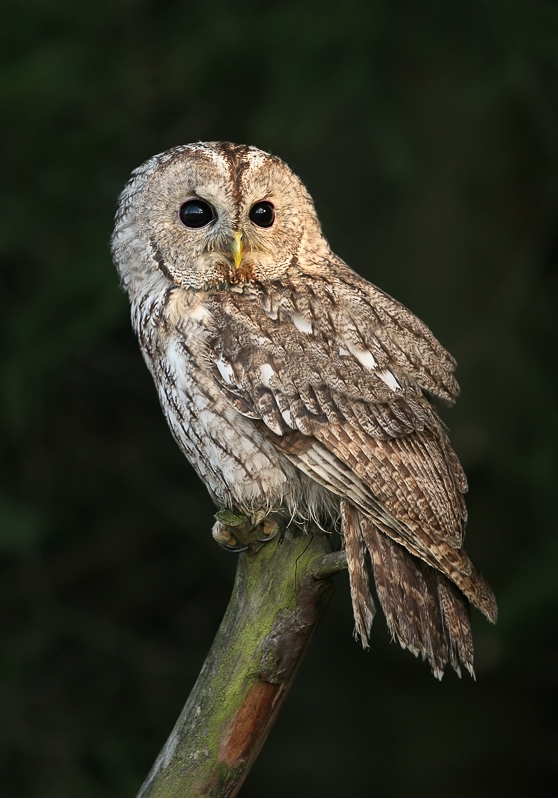
Brown Boobook
Ninox scutulata
Order: Strigiformes / Family: Strigidae

Wikimedia Commons
About the Brown Boobook
The Brown Boobook (Ninox scutulata), often referred to as the brown hawk-owl, is a small to medium-sized owl found predominantly in Asia, showcasing an impressive adaptability across varied habitats. This species plays a significant ecological role as both predator and prey within its ecosystems. It predominantly inhabits forested regions, but is also observed in cultivated lands and urban settings, illustrating its versatility. Its presence across a range of habitats highlights its adaptability to human-altered landscapes, a trait that has become increasingly important as natural habitats continue to diminish.
Across its extensive range, which includes countries such as India, China, Thailand, and the Philippines, the Brown Boobook contributes to controlling insect populations, thus maintaining ecological balance. This bird's ability to thrive in both dense forests and urban areas reflects its opportunistic hunting techniques and dietary breadth. Despite human encroachment, the Brown Boobook remains relatively common, its adaptability serving as a key factor in its persistence.
Seasonally, the Brown Boobook exhibits some migratory behavior, particularly in northern populations which move southward during the colder months. These movements are generally not vast, reflecting the species' capacity to adapt and exploit local resources effectively. The bird's vocalizations, crucial for communication, vary slightly across regions, indicating potential subspecific differentiation. As a nocturnal raptor, it is primarily active at night, utilizing its keen senses to navigate and hunt, thereby playing a vital role in nocturnal ecosystems.
The Brown Boobook belongs to the family Strigidae, within the order Strigiformes. These birds typically live average about 10-12 years, with some individuals living up to 15 years in the wild..
How to Identify a Brown Boobook
The Brown Boobook is characterized by its rich brown plumage, which provides excellent camouflage in wooded environments. Adult birds typically exhibit a darker brown head with fine streaks, a trait that helps in distinguishing them from similar species. Their eyes are a striking yellow, a feature that stands out against the darker facial feathers. The underparts are lighter, often with streaks or spots that vary in intensity among individuals.
Juvenile Brown Boobooks resemble adults but possess a slightly fluffier appearance with more pronounced streaking on their underparts. Male and female Brown Boobooks are similar in appearance, making sex differentiation in the field challenging without behavioral cues. The flight silhouette of the Brown Boobook is notable for its broad, rounded wings and relatively short tail, typical of many owls, allowing for agile maneuvering through dense foliage.
In comparison to other small owls, such as the Collared Scops Owl, the Brown Boobook lacks ear tufts and has a more robust build. Its perching posture is upright, often with a slightly hunched appearance, which is a common resting stance among owls. When observing in the field, keen attention to these specific features can aid in accurate identification.
Having trouble telling birds apart? Upload a photo to our bird identification tool for an instant species match.
Brown Boobook Habitat and Range
Preferred Habitat
The Brown Boobook primarily inhabits tropical and subtropical forests, with a preference for dense, humid woodland areas. It is found across elevations ranging from sea level up to 2,000 meters, demonstrating a broad ecological range. In addition to forested habitats, the Brown Boobook can also be found in secondary growth, plantations, and even urban parks, where tree cover is sufficient to support its needs.
During the breeding season, these owls prefer dense forests that provide ample cover and nesting opportunities. In contrast, non-breeding individuals may be more flexible, occasionally venturing into more open habitats. In urban areas, the Brown Boobook has adapted to living in proximity to human activity, often roosting in large trees in parks or gardens. This adaptability to various environments underscores its resilience and ability to exploit a range of ecological niches.
Geographic Range
The Brown Boobook has a wide-ranging distribution across southern and eastern Asia. Its breeding range includes much of India, Sri Lanka, and extends eastward through Nepal, Bhutan, and into Southeast Asia, including Thailand, Vietnam, and the Malay Peninsula. Further east, it inhabits the Philippines, parts of Indonesia, and southern China.
During the winter months, populations in the northern parts of its range, such as those from northern India and China, undertake short migrations to more southerly locations within the same geographic region. These movements are typically altitudinal or latitudinal, aimed at avoiding colder temperatures and finding more abundant food resources.
Within its range, the Brown Boobook is most densely populated in areas where suitable forest habitat coincides with abundant prey populations. Regions such as the Western Ghats in India and lowland forests in Malaysia are known hotspots for this species, reflecting the importance of these habitats for its survival.
Want to know which birds visit your area? Browse our backyard birds by location guides for region-specific species lists.
What Does the Brown Boobook Eat?
The Brown Boobook is primarily carnivorous, with a diet that consists largely of insects and small vertebrates. Beetles, moths, and grasshoppers form a significant portion of its diet, especially during the breeding season when these insects are plentiful. The owl is also known to hunt small mammals, birds, and reptiles, showcasing its role as a versatile nocturnal predator.
Foraging primarily occurs at night, with the Brown Boobook using its acute hearing and vision to detect prey. Its hunting technique involves perching quietly and scanning the surrounding area before swooping down on unsuspecting prey. During the wetter months, when insect populations peak, the bird's diet shifts more heavily towards these available resources.
Seasonal variations in diet correspond with prey availability, allowing the Brown Boobook to maintain its role as an apex predator in nocturnal ecosystems. Its ability to adapt its feeding strategy to local conditions has been key to its success across diverse habitats.
Brown Boobook Behavior and Social Structure
The Brown Boobook exhibits solitary or paired living arrangements, with individuals typically maintaining territories through vocalizations and displays. Males often engage in courtship rituals that include food offerings and synchronized flight patterns to attract females during the breeding season. These displays are crucial for pair bonding and establishing breeding territories.
Territorial behavior is pronounced, with Brown Boobooks using their distinctive calls to communicate boundaries and deter intruders. While generally not aggressive towards humans, they can be fiercely defensive of their nesting areas when threatened. The species is primarily nocturnal, becoming active at dusk as it begins its hunting activities.
The Brown Boobook's response to predators includes a combination of camouflage and evasive flight. When confronted by larger predators, it may use distraction techniques to protect its young. Daily activity patterns are centered around night hunting, with daylight hours spent roosting in concealed locations such as dense foliage or tree cavities.
Brown Boobook Nesting and Reproduction
Brown Boobooks typically nest in natural cavities found in trees, although they may occasionally use abandoned nests of other large birds. The selection of nest sites is influenced by the availability of suitable cavities, as well as proximity to abundant food resources.
The female lays a clutch of 2-3 eggs, which she incubates while the male provides food. The incubation period lasts about 28-30 days, with both parents involved in feeding the chicks once hatched. Fledging occurs approximately 4-5 weeks after hatching, at which point young owls leave the nest but remain dependent on their parents for several more weeks.
Brown Boobooks typically raise one brood per year, although in areas with abundant resources, a second brood is possible. Parental roles are well defined, with the male responsible for hunting and defense while the female focuses on incubation and initial chick rearing.
Brown Boobook Sounds and Vocalizations
The primary song of the Brown Boobook is a series of low, rhythmic hoots that increase in tempo, often described as 'hoo-hoo-hoo.' These calls serve both territorial and mating functions. In addition to its primary song, the Brown Boobook emits various call notes, including softer hoots and whistles used in close-range communication between mates.
Alarm calls are harsher and more abrupt, designed to warn off potential intruders or signal the presence of predators. During the dawn chorus, Brown Boobooks become particularly vocal, their calls carrying over long distances in the still morning air. Their vocalizations, while not as varied as some passerines, are distinctive and an essential tool for field identification.
Interesting Facts About the Brown Boobook
- 1The Brown Boobook's scientific name, Ninox scutulata, reflects its hawk-like appearance and hunting prowess.
- 2Despite being primarily nocturnal, Brown Boobooks can occasionally be seen hunting during the day, especially in cloudy conditions.
- 3Brown Boobooks are known for their ability to consume prey up to a third of their weight, showcasing their voracious appetite.
- 4The owl's calls play a crucial role in mating, with males increasing the frequency of calls during the breeding season.
- 5Brown Boobooks have been observed using urban streetlights to hunt insects attracted to the light, illustrating their adaptability.
- 6The species' ability to thrive in both rural and urban environments demonstrates its remarkable ecological flexibility.
- 7Unlike many owls, the Brown Boobook has a relatively simple vocal repertoire, yet it is highly effective for communication.
Brown Boobook Conservation Status
The International Union for Conservation of Nature (IUCN) lists the Brown Boobook as a species of Least Concern, reflecting its widespread population and adaptability to various habitats. However, localized threats persist, particularly habitat destruction due to deforestation and urban expansion. These activities result in the loss of nesting sites and food resources. Conservation efforts focus on habitat preservation, especially in regions where deforestation rates are high. Protected areas in countries like India and Indonesia play a crucial role in maintaining stable populations. Historically, the Brown Boobook has shown resilience, adapting to changing environments, but continued monitoring is essential to ensure long-term population stability.
Other Strigidae Species


Birds Similar to the Brown Boobook
These species are often confused with the Brown Boobook due to similar appearance or overlapping range.