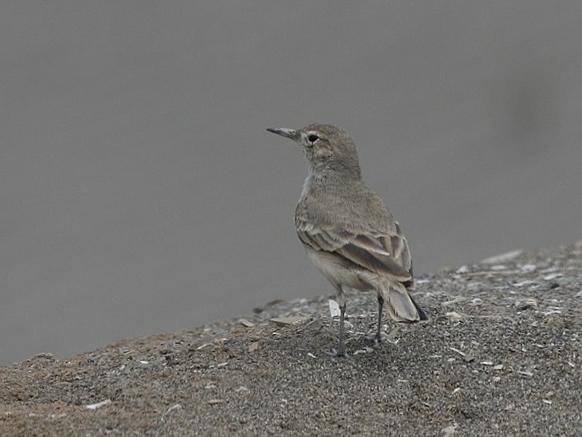
Campo Miner
Geositta poeciloptera
Order: Passeriformes / Family: Furnariidae

Wikimedia Commons
About the Campo Miner
The Campo Miner is a fascinating member of the Furnariidae family, often found in the open grasslands and savannas of South America. This species, Geositta poeciloptera, is particularly noteworthy for its adaptation to terrestrial habitats, where it spends much of its time foraging on the ground. It plays a crucial role in its ecosystem by controlling insect populations, thus maintaining the ecological balance. The bird is predominantly found in countries such as Brazil, Paraguay, and Argentina, with occasional sightings reported in Bolivia and Uruguay. These regions provide the dry, open environments that Campo Miners prefer, allowing them to exploit their excellent ground-foraging skills.
During the breeding season, Campo Miners become more territorial, frequently seen defending their chosen patch of habitat from rivals. They exhibit a fascinating seasonal behavior, with some populations undertaking short-distance migrations to take advantage of food availability and breeding conditions. This seasonal movement ensures that they can exploit different areas as environmental conditions change, demonstrating their adaptability. Throughout the year, Campo Miners contribute to the health of their ecosystems, not only by keeping insect populations in check but also by serving as prey for larger predators, thus integrating themselves into the food web.
The significance of the Campo Miner extends beyond its ecological role. As an indicator species, its presence and population trends can provide insights into the health of the grassland ecosystems it inhabits. Given the ongoing threats of habitat loss due to agricultural expansion and land-use changes, maintaining healthy populations of Campo Miners is essential for the conservation of these environments. Preserving their habitats not only supports the survival of this species but also the myriad of other organisms that share its ecosystem.
The Campo Miner belongs to the family Furnariidae, within the order Passeriformes. These birds typically live 4-6 years, with a maximum recorded of 8 years.
How to Identify a Campo Miner
The Campo Miner is a small bird, measuring around 14 to 16 centimeters in length, with a wingspan of approximately 25 centimeters. Its plumage is predominantly sandy-brown, which provides excellent camouflage against the arid grasslands and open fields it inhabits. The bird features distinctive streaking on its back and wings, which is a key field mark for identification. Its underparts are paler, with subtle buffy tones, while the tail exhibits a contrasting rufous color, edged with darker feathers.
Adults exhibit little sexual dimorphism, making it difficult to differentiate males from females based solely on plumage. However, juveniles can be identified by their slightly duller coloration and less pronounced streaking compared to adults. The Campo Miner's slender bill is adapted for probing the ground, and its legs are well-suited for walking and running, a behavior often observed when it is foraging.
In flight, the Campo Miner presents a distinctive silhouette, with rapid wing beats interspersed with glides. Its flight is low and direct, often skimming just above the ground. When perched, the bird typically adopts an upright posture, which, combined with its streaked back, helps it blend seamlessly into its environment. This excellent camouflage can sometimes lead to confusion with other ground-dwelling species, but the combination of its size, shape, and plumage pattern is usually diagnostic.
Having trouble telling birds apart? Upload a photo to our bird identification tool for an instant species match.
Campo Miner Habitat and Range
Preferred Habitat
The Campo Miner inhabits open grasslands, savannas, and dry scrublands, favoring areas with sparse vegetation and bare ground where it can easily forage. It is found at elevations ranging from sea level to around 1,500 meters, though it predominantly occupies lowland regions. During the breeding season, it selects territories within these habitats that offer a mix of open spaces for feeding and vegetative cover for nesting.
In some regions, the Campo Miner exhibits slight seasonal habitat shifts, moving to areas with more abundant food resources during the non-breeding season. Despite its preference for natural grasslands, the Campo Miner can sometimes be found in rural agricultural areas, adapting to modified landscapes where its primary food sources remain available. However, it is seldom seen in urban environments, as it relies heavily on natural or semi-natural habitats for its survival.
Geographic Range
The Campo Miner has a predominantly South American distribution, with its breeding range encompassing much of central and southern Brazil, eastern Paraguay, and northeastern Argentina. It is also occasionally found in parts of Bolivia and northern Uruguay. This species does not undertake long-distance migrations but may move locally within its range to exploit seasonal variations in food availability and breeding conditions.
During the non-breeding season, some populations migrate to slightly different areas within their range, seeking regions with abundant insect prey. The Campo Miner is relatively common in its preferred habitats, with certain areas, such as the grasslands of Mato Grosso do Sul in Brazil and the Chaco region of Paraguay, serving as population density hotspots. These areas provide optimal conditions for foraging and nesting, supporting robust populations of the species.
Want to know which birds visit your area? Browse our backyard birds by location guides for region-specific species lists.
What Does the Campo Miner Eat?
The Campo Miner primarily feeds on a diet of insects and other small invertebrates, which it forages from the ground. It employs a methodical approach to feeding, using its slender bill to probe into the soil and leaf litter for prey. Common diet items include beetles, ants, and caterpillars, which provide necessary nutrients and energy.
During the rainy season, when insect populations surge, Campo Miners benefit from the increased availability of food, which supports their energy needs during the breeding period. In drier months, they may supplement their diet with seeds and plant matter, showcasing their dietary flexibility. The bird's feeding schedule is diurnal, with peak activity observed in the early morning and late afternoon when temperatures are cooler and prey is more active.
Campo Miner Behavior and Social Structure
The Campo Miner exhibits a solitary or paired social structure, especially during the breeding season when it becomes territorial. Each pair defends a specific area, often engaging in displays to ward off intruders. These displays can include vocalizations and aerial chases, demonstrating their commitment to maintaining territory boundaries.
Courtship involves a series of subtle displays where one bird may present food to its partner, strengthening pair bonds. Outside the breeding season, Campo Miners may form loose flocks, particularly during migrations to areas with abundant resources. These flocks are usually small, with individuals maintaining some distance while foraging.
In response to predators, Campo Miners rely on their camouflage and vigilance. They are quick to take flight or run to cover when threatened, showcasing an agile and alert nature. Daily activity peaks during cooler parts of the day, with periods of rest during the heat of midday. This behavior allows them to efficiently manage energy while avoiding the harshest environmental conditions.
Campo Miner Nesting and Reproduction
Campo Miners construct their nests on the ground, often choosing a location that offers some protective cover from vegetation or rocks. The nest itself is a simple cup-like structure, built from grasses, twigs, and other plant materials, providing insulation and camouflage.
A typical clutch consists of two to three eggs, which are incubated by both parents for about 14 to 16 days. The shared responsibility extends to feeding and caring for the hatchlings, with both adults contributing to the provisioning of food. Fledging occurs approximately 16 to 18 days after hatching, although young birds may remain dependent on their parents for additional weeks as they hone their foraging skills.
Campo Miners typically raise one brood per year, though favorable conditions can sometimes result in a second brood. This reproductive strategy ensures that they can capitalize on optimal environmental conditions, increasing the chances of offspring survival.
Campo Miner Sounds and Vocalizations
The Campo Miner's primary song is a series of melodious whistles, characterized by a clear, rising and falling rhythm that carries well across open landscapes. This song serves as both a territorial and a mate-attraction call, often delivered from a prominent perch or during short display flights.
Its call notes are softer, consisting of short 'chip' sounds used in communication between paired individuals or to signal alarm. When threatened, the Campo Miner may emit a rapid series of alarm calls, alerting nearby birds to potential danger. During the early morning, these birds participate in a dawn chorus, their songs mingling with those of other grassland species, creating a vibrant acoustic environment.
Interesting Facts About the Campo Miner
- 1Campo Miners have been observed using tools, such as sticks, to extract insects from the ground, showcasing their problem-solving abilities.
- 2This species has a high reproductive success rate, with over 70% of nests successfully fledging young in optimal conditions.
- 3Despite their small size, Campo Miners can cover vast distances on foot, often traveling over a kilometer in search of food each day.
- 4Their adaptations to dry environments include highly efficient kidneys that conserve water, allowing them to thrive in arid regions.
- 5Campo Miners occasionally engage in sunbathing behavior, spreading their wings to absorb heat, which helps regulate their body temperature.
Campo Miner Conservation Status
As of the latest assessments, the Campo Miner is classified as a species of Least Concern by the International Union for Conservation of Nature (IUCN). However, its populations are under pressure from ongoing habitat loss due to agricultural expansion and conversion of grasslands into farmland. These changes fragment its habitat, potentially impacting population connectivity and genetic diversity. Conservation efforts focused on preserving grassland ecosystems are critical for the long-term survival of this species. Protected areas and sustainable land management practices can help maintain suitable habitats, ensuring that Campo Miners and other grassland-dependent species continue to thrive. Historical population trends indicate that while the species remains relatively widespread, localized declines correlate with areas experiencing significant environmental degradation.
Other Furnariidae Species


Birds Similar to the Campo Miner
These species are often confused with the Campo Miner due to similar appearance or overlapping range.