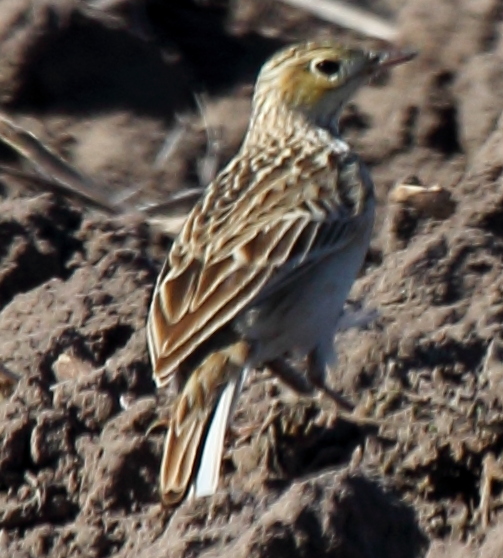
Cape Wagtail
Motacilla capensis
Order: Passeriformes / Family: Motacillidae

Wikimedia Commons
About the Cape Wagtail
The Cape Wagtail, scientifically known as Motacilla capensis, is a small passerine bird widely recognized for its distinctive tail-wagging behavior. This species belongs to the family Motacillidae and inhabits a variety of environments, primarily in southern Africa. Found in open areas near water, it frequents gardens, parks, and agricultural lands, often in close proximity to human settlements. The Cape Wagtail plays an important ecological role as an insectivore, contributing to pest control in its habitats. Its presence in urban and rural settings highlights its adaptability, making it a common sight across its range. The bird's significance extends beyond its ecological contributions, as it serves as an indicator species for environmental health in its regions. Studies on Cape Wagtail populations provide insights into the impacts of urbanization and habitat modification on wildlife. In its natural habitat, the Cape Wagtail is active throughout the year, with seasonal behaviors influenced by breeding and rainfall patterns. During the breeding season, which typically occurs in the austral spring and summer, the bird's activity peaks. It engages in territorial displays and courtship rituals, often near water sources. Outside the breeding season, the Cape Wagtail remains active, although its behavior shifts slightly as it forms small flocks and roams more widely in search of food. This bird's adaptability to various environments and its role in ecological balance underscore its importance in southern African ecosystems.
The Cape Wagtail belongs to the family Motacillidae, within the order Passeriformes. These birds typically live average 3-4 years with a maximum recorded of 6 years..
How to Identify a Cape Wagtail
The Cape Wagtail is a medium-sized bird, measuring approximately 18-20 cm in length. It has a predominantly gray upper body with a contrasting white underside and a black band across the chest. The bird's most distinguishing feature is its incessantly wagging tail, usually held upwards. Adult plumage is marked by a gray crown and nape, while the back is a uniform gray. The wings show a mix of gray and white feathers, contributing to its distinctive appearance. Juvenile Cape Wagtails have a more subdued coloration compared to adults, with less pronounced chest bands and a brownish tinge to their plumage. Males and females appear similar, making sex identification difficult in the field. Close observation may reveal subtle differences, such as the slightly brighter plumage in males. Confusion with similar species, such as the African Pied Wagtail, can occur, but the Cape Wagtail is easily distinguished by its gray back and lack of extensive black on the upperparts. In flight, the Cape Wagtail presents a slim silhouette, with its long tail accentuating its streamlined shape. When perching, it often adopts an upright posture, tail flicking rhythmically.
Having trouble telling birds apart? Upload a photo to our bird identification tool for an instant species match.
Cape Wagtail Habitat and Range
Preferred Habitat
Cape Wagtails inhabit a wide range of environments, demonstrating remarkable flexibility in habitat selection. They thrive in open areas near water, such as riverbanks, lakeshores, and wetlands. These birds are also common in urban parks and gardens, where they find abundant feeding opportunities. The elevation range of the Cape Wagtail varies from sea level to mountainous regions, typically up to 2,000 meters. Seasonal habitat shifts occur, influenced by breeding and food availability. During the breeding season, they prefer habitats with ample cover and proximity to water bodies, essential for nesting and feeding young. In non-breeding months, they may venture further into drier areas, although they continue to favor locations with some access to water. Urban presence is notable, as Cape Wagtails adapt well to human-altered landscapes, frequently seen foraging on lawns and pavements.
Geographic Range
The Cape Wagtail is primarily found in sub-Saharan Africa, with its range extending across several countries. It is a year-round resident in South Africa, Namibia, Botswana, Zimbabwe, and Mozambique. The species occupies a broad range, from the southernmost regions of South Africa up to the southern parts of Angola and Zambia. While generally non-migratory, some local movements occur, especially in response to rainfall and food availability. Population density hotspots include the coastal regions of South Africa, where conditions are favorable year-round. In these areas, the Cape Wagtail thrives due to abundant resources and suitable nesting sites. While largely absent from dense forests and arid deserts, the bird's adaptability allows it to inhabit a variety of other landscapes across its range.
Want to know which birds visit your area? Browse our backyard birds by location guides for region-specific species lists.
What Does the Cape Wagtail Eat?
The Cape Wagtail primarily feeds on insects, making it an effective insectivore. Its diet includes a wide variety of invertebrates such as beetles, flies, and caterpillars. During the breeding season, the bird's diet expands to include small aquatic organisms like tadpoles and crustaceans, which are readily available in its preferred habitats near water. Seasonal changes in diet are evident, with a greater reliance on aquatic prey during wetter months. The Cape Wagtail employs a characteristic foraging technique, walking or running along the ground with sudden stops to pick up prey. This method allows it to cover significant ground efficiently while foraging. Prey size varies, but it typically targets small to medium-sized insects. Feeding occurs throughout the day, with peaks in activity observed during early morning and late afternoon when prey is most abundant.
Cape Wagtail Behavior and Social Structure
Cape Wagtails exhibit complex social behavior, often seen in pairs or small family groups. While generally non-territorial outside the breeding season, they display strong territorial instincts during nesting periods, defending their chosen sites vigorously from intruders. Courtship displays are subtle yet intricate, involving mutual tail wagging and gentle calls between mates. These displays strengthen pair bonds and facilitate successful breeding. Flocking behavior becomes more pronounced outside the breeding season, with groups of Cape Wagtails coming together in open areas to forage communally. Their response to predators includes alarm calls and evasive flight, often seeking cover in dense vegetation or near water. Daily activity patterns align with diurnal rhythms, with increased foraging and social interactions during the cooler parts of the day.
Cape Wagtail Nesting and Reproduction
Cape Wagtails build cup-shaped nests constructed from a variety of materials, including grass, twigs, and feathers, often lined with softer materials like wool or hair. Preferred nest sites include sheltered locations such as under eaves, in crevices, or among dense shrubbery. These sites provide protection from the elements and potential predators. The typical clutch size ranges from two to five eggs, with incubation lasting about 13-14 days. Both parents share incubation duties, although the female may contribute slightly more. After hatching, the fledging period lasts approximately 14-16 days, during which both parents feed and care for the young. Cape Wagtails typically produce two broods per year, although in favorable conditions, a third brood may occur.
Cape Wagtail Sounds and Vocalizations
The Cape Wagtail's primary song is a series of sharp, clear notes delivered in quick succession. The rhythm is lively, often described as a melodic 'chit-chit-chit' interspersed with trills. Pitch varies, but the song generally maintains a consistent quality. Call notes include softer 'tsip' sounds used for communication between mates or alerting others to danger. Alarm calls are louder and more urgent, serving to warn of nearby threats. During the dawn chorus, Cape Wagtails contribute with regularity, their voices blending into the natural symphony of morning bird activity.
Interesting Facts About the Cape Wagtail
- 1Cape Wagtails often use human structures for nesting, taking advantage of eaves and rooftops for protection.
- 2Unlike many birds, Cape Wagtails are not migratory, remaining in their territories throughout the year.
- 3The tail-wagging behavior of Cape Wagtails is believed to help flush out insects from hiding, aiding in foraging.
- 4Cape Wagtails have a diverse vocal repertoire, with different calls used for communication, alarm, and courtship.
- 5They are among the few bird species that thrive in both urban and rural environments, showcasing remarkable adaptability.
- 6The Cape Wagtail's scientific name, Motacilla capensis, reflects its initial discovery in the Cape of Good Hope region.
- 7These birds can often be seen foraging near water bodies, where they catch small aquatic creatures like tadpoles.
Cape Wagtail Conservation Status
According to the IUCN, the Cape Wagtail currently holds a status of Least Concern, indicating a stable population trend. Despite this favorable status, certain threats persist, primarily habitat degradation and urban expansion. Conservation efforts focus on preserving natural habitats and maintaining water quality in wetlands, crucial for the species' survival. Historical data suggest that Cape Wagtail populations have remained relatively stable over the years, benefiting from their adaptability to altered landscapes. Continued monitoring and habitat protection remain essential to ensure the long-term stability of this widespread species.