
Chattering Giant-Honeyeater
Gymnomyza viridis
Order: Passeriformes / Family: Meliphagidae
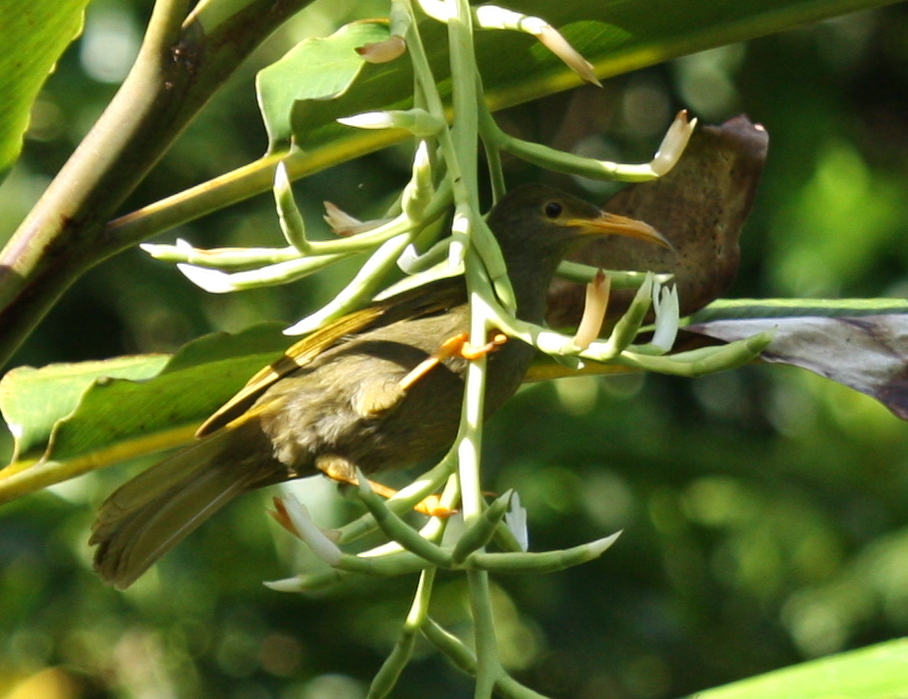
Wikimedia Commons
About the Chattering Giant-Honeyeater
The Chattering Giant-Honeyeater (Gymnomyza viridis) is a striking bird species endemic to the lush tropical forests of Vanuatu. This species is a member of the Meliphagidae family, which is well-known for its specialized adaptations for nectar feeding. Its vibrant green plumage not only provides excellent camouflage among the foliage but also serves as an identifying characteristic for birdwatchers. The Chattering Giant-Honeyeater plays a significant role in the ecosystem as a pollinator, contributing to the reproductive success of various native plant species. In addition to its ecological role, the bird's presence reflects the health of its habitat, making it an essential species for conservation monitoring efforts. Typically found in lowland forests, the Chattering Giant-Honeyeater thrives in areas rich in flowering plants. These environments provide abundant food resources, particularly nectar, which constitutes a significant portion of its diet. The bird's long, curved bill and specialized tongue are perfectly adapted for reaching deep into flowers, allowing it to access nectar that other birds cannot. This feeding behavior not only supports the honeyeater but also facilitates cross-pollination of the plants it visits. Seasonal variations in food availability can influence the Chattering Giant-Honeyeater's movements, as it may travel within its range to locate sufficient resources. During breeding seasons, the Chattering Giant-Honeyeater exhibits increased territorial behavior, with males often engaging in vocal displays to assert dominance and attract mates. These vocalizations, a series of rapid chattering sounds, can be heard throughout their habitat, particularly during the early morning hours. The breeding season coincides with the peak flowering period of many plant species, ensuring ample food supply for raising young. The Chattering Giant-Honeyeater's ecological significance as a pollinator highlights the importance of preserving its natural habitat. Forest degradation and habitat loss pose significant threats to this species, necessitating ongoing conservation efforts to maintain healthy forest ecosystems in Vanuatu.
The Chattering Giant-Honeyeater belongs to the family Meliphagidae, within the order Passeriformes. These birds typically live average 8 years, with some individuals living up to 11 years..
How to Identify a Chattering Giant-Honeyeater
Adult Chattering Giant-Honeyeaters boast a bright green plumage that serves as excellent camouflage among the forest foliage. Their underparts are slightly paler, providing a subtle contrast that can aid in identification. Juveniles appear similar to adults but may have slightly duller plumage with less definition between color shades. Males and females are generally similar in appearance, though males tend to be slightly larger, a trait not always noticeable unless observed closely. When comparing the Chattering Giant-Honeyeater to similar species, such as the Vanuatu Honeyeater, the former can be distinguished by its larger size and more vibrant coloration. In flight, the Chattering Giant-Honeyeater displays a distinctive silhouette with broad wings and a relatively long tail. Its perching posture often involves a slight forward lean, which, along with its frequent vocalizations, makes it easier to spot when surveying the forest canopy. Observant birdwatchers will notice its active movements as it flits between flowers and branches, a behavior that further differentiates it from other, more static honeyeaters.
Having trouble telling birds apart? Upload a photo to our bird identification tool for an instant species match.
Chattering Giant-Honeyeater Habitat and Range
Preferred Habitat
The Chattering Giant-Honeyeater primarily inhabits the dense lowland and montane forests of Vanuatu, thriving in regions where flowering plants abound. These forests provide the necessary resources for their diet and nesting. The bird generally occupies elevations ranging from sea level to approximately 1000 meters, though it most frequently appears in areas with rich canopy coverage and diverse plant life. Seasonal shifts in habitat use are minimal, as the honeyeater remains in forested areas year-round, favoring regions with ample nectar sources. Unlike some honeyeaters, the Chattering Giant-Honeyeater does not typically venture into urban environments, preferring the tranquility and resource density of its native forest habitats.
Geographic Range
The Chattering Giant-Honeyeater is an endemic resident of Vanuatu, with its range encompassing several islands within the archipelago. It is not migratory, instead maintaining a consistent presence throughout its range. Key population hubs include the islands of Espiritu Santo, Malakula, and Pentecost, where the species is most commonly observed. Within these regions, the Chattering Giant-Honeyeater occupies both lowland and montane forest habitats, contributing to its relatively stable population across its range. The bird's preference for specific islands and habitats highlights the importance of localized conservation efforts to ensure its continued survival.
Want to know which birds visit your area? Browse our backyard birds by location guides for region-specific species lists.
What Does the Chattering Giant-Honeyeater Eat?
Nectar serves as the primary food source for the Chattering Giant-Honeyeater, with its long, curved bill and specialized tongue perfectly adapted for accessing this vital resource. It frequently feeds on the nectar of various flowering plants, including species such as hibiscus and other native flora. In addition to nectar, the honeyeater supplements its diet with insects, which provide necessary proteins, especially during the breeding season when energy demands increase. This occasional insectivorous behavior involves gleaning insects from foliage or catching them mid-flight. The Chattering Giant-Honeyeater's foraging technique is dynamic, involving swift movements between flowers and an active search for food throughout the day.
Chattering Giant-Honeyeater Behavior and Social Structure
The Chattering Giant-Honeyeater exhibits a complex social structure, marked by territorial behavior, particularly during the breeding season. Males engage in vocal displays to establish and defend territories, using rapid chattering calls to deter rivals and attract potential mates. Courtship involves a series of displays, including song and flight maneuvers, to impress females. While generally solitary outside the breeding season, these honeyeaters may form loose flocks when food sources are abundant, especially in areas with high concentrations of flowering plants. Their response to predators is typically evasive, with individuals rapidly retreating into dense foliage when threatened. Daily activity patterns revolve around foraging and vocalizing, with peak vocal activity occurring during the early mornings and late afternoons.
Chattering Giant-Honeyeater Nesting and Reproduction
The Chattering Giant-Honeyeater constructs cup-shaped nests using grasses, leaves, and spider silk, typically located high in the forest canopy to offer protection from ground predators. Nests are strategically placed in dense foliage to remain concealed from aerial threats. Clutch sizes usually range from two to three eggs, with both parents sharing incubation duties, which generally last about two weeks. After hatching, chicks remain in the nest for another two to three weeks before fledging. Parental care continues post-fledging, with adults feeding and teaching young birds essential survival skills. The Chattering Giant-Honeyeater typically raises one brood per year, with breeding closely tied to the availability of food resources.
Chattering Giant-Honeyeater Sounds and Vocalizations
The primary song of the Chattering Giant-Honeyeater is a rapid series of chattering notes, characterized by a lively tempo and clear, ringing quality that carries well through the forest. This song serves both territorial and mating purposes, often heard during the early morning hours. In addition to its primary song, the honeyeater produces various call notes, including sharp 'chip' sounds used for communication among conspecifics. Alarm calls are more strident and urgent, warning nearby individuals of potential threats. The bird's vocal repertoire contributes to the vibrant soundscape of the Vanuatu forests, especially during the breeding season when vocal activity intensifies.
Interesting Facts About the Chattering Giant-Honeyeater
- 1The Chattering Giant-Honeyeater is one of the largest honeyeaters in the Meliphagidae family, reaching lengths of up to 25 centimeters.
- 2Despite its name, the Chattering Giant-Honeyeater's song is more musical than harsh, adding a melodic touch to Vanuatu's forests.
- 3This species plays a vital role in pollination, with its feeding habits supporting the reproduction of over 50 plant species in its range.
- 4The bird's diet includes insects, which it catches using an agile and acrobatic flight style akin to that of a flycatcher.
- 5The Chattering Giant-Honeyeater exhibits a striking green plumage that blends seamlessly with the forest canopy, offering excellent camouflage.
- 6Females take on a significant role in nest construction, often spending several days weaving together materials to ensure a sturdy structure.
- 7During courtship, males perform elaborate flight displays, showcasing their agility and vibrant plumage to attract females.
Chattering Giant-Honeyeater Conservation Status
The Chattering Giant-Honeyeater is currently classified as Least Concern by the IUCN, with its population considered stable. However, ongoing threats such as habitat loss and degradation due to logging and land conversion pose significant risks to its long-term survival. Conservation efforts in Vanuatu focus on preserving forest habitats and maintaining the ecological balance necessary to support this species. Historical data suggests that while the population has faced localized declines, concerted conservation actions have helped stabilize numbers in recent years. Continued habitat protection and sustainable land-use practices are crucial for the future of the Chattering Giant-Honeyeater.
Other Meliphagidae Species


Birds Similar to the Chattering Giant-Honeyeater
These species are often confused with the Chattering Giant-Honeyeater due to similar appearance or overlapping range.
