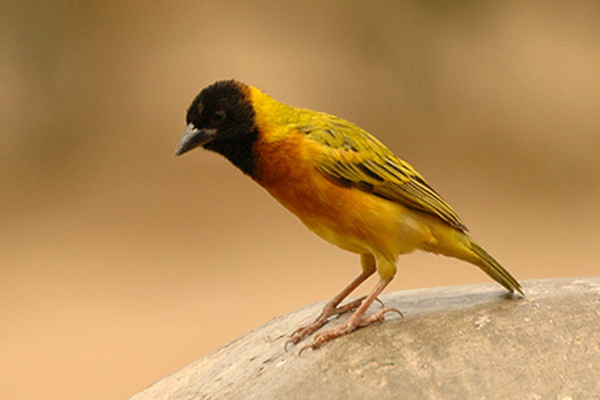
Chestnut-and-black Weaver
Ploceus castaneofuscus
Order: Passeriformes / Family: Ploceidae

Wikimedia Commons
About the Chestnut-and-black Weaver
The Chestnut-and-black Weaver (Ploceus castaneofuscus) is a small, striking bird found predominantly in the tropical regions of West and Central Africa. These weavers play a vital role in their ecosystems, primarily within the lowland forests and savannas of countries such as Nigeria, Cameroon, and the Democratic Republic of the Congo. Often seen in large colonies, these birds contribute significantly to the ecological balance by helping control insect populations and aiding in seed dispersal. During the breeding season, their vibrant plumage and intricate nests make them a focal point for birdwatchers and researchers alike. The Chestnut-and-black Weaver's adaptability also highlights its importance, as it thrives in varied habitats including wetlands and agricultural landscapes. While primarily insectivorous, their diet shifts with the seasons, reflecting their ecological flexibility. This adaptability ensures they remain a common sight in suitable habitats year-round. Notably, the Chestnut-and-black Weaver exhibits interesting seasonal behaviors. Breeding season brings a flurry of activity as males construct elaborate nests to attract females, showcasing their nest-building prowess and contributing to their unique role as ecosystem engineers. These birds also exhibit complex social behaviors, often forming large, noisy colonies that provide a spectacle of avian cooperation and communication. Their presence is a testament to the rich biodiversity of African tropical ecosystems and underscores the importance of conservation efforts in these regions.
The Chestnut-and-black Weaver belongs to the family Ploceidae, within the order Passeriformes. These birds typically live average of 5-7 years with a max recorded of 9 years.
How to Identify a Chestnut-and-black Weaver
The Chestnut-and-black Weaver is a visually striking bird with notable plumage differences between the sexes. Adult males boast a striking combination of rich chestnut and deep black feathers. The chestnut color covers the upperparts, including the head and back, while the wings and tail are a contrasting black. Females, on the other hand, display a more subdued palette with predominantly brownish tones, providing them with better camouflage. Juveniles resemble females but with slightly duller hues. One of the key field marks of the Chestnut-and-black Weaver is its distinctive chestnut hood, which is more pronounced in males. This feature, along with their black wings and tail, helps differentiate them from similar species such as the Village Weaver, which lacks the rich chestnut coloration. In flight, the weaver's silhouette is compact with rapid wing beats, and it often flies in groups, maintaining close proximity to fellow colony members. When perched, the Chestnut-and-black Weaver exhibits a slightly hunched posture, often engaging in social interactions with other weavers.
Having trouble telling birds apart? Upload a photo to our bird identification tool for an instant species match.
Chestnut-and-black Weaver Habitat and Range
Preferred Habitat
The Chestnut-and-black Weaver thrives in a variety of habitats, with a preference for tropical lowland forests and savanna regions. These birds are especially common in wetlands and marshy areas, where they find ample food and nesting sites. In regions like the Niger Delta, they exploit the lush vegetation and abundant insect life. They also adapt well to agricultural landscapes, often nesting in sugarcane fields or near rice paddies. Elevation-wise, the weaver is most often found at lower altitudes, generally below 1,500 meters. Although primarily a rural species, the Chestnut-and-black Weaver can occasionally be seen on the fringes of urban areas, particularly in parks and gardens that offer suitable nesting sites. During the dry season, these weavers may shift to areas with permanent water sources, like riverbanks and large ponds.
Geographic Range
The Chestnut-and-black Weaver's range encompasses much of West and Central Africa, particularly in countries such as Nigeria, Ghana, and the Democratic Republic of the Congo. It breeds and resides year-round in these regions, taking advantage of the tropical climate. The bird's range extends as far as the southern parts of Mali and through the Central African Republic, ensuring a widespread presence across diverse ecological zones. Notably, these weavers are non-migratory, showing a preference for established territories where food sources are reliable. Within their range, population density can be higher in areas like the Congo Basin and coastal regions of West Africa, where suitable habitats abound. Their presence is less common in the dense central African rainforests, where habitat conditions are not as favorable.
Want to know which birds visit your area? Browse our backyard birds by location guides for region-specific species lists.
What Does the Chestnut-and-black Weaver Eat?
The Chestnut-and-black Weaver predominantly feeds on insects and other small invertebrates, playing a vital role in controlling pest populations. During the wet season, when insect activity peaks, they consume a wide array of insects including beetles, caterpillars, and ants. This diet not only sustains the weavers but benefits local agriculture by reducing crop pests. In the dry season, their diet shifts to include seeds and grains, which they forage from grasses and cultivated fields. Weavers often forage in small groups, employing a technique of gleaning insects from foliage or capturing them mid-flight. They exhibit a preference for smaller prey, ensuring efficient energy intake with minimal exertion. Feeding occurs primarily during the cooler hours of early morning and late afternoon, allowing weavers to avoid the midday heat.
Chestnut-and-black Weaver Behavior and Social Structure
The Chestnut-and-black Weaver is highly social, often found in large, noisy colonies that provide a captivating display of avian interaction. These colonies serve multiple purposes, including predator deterrence and enhancing foraging efficiency. Males engage in elaborate courtship displays, weaving intricate nests to attract females. Territorial disputes are common, particularly during the breeding season, as males defend their chosen nesting sites with vigor. These weavers exhibit a fascinating communication system, using a range of vocalizations and visual signals to convey information within the colony. Flocking patterns vary with the season, with larger gatherings during the breeding season providing a spectacle of synchronized flight and coordination. In response to predators like hawks and snakes, the weavers demonstrate a remarkable cooperative defense strategy, mobbing the threat en masse. Daily activity patterns include periods of intense social interaction interspersed with quieter foraging and preening sessions.
Chestnut-and-black Weaver Nesting and Reproduction
The Chestnut-and-black Weaver is renowned for its intricate nest-building skills, with males taking the lead in constructing elaborate, woven nests. These nests are typically suspended from tree branches or reeds near water sources, providing protection from ground-based predators. The preferred nesting materials include grass, leaves, and twigs, intricately interwoven to form a sturdy structure. Clutch sizes generally range from two to four eggs, with an incubation period of about 12 to 14 days. Both parents participate in feeding the chicks, although the female primarily incubates the eggs. Fledging occurs approximately three weeks after hatching, with young birds remaining dependent on parental care for a short period post-fledging. The Chestnut-and-black Weaver often produces two broods per year, taking advantage of abundant food resources during the wet season.
Chestnut-and-black Weaver Sounds and Vocalizations
The primary song of the Chestnut-and-black Weaver is a melodious series of chirps and whistles, characterized by a rhythmic cadence and clear pitch. Their call notes are sharp and metallic, often used in social interactions within the colony. Alarm calls are more urgent and harsh, serving as a warning to fellow weavers of impending danger. During the dawn chorus, these weavers contribute to the cacophony of sounds with a lively and continuous chatter that resonates throughout their habitat. Their vocalizations, while not as complex as some songbirds, are distinctive and effective in maintaining social cohesion within their colonies.
Interesting Facts About the Chestnut-and-black Weaver
- 1Chestnut-and-black Weavers can build up to three nests in a single breeding season, showcasing their exceptional nest-building skills.
- 2These weavers often incorporate man-made materials, such as string and plastic, into their nests, demonstrating adaptability to human presence.
- 3The Chestnut-and-black Weaver's colonies can number in the hundreds, forming bustling communities that are a sight to behold during breeding season.
- 4Juvenile Chestnut-and-black Weavers fledge about 21 days after hatching, during which time they develop the skills necessary for independent survival.
- 5These weavers can adjust their diet based on environmental availability, switching from insects to grains depending on seasonal abundance.
- 6Predation pressure from snakes and raptors has led to the evolution of cooperative defense strategies in Chestnut-and-black Weaver colonies.
- 7The species' adaptability to different habitats, from wetlands to agricultural fields, makes it a resilient component of African avifauna.
Chestnut-and-black Weaver Conservation Status
The Chestnut-and-black Weaver is currently categorized as a species of Least Concern by the IUCN, reflecting its stable population trend across its range. Nevertheless, habitat loss due to agricultural expansion and deforestation poses a potential threat to localized populations. Conservation efforts focus on preserving wetlands and controlling pesticide use, ensuring these weavers continue to thrive. Historically, their populations have remained robust due to their adaptability to changing environments. Continued monitoring and habitat preservation are essential to maintaining the weaver's ecological role and presence across West and Central Africa.
Other Ploceidae Species



Birds Similar to the Chestnut-and-black Weaver
These species are often confused with the Chestnut-and-black Weaver due to similar appearance or overlapping range.