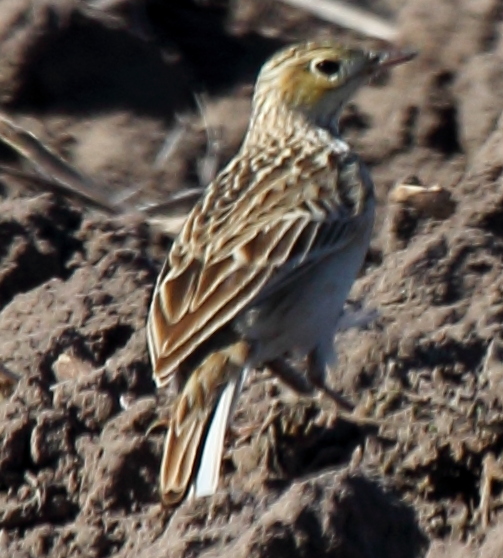
Citrine Wagtail
Motacilla citreola
Order: Passeriformes / Family: Motacillidae

Wikimedia Commons
About the Citrine Wagtail
The Citrine Wagtail (Motacilla citreola) is a vibrant, medium-sized passerine bird, renowned for its striking yellow coloration and graceful movements. This species is primarily found across Eurasia, with a breeding range extending from Eastern Europe through Central Asia to Siberia. The bird's presence is an indicator of healthy wetland ecosystems, as it typically inhabits marshes, riverbanks, and wet meadows.
The ecological role of the Citrine Wagtail is significant, as it contributes to insect population control, feeding predominantly on small invertebrates. During the breeding season, these birds favor open landscapes rich in water resources, which support abundant insect life. Their migration patterns are influenced by seasonal changes, moving to warmer regions such as the Indian subcontinent and Southeast Asia during winter.
This wagtail's adaptability allows it to thrive in various wetland habitats, from lowland marshes to alpine meadows, providing a unique opportunity for researchers to study the effects of habitat changes on migratory bird populations. Its presence often signals the return of spring in northern breeding grounds, marking an important seasonal transition in these ecosystems.
The Citrine Wagtail belongs to the family Motacillidae, within the order Passeriformes. These birds typically live typically 3-5 years, with some individuals living up to 6 years..
How to Identify a Citrine Wagtail
Adult Citrine Wagtails display a vivid yellow head and underparts that make them easy to recognize during the breeding season. Males exhibit brighter and more extensive yellow plumage than females, particularly noticeable on the head and throat. Both sexes have a gray back and wings, with white wing bars and tail edges that become visible in flight.
Juvenile Citrine Wagtails differ from adults, showing a predominantly gray-brown plumage with a paler yellow wash on the underparts, transitioning to full adult coloration as they mature. This species can be confused with the Yellow Wagtail (Motacilla flava), but the Citrine's distinct eye-catching yellow head and contrasting facial markings help in differentiating them.
When observing the Citrine Wagtail in flight, look for its undulating flight pattern and the characteristic tail-wagging behavior when perched. These field marks, along with its melodic song, make it a favorite among birdwatchers.
Having trouble telling birds apart? Upload a photo to our bird identification tool for an instant species match.
Citrine Wagtail Habitat and Range
Preferred Habitat
The Citrine Wagtail predominantly inhabits wetland ecosystems such as marshes, riverbanks, and floodplains, thriving at elevations ranging from sea level to high-altitude meadows near 4,000 meters. During migration and winter, it frequents a variety of water-rich environments, including rice paddies and irrigation channels.
In rural areas, these birds are more commonly observed, as urban development typically lacks the extensive wetland areas they prefer. Seasonal habitat shifts occur as they move from northern breeding grounds to southern wintering areas, where suitable wetland habitats are crucial for their survival.
Geographic Range
The breeding range of the Citrine Wagtail spans from Eastern Europe, including countries like Ukraine and Russia, across Central Asia to Siberia. During the winter, it migrates south to regions such as India, Bangladesh, and Southeast Asia, following well-defined migration corridors.
In its breeding range, the species is locally common, with population density hotspots found in areas rich in wetland resources. In wintering grounds, it is widespread across suitable habitats, though less concentrated compared to breeding sites.
Want to know which birds visit your area? Browse our backyard birds by location guides for region-specific species lists.
What Does the Citrine Wagtail Eat?
Citrine Wagtails primarily consume small invertebrates, focusing on insects such as flies, beetles, and aquatic larvae. During the breeding season, their diet includes a higher proportion of insects to support energy-intensive activities such as nest building and feeding young.
In winter, these wagtails adapt their diet to available resources, occasionally consuming seeds and small crustaceans when insects are scarce. Foraging typically occurs in shallow water or along muddy edges, where they actively search for prey by walking, running, or short flights.
Citrine Wagtail Behavior and Social Structure
This species exhibits a social structure that varies with the season. During the breeding season, Citrine Wagtails are territorial, defending nesting areas through vocalizations and displays. Courtship involves aerial displays and synchronized movements between pairs.
In non-breeding months, they form loose flocks while foraging, providing safety in numbers. These birds are diurnal, with peak activity occurring during morning and late afternoon. Their response to predators involves alarm calls and taking cover in dense vegetation.
Citrine Wagtail Nesting and Reproduction
Citrine Wagtails construct cup-shaped nests using grasses and other plant materials, often lined with feathers for insulation. Nests are typically located on the ground, concealed by tussocks or reeds near water bodies.
A typical clutch consists of 4-6 eggs, with both parents sharing incubation duties over a period of 12-14 days. After hatching, the chicks fledge in approximately 12-15 days, with parents continuing to provide food and protection. This species usually raises 1-2 broods per year, depending on environmental conditions.
Citrine Wagtail Sounds and Vocalizations
The primary song of the Citrine Wagtail is a series of melodious, high-pitched notes delivered in a rapid sequence, often described as a mix of trills and chirps. Their call notes include sharp 'tsip' sounds used for communication between individuals.
Alarm calls are more insistent, serving as warnings to nearby conspecifics of potential threats. During the dawn chorus, males sing vigorously to establish territory and attract mates, contributing to the rich soundscape of their habitats.
Interesting Facts About the Citrine Wagtail
- 1Citrine Wagtails can be observed wagging their tails almost incessantly, a behavior thought to aid in flushing insects from vegetation.
- 2The species was first described scientifically by Peter Simon Pallas in 1776, highlighting its long-standing presence in ornithological studies.
- 3Despite their vivid plumage, Citrine Wagtails are masters of camouflage when nesting, as their nests blend seamlessly with the surrounding vegetation.
- 4These birds undertake long migratory journeys, traveling thousands of kilometers between breeding and wintering grounds each year.
- 5Citrine Wagtails have been recorded at altitudes up to 4,000 meters, showcasing their adaptability to diverse environments.
- 6Their scientific name, Motacilla citreola, reflects their yellow coloration, with 'citreola' deriving from the Latin for lemon.
- 7The species is often seen near humans in rural landscapes, benefiting from the abundance of insects in agricultural areas.
Citrine Wagtail Conservation Status
According to the IUCN, the Citrine Wagtail is classified as Least Concern due to its widespread distribution and stable population trend. However, threats such as habitat loss from wetland drainage and pollution pose challenges to its long-term survival. Conservation efforts focus on protecting wetland habitats and promoting sustainable land use practices. Historical data suggests that population levels have remained relatively stable over recent decades, aided by international conservation agreements.