
Clicking Shrike-Babbler
Pteruthius intermedius
Order: Passeriformes / Family: Vireonidae

Wikimedia Commons
About the Clicking Shrike-Babbler
The Clicking Shrike-Babbler, scientifically known as Pteruthius intermedius, is a bird of remarkable charm and ecological importance found primarily in the montane forests of Southeast Asia. This species belongs to the family Vireonidae, sharing affinities with both shrikes and babblers, which is reflected in its name. The Clicking Shrike-Babbler is a medium-sized bird, measuring approximately 15-17 cm in length, and showcases a vibrant plumage that plays a crucial role in its identification and appeal.
This bird inhabits regions such as the Eastern Himalayas, extending through parts of northern Myanmar, Thailand, and Vietnam. Its preference for montane forests, often at elevations ranging from 1,500 to 3,000 meters, positions it as a key player in these ecosystems. The Clicking Shrike-Babbler contributes to the control of insect populations and aids in seed dispersal, underpinning its ecological significance.
Seasonally, this bird exhibits altitudinal migration, moving to lower elevations during the colder months. Such shifts ensure its survival through harsh climatic conditions and allow it to exploit different ecological niches throughout the year. The Clicking Shrike-Babbler's presence in these regions supports a diverse range of flora and fauna, highlighting its role in maintaining ecological balance.
Beyond its ecological contributions, the Clicking Shrike-Babbler is cherished by birdwatchers and naturalists for its distinctive clicking calls, which can be heard echoing through dense forest canopies. These vocalizations, coupled with its striking plumage, make it a sought-after species for avian enthusiasts exploring the forested regions of Southeast Asia.
The Clicking Shrike-Babbler belongs to the family Vireonidae, within the order Passeriformes. These birds typically live average 5 years, with a maximum recorded of 8 years..
How to Identify a Clicking Shrike-Babbler
The Clicking Shrike-Babbler boasts a striking appearance, with adult plumage characterized by a vivid combination of colors. Males typically display a rich olive-green back, contrasted by a deep rufous cap and striking black and white wing bars. The throat and underparts are a bright yellow, providing a bold contrast to the darker upperparts.
Females, while similarly colored, tend to have a slightly duller hue compared to the males, with a more subdued rufous cap and less pronounced wing markings. Juveniles resemble females but lack the full intensity of adult plumage and wing patterns, displaying a more muted palette that aids in camouflage among the dense foliage.
In flight, the Clicking Shrike-Babbler presents a compact silhouette, with broad wings and a short tail that facilitate agile maneuvering through forested habitats. Its perching posture is upright and alert, often observed perched on branches at mid-canopy level, where it can survey its surroundings with keen vigilance. This bird can occasionally be confused with the White-bellied Erpornis, but the latter lacks the characteristic rufous cap and distinctive clicking calls of the Clicking Shrike-Babbler.
Having trouble telling birds apart? Upload a photo to our bird identification tool for an instant species match.
Clicking Shrike-Babbler Habitat and Range
Preferred Habitat
The Clicking Shrike-Babbler favors montane forests, thriving in the dense, cool environments found at elevations between 1,500 and 3,000 meters. These habitats often include a mix of broadleaf and coniferous trees, providing ample cover and foraging opportunities. Within these forests, the bird is particularly associated with areas rich in moss and undergrowth, where it can forage effectively.
During different seasons, the Clicking Shrike-Babbler might shift to lower elevations, especially during winter months when higher altitudes become inhospitable. It is less commonly found in urban or heavily disturbed areas, preferring the continuity and complexity of natural forest habitats. However, in regions where forest edges abut agricultural lands, it may occasionally venture into orchards and plantations in search of food, especially during leaner times.
Geographic Range
The Clicking Shrike-Babbler's range primarily encompasses the Eastern Himalayas, stretching across northern regions of India, Nepal, and Bhutan. It also extends into northern parts of Myanmar, northern Thailand, and Vietnam. This bird is typically found in montane forest areas within these countries, favoring elevations conducive to its ecological needs.
During winter months, it might move to lower elevations within its range, but it generally remains within the same broad geographic area year-round. Population density appears higher in regions with extensive undisturbed forest cover, such as the temperate and subtropical zones of the Himalayas. Migration corridors for this species are typically altitudinal rather than latitudinal, reflecting its adaptation to specific climatic and ecological zones.
Want to know which birds visit your area? Browse our backyard birds by location guides for region-specific species lists.
What Does the Clicking Shrike-Babbler Eat?
The Clicking Shrike-Babbler primarily feeds on insects, making it an insectivore with a preference for caterpillars, beetles, and other arthropods. It forages actively among the foliage, employing a combination of gleaning and hovering techniques to capture prey. Occasionally, it may pluck insects from spider webs or leaf surfaces, showcasing its adaptability in feeding strategies.
Seasonally, the bird's diet may expand to include berries and small fruits, particularly during times when insect abundance decreases. This opportunistic feeding helps the Clicking Shrike-Babbler maintain its energy needs across different seasons. The bird typically forages in pairs or small family groups, often joining mixed-species flocks to exploit food resources more efficiently.
Clicking Shrike-Babbler Behavior and Social Structure
The Clicking Shrike-Babbler exhibits a complex social structure, often seen in pairs or small family groups. These social units maintain territories within the dense forest canopies, where they engage in frequent vocal exchanges, characterized by their distinctive clicking calls. Territorial behavior is pronounced, with males often engaging in displays and vocalizations to assert dominance and deter intruders.
Courtship displays involve both vocal and visual components, with males showcasing their vibrant plumage to attract potential mates. Flocking behavior is common outside the breeding season, with the bird forming loose associations with other insectivorous species to maximize foraging efficiency.
The Clicking Shrike-Babbler is diurnal, with peak activity occurring in the early morning and late afternoon when it actively forages and defends its territory. In response to predators, the bird employs alarm calls and may engage in mobbing behavior, particularly when faced with aerial threats.
Clicking Shrike-Babbler Nesting and Reproduction
The Clicking Shrike-Babbler constructs its nest in dense foliage, often at mid-canopy level, to provide concealment from predators. The nest is typically cup-shaped, constructed from twigs, moss, and leaves, and lined with softer materials such as feathers and grass.
Clutch size usually ranges from 2 to 4 eggs, which are incubated primarily by the female while the male provides food and protection. The incubation period lasts around 13 to 15 days, after which the chicks hatch and are cared for by both parents.
Fledging occurs approximately 14 to 16 days post-hatching, with the young remaining dependent on the parents for several weeks thereafter. The pair typically raises one or two broods per year, depending on environmental conditions and food availability.
Clicking Shrike-Babbler Sounds and Vocalizations
The primary song of the Clicking Shrike-Babbler is a series of sharp, clicking notes, reminiscent of the sound of two stones being tapped together. This rhythmic series can often be heard echoing through the forest, especially during the breeding season.
In addition to its song, the bird produces a variety of call notes, including softer whistles and buzzes used during social interactions. Alarm calls are harsher and more urgent, designed to alert conspecifics of potential threats. The dawn chorus of the Clicking Shrike-Babbler is particularly vibrant, contributing to the rich acoustic environment of its montane forest habitat.
Interesting Facts About the Clicking Shrike-Babbler
- 1The Clicking Shrike-Babbler's call is so distinctive that it often serves as a reliable auditory cue for birdwatchers in dense forests.
- 2Despite being part of the Vireonidae family, the Clicking Shrike-Babbler's behavior and appearance show a fascinating blend of shrike and babbler traits.
- 3The species exhibits strong site fidelity during the breeding season, often returning to the same nesting territories year after year.
- 4This bird's altitudinal migrations allow it to exploit different ecological niches, demonstrating remarkable adaptability to its environment.
- 5The Clicking Shrike-Babbler plays a crucial role in mixed-species flocks, often acting as a sentinel with its alertness and vocalizations.
- 6Recent genetic studies have helped clarify the evolutionary relationships of the Clicking Shrike-Babbler within the diverse Vireonidae family.
- 7Its vibrant plumage not only aids in mate attraction but also serves as a visual signal in territorial disputes with other males.
Clicking Shrike-Babbler Conservation Status
The Clicking Shrike-Babbler is currently listed as Least Concern by the IUCN, with populations considered stable. However, habitat loss due to deforestation and land conversion poses ongoing threats to its preferred montane forest habitats. Conservation efforts focus on preserving these critical habitats through protected areas and community engagement initiatives. Historical population trends have shown resilience, but continued monitoring is essential to ensure the species' long-term viability in the face of environmental change.
Other Vireonidae Species
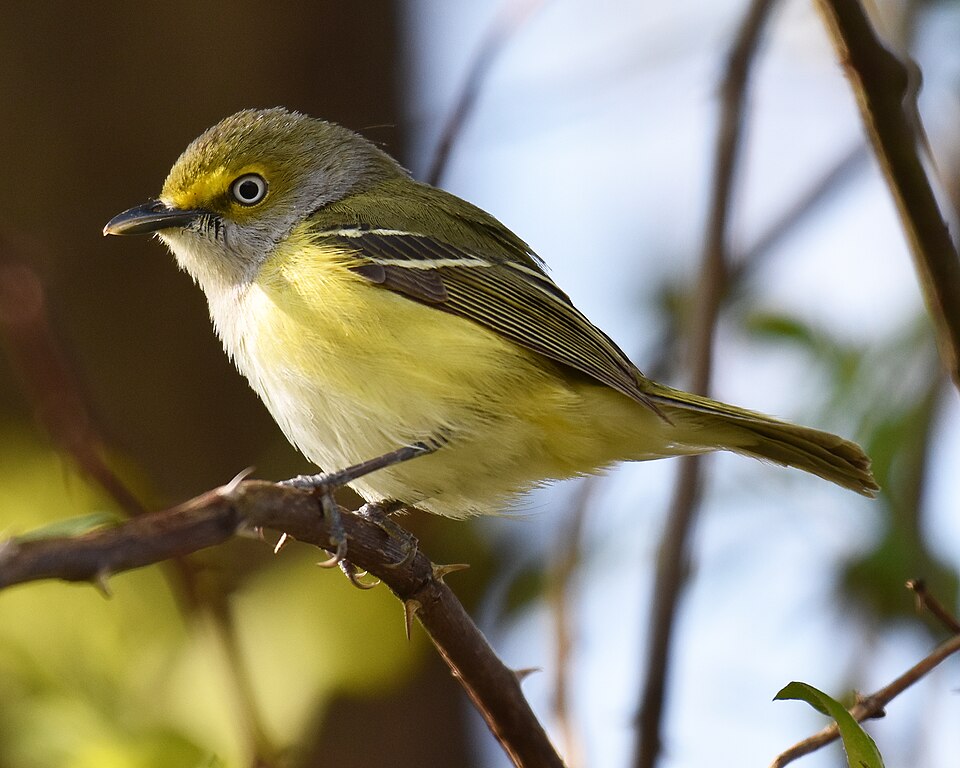

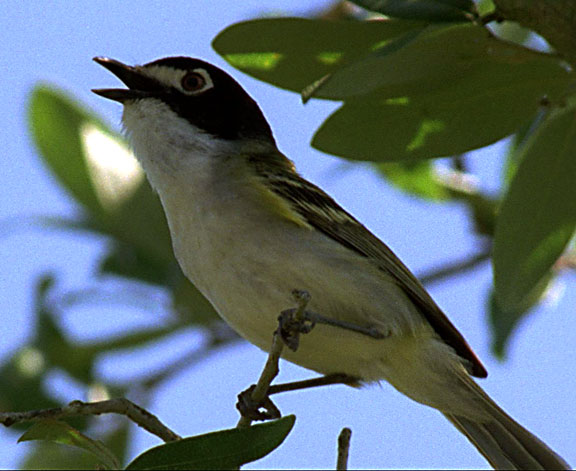

Birds Similar to the Clicking Shrike-Babbler
These species are often confused with the Clicking Shrike-Babbler due to similar appearance or overlapping range.

