
Cock-tailed Tyrant
Alectrurus tricolor
Order: Passeriformes / Family: Tyrannidae
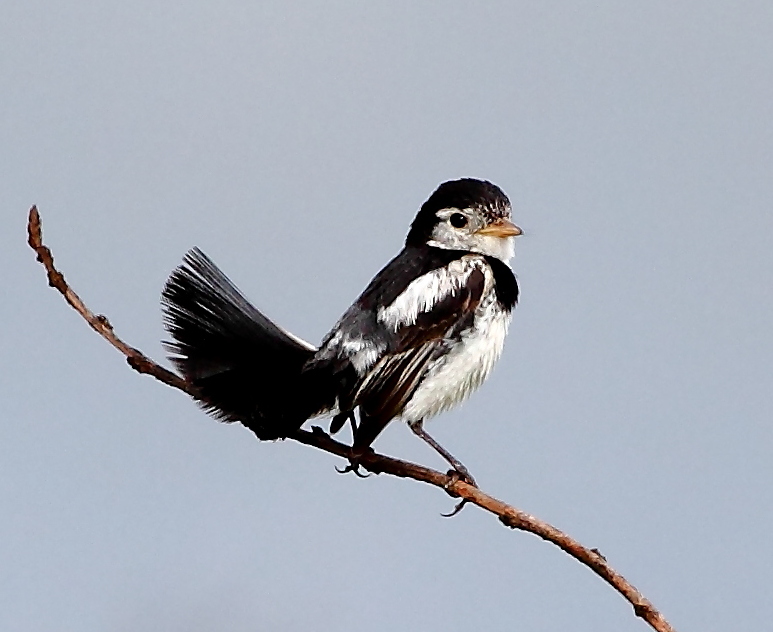
Wikimedia Commons
About the Cock-tailed Tyrant
The Cock-tailed Tyrant, known scientifically as Alectrurus tricolor, is a remarkable member of the Tyrannidae family. This small passerine bird is native to South America's subtropical and tropical regions. Its distinctive appearance and peculiar behaviors make it an intriguing subject for ornithologists and birdwatchers alike. The species inhabits grasslands, savannas, and open areas where it finds ample food and nesting sites. This bird plays a crucial role in its ecosystem as both a predator of insects and a prey species for larger birds and mammals. Found in countries such as Brazil, Paraguay, Bolivia, and Argentina, the Cock-tailed Tyrant primarily occupies the Cerrado and Pantanal regions, where its presence indicates healthy grassland ecosystems. During the breeding season, which coincides with the wet season, these birds engage in elaborate courtship displays that showcase their striking tails and vocal abilities. Outside the breeding season, they may be less conspicuous but remain vital to their habitat's ecological balance. As insectivores, they help control insect populations, which benefits both agriculture and natural plant communities. Regrettably, the Cock-tailed Tyrant faces challenges from habitat destruction due to agricultural expansion and urbanization. Conservationists emphasize the importance of preserving its habitats to maintain the species' ecological roles and ensure its survival for future generations. Efforts to protect the Cerrado and Pantanal, among other critical habitats, are vital for the longevity of this and many other species.
The Cock-tailed Tyrant belongs to the family Tyrannidae, within the order Passeriformes. These birds typically live average 3-5 years with a max recorded of 6 years..
How to Identify a Cock-tailed Tyrant
Identifying the Cock-tailed Tyrant involves noting several key features. Males are particularly striking with their long, cocked tails, which they use prominently during displays. Their plumage is mostly black with a contrasting white rump and tail tips, making them stand out against the green grasslands. Females and juveniles, on the other hand, are less conspicuous, with a predominantly brownish tone and shorter tails. These differences in plumage and tail length are essential for field identification. The species can be mistaken for other grassland birds, yet the unique tail and plumage patterns of the male Cock-tailed Tyrant provide reliable distinguishing marks. When in flight, the silhouette of this bird is distinctive-its elongated tail and rapid, flitting flight pattern set it apart. When perched, the Cock-tailed Tyrant assumes an upright posture, often on tall grass stems or low shrubs, allowing it to survey its surroundings and spot potential prey.
Having trouble telling birds apart? Upload a photo to our bird identification tool for an instant species match.
Cock-tailed Tyrant Habitat and Range
Preferred Habitat
The Cock-tailed Tyrant thrives in grassland habitats, particularly those with a mix of tall grasses and scattered shrubs. It predominates in the savannas and subtropical grasslands of the Cerrado and Pantanal regions. These areas provide the necessary cover and food resources for the bird's survival. The Cock-tailed Tyrant is mainly found at lower elevations, typically below 1,000 meters. Habitats shift slightly with the seasons, as breeding coincides with the wet season when insects are abundant. While it is not commonly found in urban areas, it may occasionally visit open fields or rural outskirts where suitable habitat persists. Conservation of these grassland environments is crucial to the species' continued existence.
Geographic Range
The Cock-tailed Tyrant's range is primarily concentrated in South America, specifically within Brazil, Paraguay, Bolivia, and parts of northern Argentina. During the breeding season, its presence is most notable in the Cerrado and Pantanal regions, where breeding pairs establish territories. These areas are known for their biodiversity and extensive grassland ecosystems. Outside the breeding season, the bird remains within these regions, exhibiting some local movements in response to food availability and environmental conditions. The species does not typically migrate long distances, but it might move to more favorable areas within its range when necessary. Population densities are highest in regions where natural grasslands are intact, though these areas are increasingly under threat from agricultural development.
Want to know which birds visit your area? Browse our backyard birds by location guides for region-specific species lists.
What Does the Cock-tailed Tyrant Eat?
The diet of the Cock-tailed Tyrant primarily consists of insects, which it hunts with agility and precision. Grasshoppers, beetles, and flies form the bulk of its diet, though it may consume other small invertebrates as well. During the wet season, when insects are most abundant, the bird takes advantage of this food surplus to fuel breeding activities. The Cock-tailed Tyrant employs a sit-and-wait foraging strategy, perching on tall grasses or low shrubs to spot and then sally forth to capture prey mid-air or on the ground. This bird typically forages alone or in pairs, focusing on areas where insect activity is high. Its foraging activity peaks during the cooler morning and late afternoon hours, avoiding the intense midday heat.
Cock-tailed Tyrant Behavior and Social Structure
Alectrurus tricolor exhibits intriguing behavioral patterns, particularly during the breeding season. Males perform elaborate aerial displays, utilizing their long tails to attract females. These displays are accompanied by distinctive vocalizations, often performed from prominent perches to maximize visibility and audibility. The Cock-tailed Tyrant is generally a solitary bird, forming pairs only during the breeding period. Territorial behavior is pronounced, with males defending their chosen area vigorously against intruders. Outside the breeding season, the Cock-tailed Tyrant becomes more elusive, often blending into the grasslands. It remains active during daylight hours, with peak activity in the morning and late afternoon. In response to predators, such as raptors, it relies on its cryptic plumage and quick flight to evade capture.
Cock-tailed Tyrant Nesting and Reproduction
The nesting habits of the Cock-tailed Tyrant involve careful selection of site and materials. Nests are typically constructed low in dense grass clumps or small shrubs, providing cover from predators and harsh weather. The female primarily builds the nest, using fine grasses and plant fibers to create a small cup-shaped structure. Clutch size ranges from two to three eggs, which the female incubates for approximately two weeks. Both parents participate in feeding and caring for the young once they hatch. Fledging occurs about two weeks after hatching, with young birds quickly gaining independence. The species usually raises one brood per year, though favorable conditions may occasionally allow for a second.
Cock-tailed Tyrant Sounds and Vocalizations
The Cock-tailed Tyrant's vocalizations are both distinctive and varied, playing a crucial role in communication and courtship. Its primary song consists of a series of high-pitched, melodious notes delivered in rapid succession. This song is often heard during the breeding season as males assert their presence and attract mates. Call notes include sharp 'peet' sounds used for maintaining contact between pairs or signaling alarm. When threatened, the bird emits a harsh, chattering call, alerting others to potential danger. Dawn and dusk are the peak periods for vocal activity, with the bird contributing to the dawn chorus with its characteristic song.
Interesting Facts About the Cock-tailed Tyrant
- 1The Cock-tailed Tyrant is named for its unique tail shape, which resembles a cock's tail when fanned out during display.
- 2Despite its small size of about 12 cm, the Cock-tailed Tyrant's tail can account for nearly half of its overall length.
- 3The species shows remarkable site fidelity, often returning to the same breeding territories year after year.
- 4Cock-tailed Tyrants are one of the few tyrant flycatchers that rely heavily on grassland habitats, highlighting their ecological specialization.
- 5Researchers have noted that the Cock-tailed Tyrant is particularly sensitive to habitat changes, making it an important indicator species for grassland health.
- 6The bird's striking black-and-white plumage provides excellent camouflage among the contrasting light and shadows of its grassy environment.
- 7Courting males use their tails not just for display, but also to produce a distinctive sound by vibrating their tail feathers during flight.
Cock-tailed Tyrant Conservation Status
The Cock-tailed Tyrant faces conservation challenges due to habitat loss and fragmentation. The IUCN lists the species as Near Threatened, with a declining population trend. The primary threats include agricultural expansion, particularly soy cultivation and cattle ranching, which reduce the availability of suitable grasslands. Conservation efforts focus on habitat preservation and restoration, including the establishment of protected areas within the Cerrado and Pantanal regions. Historical population changes reflect gradual declines as grassland habitats diminish. Continued monitoring and habitat conservation are essential to reversing this trend and ensuring the species' future viability.
Other Tyrannidae Species


Birds Similar to the Cock-tailed Tyrant
These species are often confused with the Cock-tailed Tyrant due to similar appearance or overlapping range.

