
Cook Islands Reed Warbler
Acrocephalus kerearako
Order: Passeriformes / Family: Acrocephalidae
Wikimedia Commons
About the Cook Islands Reed Warbler
The Cook Islands Reed Warbler (Acrocephalus kerearako) is an intriguing small passerine bird endemic to the Cook Islands, primarily inhabiting the islands of Atiu, Mitiaro, and Mangaia. This warbler plays a crucial ecological role by controlling insect populations and contributing to seed dispersal, which helps maintain the intricate balance of the island ecosystems. The bird's significance extends beyond ecology, as it also holds cultural importance to the indigenous people of the region, often appearing in local folklore and traditions. Typically found in dense forest undergrowth and reed beds, the Cook Islands Reed Warbler is well-adapted to its environment, showing preferences for areas with abundant vegetation where it can find both food and shelter. During the breeding season, which occurs from October to March, the warbler becomes more vocal and territorial, engaging in complex song displays to attract mates and establish breeding territories. In non-breeding months, the bird remains within its preferred habitats but may demonstrate reduced vocal activity, focusing on foraging and maintenance behaviors instead. This seasonal variation in behavior underscores the warbler's adaptability and its intrinsic connection to the rhythms of its island environment.
The Cook Islands Reed Warbler belongs to the family Acrocephalidae, within the order Passeriformes. These birds typically live average 5 years, maximum recorded 9 years..
How to Identify a Cook Islands Reed Warbler
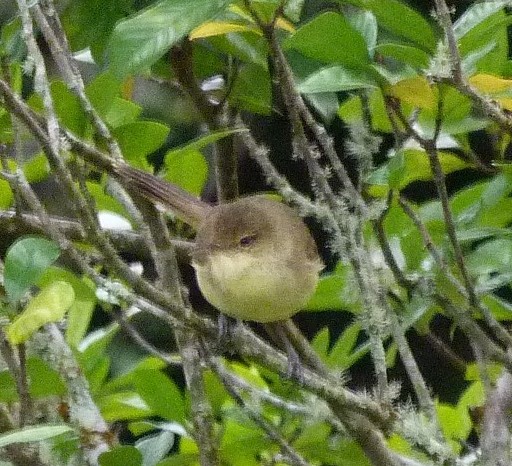
Identifying the Cook Islands Reed Warbler involves noting several key field marks. Adult birds display a predominantly olive-brown plumage with a lighter, often buff-colored underbelly. Their wings tend to be slightly darker, providing a subtle contrast that aids in camouflage among the dense foliage. Juveniles resemble adults but often have slightly duller, more muted tones. There is little sexual dimorphism, with males and females appearing similar, though males may be slightly larger on average. This similarity helps reduce confusion in field identification. The warbler's slender bill is a crucial feature, well-suited for insect foraging. Observers may also note the bird's distinctive flight pattern, characterized by rapid, fluttering wingbeats interspersed with short glides. When perched, the Cook Islands Reed Warbler often adopts an upright posture, frequently swaying as it navigates through the vegetation. This behavior, combined with its vocalizations, can help distinguish it from similar species, such as the Polynesian Warbler, which tends to have a more robust build and different vocal repertoire.
Having trouble telling birds apart? Upload a photo to our bird identification tool for an instant species match.
Cook Islands Reed Warbler Habitat and Range
Preferred Habitat
The Cook Islands Reed Warbler thrives in a variety of habitats, prominently featuring dense forest undergrowth and reed beds. These environments provide the necessary cover and food resources. The warbler favors lowland and mid-elevation areas, typically from sea level up to 300 meters, where the vegetation is rich and varied. While it predominantly occupies rural and natural areas, the bird can occasionally be found near human-modified landscapes, provided there is sufficient vegetation cover. Seasonal habitat shifts are minimal, as the warbler remains primarily within its established territories year-round, adapting to changes in food availability rather than relocating extensively.
Geographic Range
The Cook Islands Reed Warbler is an island endemic, with its range restricted to a few key islands within the Cook Islands such as Atiu, Mitiaro, and Mangaia. It does not migrate, maintaining a year-round presence within these islands. Its population density tends to be highest in areas with extensive forest cover and reed beds, where it can easily find food and nesting sites. While it is not considered widespread beyond these islands, it is relatively common within its limited range, illustrating the bird's adaptation to the specific conditions of its island habitat.
Want to know which birds visit your area? Browse our backyard birds by location guides for region-specific species lists.
What Does the Cook Islands Reed Warbler Eat?
The primary diet of the Cook Islands Reed Warbler consists of insects and other small invertebrates, which it gleans from leaves and branches. Its secondary diet includes fruits and seeds, particularly during periods when insect prey is less abundant. Seasonal changes in diet are linked to the availability of food resources, with insects becoming scarcer during the wetter months. Foraging techniques include deftly picking insects from foliage and occasionally sallying out to catch flying prey. Prey size is typically small to medium, allowing the warbler to handle it efficiently with its slender bill. Feeding occurs throughout the day, with peaks in the early morning and late afternoon, times when insect activity is highest.
Cook Islands Reed Warbler Behavior and Social Structure
The Cook Islands Reed Warbler exhibits a variety of interesting behaviors that underscore its adaptability and territorial nature. It is generally a solitary bird, except during the breeding season, when pairs form and become more visible. Territorial behavior is prominent during this period, with males actively defending their areas through vocal displays and occasional physical confrontations. Courtship involves intricate song displays, and once a pair has formed, both partners participate in nest building and rearing of young. Flocking is uncommon except for occasional loose associations during non-breeding months when food sources are abundant. In response to predators, the warbler exhibits alarm calls and evasive flight, utilizing dense vegetation for cover. Daily activity patterns center around feeding and territory maintenance, with peak activity in the cooler parts of the day.
Cook Islands Reed Warbler Nesting and Reproduction
Nesting for the Cook Islands Reed Warbler typically involves constructing a cup-shaped nest from grasses and leaves, intricately woven to provide stability and concealment. Nests are often located in dense shrubbery or reeds, offering protection from predators and harsh weather. The clutch size usually consists of 2-3 eggs, which both parents incubate for about 14 days. After hatching, fledging occurs approximately 12-14 days later, during which both parents remain involved in feeding and protecting the chicks. The warbler may have one to two broods per year, depending on environmental conditions and food availability.
Cook Islands Reed Warbler Sounds and Vocalizations
The primary song of the Cook Islands Reed Warbler is a melodic series of whistles and trills, often described as both rhythmic and tuneful. It serves not only for mate attraction but also for territory defense. Call notes, in contrast, are shorter and more abrupt, used for communication between mates or as alarm signals when predators are near. During the dawn chorus, the warbler's song is particularly prominent, contributing to the overall symphony of the island's avian community.
Interesting Facts About the Cook Islands Reed Warbler
- 1The Cook Islands Reed Warbler is one of the few species endemic to the Cook Islands, highlighting its unique evolutionary path.
- 2Despite its small size, the Cook Islands Reed Warbler can produce songs that carry over considerable distances in dense forests.
- 3During the breeding season, males can sing for several hours a day, showcasing their endurance and territorial vigor.
- 4The warbler's diet shifts seasonally, showcasing its adaptability to the island's dynamic ecosystem.
- 5Females often participate equally in nest building, a trait not common in all warbler species.
- 6The Cook Islands Reed Warbler's alarm calls are effective in warning other birds in the vicinity of potential predators.
- 7This warbler species was first described by ornithologists in the late 19th century, emphasizing its relatively recent scientific recognition.
Cook Islands Reed Warbler Conservation Status
The Cook Islands Reed Warbler currently holds a status of Least Concern according to the IUCN, with its population considered stable. The primary threats include habitat loss due to agricultural expansion and potential introduction of invasive species. Conservation efforts focus on habitat preservation and monitoring population trends. Historically, the population has remained relatively stable, largely due to the isolated nature of its habitat, which minimizes human disturbance.


