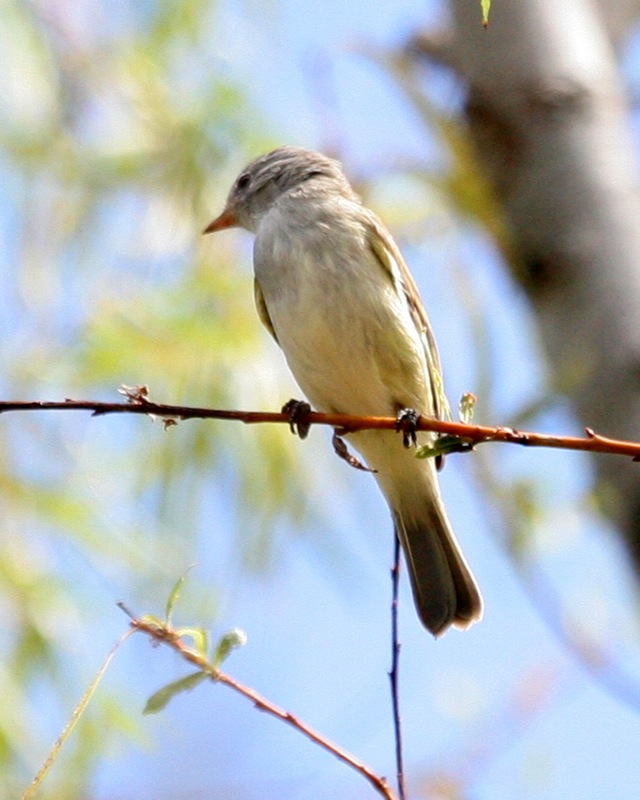
Coopmans's Elaenia
Elaenia brachyptera
Order: Passeriformes / Family: Tyrannidae

Wikimedia Commons
About the Coopmans's Elaenia
The Coopmans's Elaenia, known scientifically as Elaenia brachyptera, is a small tyrant flycatcher primarily found in the cloud forests of the Andes mountains. This bird is a member of the Tyrannidae family, known for its remarkable adaptability and diverse feeding habits. Typically inhabiting elevations between 1,500 and 3,000 meters, this elaenia thrives in regions of dense vegetation and high humidity. Key populations exist in Colombia, Ecuador, and Peru, where the bird contributes significantly to the ecosystem by aiding in seed dispersal and insect population control.
In these regions, the Coopmans's Elaenia plays a pivotal role in maintaining the ecological balance. As an insectivore and frugivore, it helps regulate insect populations and facilitates forest regeneration through seed dispersal. The bird's presence is an indicator of healthy forest environments, making it a species of interest for conservationists.
During the breeding season, typically from March to August, the Coopmans's Elaenia becomes more vocal and territorial. Outside the breeding period, this bird exhibits a more solitary lifestyle, though it may occasionally form loose associations with mixed-species flocks. Its adaptability to various microhabitats within the cloud forest underscores its ecological significance and resilience, even as it faces habitat loss due to deforestation.
The Coopmans's Elaenia belongs to the family Tyrannidae, within the order Passeriformes. These birds typically live average 4 years, with the maximum recorded lifespan unknown..
How to Identify a Coopmans's Elaenia
The Coopmans's Elaenia is a small bird, measuring approximately 13-14 centimeters in length. It exhibits a predominantly olive-green plumage with subtle grayish tones on the head and lighter underparts. The bird's short wings are a distinctive feature, contributing to its scientific name 'brachyptera,' meaning short-winged.
Juvenile Coopmans's Elaenias closely resemble adults but possess slightly duller coloration and streaked underparts. Differences between males and females are minimal, with both sexes exhibiting similar plumage and size. However, males may display slightly brighter alar bars during the breeding season.
In flight, the short-winged appearance of the Coopmans's Elaenia is evident, aiding in quick and agile movements through dense forest canopies. When perched, it often adopts an upright posture, occasionally flicking its wings and tail.
Having trouble telling birds apart? Upload a photo to our bird identification tool for an instant species match.
Coopmans's Elaenia Habitat and Range
Preferred Habitat
The Coopmans's Elaenia primarily inhabits the cloud forests of the Andes, favoring areas with dense foliage and high humidity. These forests, located at elevations ranging from 1,500 to 3,000 meters, provide the ideal environment for the bird's dietary and nesting needs.
In its natural habitat, the Coopmans's Elaenia frequents forest edges, secondary growth, and clearings. While it primarily resides in rural mountainous regions, it can occasionally be found in less densely populated urban areas that retain significant vegetation cover. Seasonal shifts in habitat are minor, as the bird largely remains within the same elevation and forest type year-round.
Geographic Range
The Coopmans's Elaenia occupies a specific range along the Andes mountains, primarily in Colombia, Ecuador, and Peru. It is a non-migratory species, with its presence largely confined to these countries.
During the breeding season, the bird can be observed more frequently in the middle to upper elevations of its range, capitalizing on the availability of nesting sites and food resources. Population density hotspots include the cloud forests of the Western and Central Andes, where dense vegetation supports a higher concentration of these birds.
Want to know which birds visit your area? Browse our backyard birds by location guides for region-specific species lists.
What Does the Coopmans's Elaenia Eat?
The Coopmans's Elaenia primarily feeds on insects and fruits. Its diet consists mainly of small arthropods, such as beetles, ants, and caterpillars, supplemented by a variety of fruits and berries.
During the rainy season, when insect populations peak, the bird shifts its diet to capitalize on the abundance of protein-rich prey. Conversely, in drier months, it relies more on fruits, which aid in hydration and energy. The Coopmans's Elaenia employs a gleaning foraging technique, carefully picking insects and fruits from foliage. It typically feeds during the early morning and late afternoon, timing its activity with peak insect availability.
Coopmans's Elaenia Behavior and Social Structure
Coopmans's Elaenia exhibits a largely solitary lifestyle but shows some social behavior during the breeding season. Males become territorial, defending their breeding sites with vocalizations and displays. They engage in courtship flights, showcasing their agility and plumage to attract females.
The species is predominantly diurnal, with peak activity occurring during the cooler parts of the day. Although generally solitary, the Coopmans's Elaenia may join mixed-species flocks outside the breeding season, which can offer protection from predators. When threatened, it employs evasive maneuvers and seeks cover in dense foliage.
Coopmans's Elaenia Nesting and Reproduction
The Coopmans's Elaenia builds cup-shaped nests, typically constructed from twigs, moss, and plant fibers, and lined with softer materials. Nests are usually placed in the fork of a tree branch, at heights ranging from 2 to 5 meters above the ground.
A typical clutch consists of 2 to 3 eggs, with both parents participating in incubation, which lasts about 14 days. After hatching, chicks remain in the nest for approximately 15 to 18 days before fledging. The species usually raises one brood per year, although favorable conditions may allow for a second.
Coopmans's Elaenia Sounds and Vocalizations
The Coopmans's Elaenia is known for its distinctive song, characterized by a series of clear, melodious whistles with a rhythmic pattern. This primary song is often delivered from a high perch, especially during the breeding season.
Call notes include short, sharp chips used for communication between individuals. Alarm calls are harsher and more urgent, serving to alert mates or deter intruders. During the dawn chorus, Coopmans's Elaenia contributes to the symphony of sounds typical of Andean cloud forests.
Interesting Facts About the Coopmans's Elaenia
- 1The Coopmans's Elaenia was named in honor of noted ornithologist Paul Coopmans, recognized for his contributions to the study of Neotropical birds.
- 2This elaenia's short wings, a key trait, are an adaptation for maneuverability within dense forest canopies, allowing it to navigate quickly through branches.
- 3While primarily an insectivore, the Coopmans's Elaenia also feeds on a wide variety of fruits, making it an important seed disperser in its ecosystem.
- 4Despite its small size, the Coopmans's Elaenia plays a significant role in controlling insect populations within its habitat, showcasing its ecological importance.
- 5The species' preference for cloud forests highlights the importance of these unique habitats, known for their high biodiversity and complex ecosystems.
- 6Coopmans's Elaenia exhibits a fascinating blend of solitary and social behaviors, joining mixed-species flocks that enhance its foraging efficiency and protection from predators.
- 7During the breeding season, the male Coopmans's Elaenia's vocal displays intensify, as it seeks to establish territory and attract a mate, reflecting its dynamic reproductive strategies.
Coopmans's Elaenia Conservation Status
The IUCN currently lists the Coopmans's Elaenia as a species of least concern, with a stable population trend. However, habitat destruction due to deforestation poses a growing threat. Conservation efforts focus on protecting cloud forests and promoting sustainable land use practices. Historically, the bird's population has remained relatively stable due to its adaptability, but ongoing habitat loss necessitates vigilant conservation measures.
Other Tyrannidae Species


Birds Similar to the Coopmans's Elaenia
These species are often confused with the Coopmans's Elaenia due to similar appearance or overlapping range.