Cozumel Vireo
Vireo bairdi
Order: Passeriformes / Family: Vireonidae

Wikimedia Commons
About the Cozumel Vireo
The Cozumel Vireo, scientifically known as Vireo bairdi, is a small passerine bird endemic to Cozumel Island, off the eastern coast of Mexico's Yucatán Peninsula. It is a member of the Vireonidae family, which includes a variety of small to medium-sized insect-eating birds. The Cozumel Vireo holds significant ecological value due to its restricted range, making it an essential species for understanding the island's unique avian biodiversity. This bird thrives in the subtropical or tropical moist lowland forests and rural gardens on the island, adapting well to both native and altered habitats. Seasonal behaviors are particularly interesting for the Cozumel Vireo. Unlike many of its mainland relatives, it does not migrate, remaining on the island throughout the year. During the breeding season, which typically occurs from March to July, the Cozumel Vireo becomes highly territorial, fiercely defending its nesting sites. Its sedentary nature makes it an excellent subject for studies on island biogeography and evolutionary adaptation. The Cozumel Vireo plays a crucial role in the island's ecosystem as an insectivore, helping to control insect populations, which can have a cascading effect on plant health and the overall ecological balance. Its presence also serves as an indicator of habitat health, reflecting the state of the forested areas where it resides. Researchers and conservationists pay close attention to this species, as its restricted range and habitat make it vulnerable to environmental changes and human activities.
The Cozumel Vireo belongs to the family Vireonidae, within the order Passeriformes. These birds typically live average 5 years with a maximum recorded of 7 years..
How to Identify a Cozumel Vireo
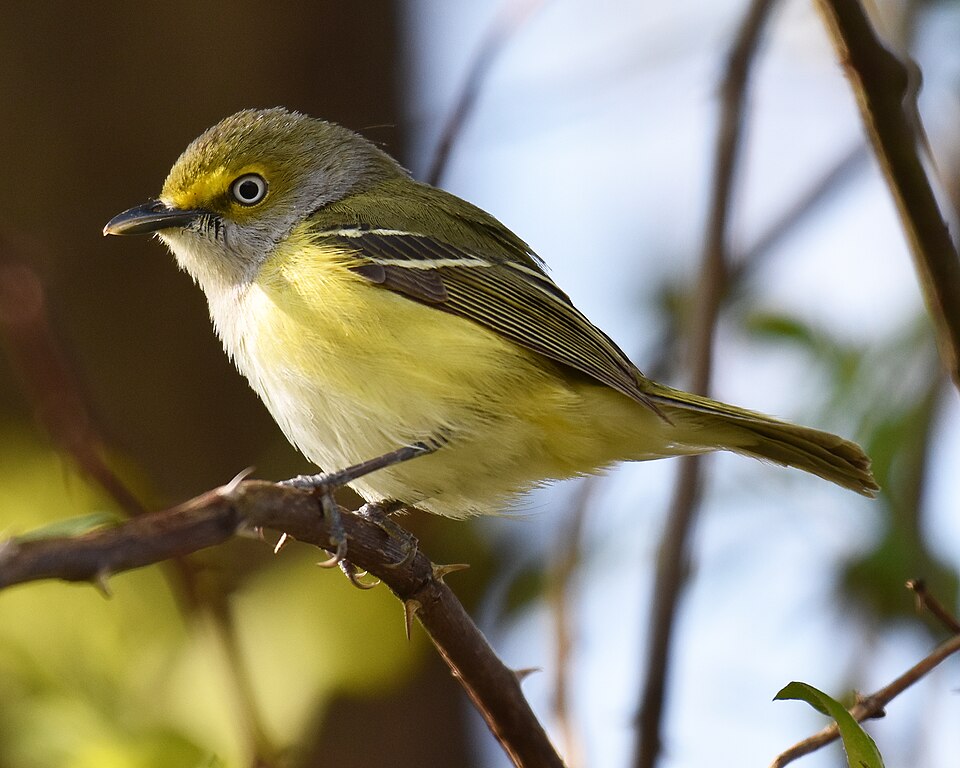
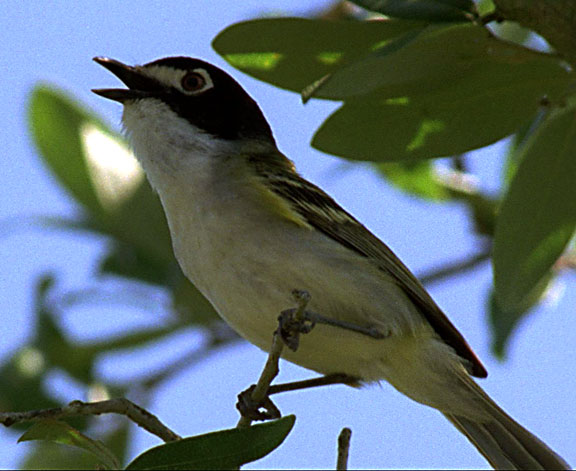
The Cozumel Vireo is a small bird, measuring approximately 12-14 cm in length and weighing between 10-15 grams. It is characterized by its olive-green upperparts and pale yellowish underparts, which provide excellent camouflage against the foliage of its forest habitat. Adults possess a distinct white eyebrow stripe and a grayish crown, which can be used to differentiate them from other vireo species. Juveniles resemble adults but may have duller plumage and less pronounced markings. There is little sexual dimorphism in this species, meaning males and females look quite similar, though males may exhibit slightly brighter plumage during the breeding season. In flight, the Cozumel Vireo shows a short, rounded tail and broad wings, typical of many vireo species. Its perching posture is upright, often observed hopping along branches as it searches for insects. While similar in appearance to the Mangrove Vireo or the Yellow-green Vireo, the Cozumel Vireo's unique range and specific plumage details help prevent confusion for experienced birders.
Having trouble telling birds apart? Upload a photo to our bird identification tool for an instant species match.
Cozumel Vireo Habitat and Range
Preferred Habitat
The Cozumel Vireo inhabits subtropical or tropical moist lowland forests and can also be found in rural gardens and secondary growth areas on Cozumel Island. It occupies areas at low elevations, typically not exceeding 100 meters above sea level. These birds prefer dense thickets and forest edges, where they can find ample food and nesting sites. Unlike many birds, the Cozumel Vireo does not exhibit significant seasonal habitat shifts, as it remains on the island year-round. While primarily a forest dweller, it can adapt to areas with human presence, such as gardens and plantations, but it is less common in urban settings compared to more adaptable species.
Geographic Range
The Cozumel Vireo's range is extremely limited, confined to Cozumel Island off the coast of the Yucatán Peninsula in Mexico. As an island endemic, it does not migrate and remains on Cozumel throughout the year. Its population density is highest in the central and southern parts of the island, where forested areas are more prevalent. Observations suggest that while the bird is not widespread, it is locally common on the island due to its adaptation to both natural and modified environments. This restricted range makes it vulnerable to habitat loss and other environmental pressures.
Want to know which birds visit your area? Browse our backyard birds by location guides for region-specific species lists.
What Does the Cozumel Vireo Eat?
The diet of the Cozumel Vireo primarily consists of insects and other arthropods. It forages among the foliage, gleaning insects from leaves and branches with quick, agile movements. During the breeding season, when the demand for food is highest, it may also consume small quantities of fruits and berries, although insects remain the mainstay of its diet. The bird's foraging technique involves hopping along branches and occasionally hanging upside down to reach prey on the undersides of leaves. Its small size allows it to exploit a variety of insect prey, from small beetles to caterpillars, contributing to pest control in its habitat.
Cozumel Vireo Behavior and Social Structure
The Cozumel Vireo is a solitary bird outside of the breeding season, typically observed alone or in pairs. During the breeding season, it becomes territorial, with males singing to defend their territories and attract mates. Courtship displays include males presenting food to females and engaging in synchronized movements. While generally sedentary, the Cozumel Vireo exhibits a high level of site fidelity, often returning to the same territory each year. It is not known to form flocks, even in the non-breeding season, and maintains a low profile, often detected by its song rather than sight. In response to predators, it relies on its camouflage and remains still, blending into the foliage.
Cozumel Vireo Nesting and Reproduction
The Cozumel Vireo constructs an open cup nest, typically placed in the fork of a tree branch, using materials such as grasses, leaves, and spider webs for binding. Nests are usually located 1-3 meters above the ground, providing some protection from ground predators. The female lays a clutch of 2-4 eggs, which she incubates for about 12-14 days. Both parents participate in feeding the chicks and removing waste from the nest. The chicks fledge approximately 10-12 days after hatching, although they remain dependent on the parents for food and protection for several weeks post-fledging. The Cozumel Vireo typically raises one brood per year, although favorable conditions may sometimes allow for a second brood.
Cozumel Vireo Sounds and Vocalizations
The Cozumel Vireo's song is a series of short, melodic phrases with a rich, sweet quality, often repeated several times in succession. Its call notes are sharp and distinct, used for communication between mates and signaling alarm when predators are near. During the dawn chorus, the Cozumel Vireo is particularly vocal, with males singing vigorously to establish territory boundaries and attract mates. The song resembles that of other vireos but is distinguished by its unique phrasing and rhythm, making it an important cue for identification in the field.
Interesting Facts About the Cozumel Vireo
- 1The Cozumel Vireo is one of only a handful of bird species endemic to Cozumel Island, highlighting its unique evolutionary path.
- 2Despite its small size, the Cozumel Vireo plays a significant role in controlling insect populations, impacting the island's overall ecosystem.
- 3The Cozumel Vireo's song is often described as more musical than that of other vireos, making it a favorite among birdwatchers.
- 4Unlike many vireo species, the Cozumel Vireo does not migrate, providing year-round opportunities for observation.
- 5The bird's ability to adapt to secondary growth and gardens aids in its survival, despite habitat pressures.
- 6Cozumel Vireos have been observed using spider webs in their nests, showcasing their resourcefulness in nest construction.
- 7The Cozumel Vireo's limited range makes it a prime candidate for studies in island biogeography and conservation biology.
Cozumel Vireo Conservation Status
The Cozumel Vireo is currently listed as Near Threatened on the IUCN Red List due to its limited range and habitat vulnerability. Population trends suggest a decline, primarily due to habitat loss from urbanization and tourism development on Cozumel Island. Conservation efforts focus on habitat preservation and monitoring population dynamics to prevent further decline. Historical data indicates that the species was more widespread before significant human settlement, highlighting the impact of human activities on its population. Continued efforts to protect its natural habitat are crucial to ensuring the long-term survival of this island endemic.