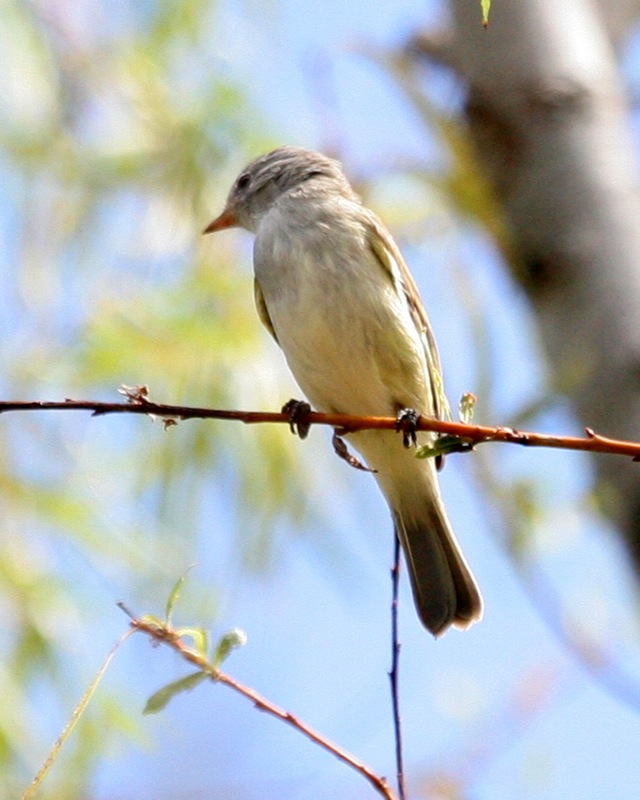
Crested Doradito
Pseudocolopteryx sclateri
Order: Passeriformes / Family: Tyrannidae

Wikimedia Commons
About the Crested Doradito
The Crested Doradito, scientifically known as Pseudocolopteryx sclateri, is a small but charismatic member of the Tyrannidae family. This species is particularly notable for its affinity towards marshy areas, where its presence signifies a healthy ecosystem. The Crested Doradito's ecological role as an insectivore helps control insect populations, balancing the marshland ecology. Found primarily in the wetlands of Argentina, Paraguay, and Uruguay, this bird's seasonal behaviors include local migrations that follow the availability of food and nesting sites. During the breeding season, these birds are often seen in pairs, diligently searching for suitable nesting locations amidst the reeds and tall grasses. Outside the breeding season, they may join mixed-species flocks, contributing to the dynamic avian community of the wetlands. The significance of the Crested Doradito extends beyond its role in pest control. It serves as an indicator species for wetland health, with its presence suggesting adequate water quality and vegetation cover. As wetlands face increasing threats from agricultural expansion and climate change, the conservation of species like the Crested Doradito becomes crucial. Observing these birds can offer insights into the broader environmental conditions of their habitats. Throughout the year, the Crested Doradito displays fascinating seasonal behaviors. During the austral summer, breeding activities peak, and males can be observed performing elaborate displays to attract females. As autumn approaches, some populations undertake short-distance migrations to lower elevations, where food resources remain plentiful. This adaptability to changing environments underscores the resilience of Pseudocolopteryx sclateri, yet it also highlights the need for continued habitat preservation efforts to ensure their survival.
The Crested Doradito belongs to the family Tyrannidae, within the order Passeriformes. These birds typically live average 3-4 years with a max recorded of 6 years.
How to Identify a Crested Doradito
The Crested Doradito boasts a striking appearance, characterized by its vibrant yellow underparts and contrasting olive-brown upperparts. A defining feature is its pointed crest, which can be raised or lowered depending on the bird's mood and activity. Adult males and females are similar in appearance, though females may exhibit slightly duller plumage. Juveniles resemble adults but can be distinguished by their less vivid coloration and more pronounced streaking on the upperparts. In flight, the Crested Doradito presents a compact silhouette with rapid wingbeats. Its tail, relatively short and slightly rounded, aids in agile maneuvers through dense vegetation. When perched, this bird typically sits upright, often adopting a cocked tail posture. While observing the Crested Doradito, birders might confuse it with the closely related Sulphur-bellied Tyrannulet, which shares similar habitats. However, the Crested Doradito can be differentiated by its more pronounced crest and less extensive yellow on the belly. Careful attention to these subtle field marks is crucial for accurate identification in the field.
Having trouble telling birds apart? Upload a photo to our bird identification tool for an instant species match.
Crested Doradito Habitat and Range
Preferred Habitat
The Crested Doradito thrives in wetland habitats, particularly favoring marshes with dense reed beds and tall grasses. These environments provide ample cover and abundant insect prey. Found at elevations ranging from sea level to about 1,500 meters, the species demonstrates some adaptability to different wetland types. During the breeding season, these birds prefer secluded, undisturbed areas with abundant vegetation. In contrast, non-breeding individuals may venture into more open or degraded habitats if food resources are sufficient. Although primarily a rural species, the Crested Doradito occasionally appears in urban wetlands where suitable conditions exist. Seasonal habitat shifts occur as these birds move in response to water levels and food availability. This adaptability allows them to exploit a variety of wetland ecosystems across their range.
Geographic Range
The Crested Doradito's range encompasses several South American countries, including Argentina, Paraguay, and Uruguay. It breeds primarily in the southern regions of Buenos Aires and Entre Ríos provinces in Argentina, where extensive wetlands provide ideal nesting sites. During the austral winter, some populations migrate northward to Paraguay and the northern provinces of Argentina, such as Corrientes and Formosa, where milder conditions prevail. Migration corridors often follow river systems, which offer continuous wetland habitats. Population density hotspots include the Iberá Wetlands in northeastern Argentina, a critical area for conservation efforts. These regions support significant numbers of Crested Doraditos throughout the year, highlighting the importance of preserving these vital habitats.
Want to know which birds visit your area? Browse our backyard birds by location guides for region-specific species lists.
What Does the Crested Doradito Eat?
The diet of the Crested Doradito consists primarily of insects, with a preference for small arthropods such as beetles, flies, and caterpillars. These birds forage actively within the dense vegetation of their wetland habitats, employing a strategy known as 'gleaning' to pick insects off leaves and stems. During the breeding season, the demand for protein-rich food increases, prompting the Crested Doradito to expand its diet to include spiders and other small invertebrates. As the seasons change, so does the availability of prey, leading to adjustments in the bird's feeding habits. In winter, when insects are less abundant, these birds may rely more on spiders and other hardy invertebrates that remain active during cooler months. The Crested Doradito typically forages during daylight hours, with peak activity occurring in the early morning and late afternoon when temperatures are moderate, and prey is most active.
Crested Doradito Behavior and Social Structure
The Crested Doradito exhibits a range of behaviors that reflect its adaptation to wetland environments. Socially, these birds tend to form monogamous pairs during the breeding season, with both partners actively participating in territory defense. Males perform elaborate courtship displays, including aerial acrobatics and vocalizations, to attract and maintain the attention of females. Outside of the breeding season, Crested Doraditos may join mixed-species flocks, which can enhance foraging efficiency and provide safety in numbers against predators. Territorial behavior is most pronounced during nesting, with pairs aggressively defending their chosen area against intruders. In response to predators, Crested Doraditos often employ distraction displays, such as feigning injury, to lead threats away from their nests. Daily activity patterns align with the availability of insect prey, with increased feeding activity during the cooler parts of the day.
Crested Doradito Nesting and Reproduction
Crested Doraditos construct cup-shaped nests using a variety of plant materials, including grasses, reeds, and moss. These nests are typically located low to the ground, often concealed within dense vegetation to protect against predators. The clutch size usually consists of two to four eggs, which are incubated primarily by the female for about 14 days. During this period, the male remains vigilant, defending the territory and occasionally bringing food to the incubating female. Once hatched, the chicks grow rapidly, fledging approximately 12 to 15 days after hatching. Both parents share feeding duties, ensuring a steady supply of insects to the growing chicks. The Crested Doradito typically raises one brood per year, although favorable conditions can sometimes lead to a second brood.
Crested Doradito Sounds and Vocalizations
The primary song of the Crested Doradito is a series of high-pitched, melodic notes delivered in rapid succession. This song is often described as a musical trill, with a rhythm that can be likened to the sound of a small stream. In addition to their song, Crested Doraditos produce distinct call notes that serve various purposes, including communication between mates and signaling alarm in the presence of predators. During the dawn chorus, males are particularly vocal, establishing and defending their territories with song. In contrast, alarm calls are sharper and more abrupt, designed to alert nearby birds to potential danger.
Interesting Facts About the Crested Doradito
- 1The Crested Doradito is one of the few species within its genus, highlighting its unique evolutionary path.
- 2Studies indicate that the Crested Doradito can adapt to various wetland types, showcasing its ecological flexibility.
- 3This bird's name, 'Doradito,' refers to its golden-yellow underparts, a striking feature against its marshland backdrop.
- 4The Crested Doradito's call can be heard over 100 meters away, aiding in territory defense and mate attraction.
- 5A Crested Doradito nest is often so well hidden that it can remain undetected even in well-surveyed areas.
- 6Despite its small size, the Crested Doradito plays a crucial role in controlling insect populations in its habitat.
- 7Crested Doraditos have been observed using their crests in social displays, a behavior that remains a subject of study.
Crested Doradito Conservation Status
Currently, the Crested Doradito holds a status of Least Concern according to the IUCN Red List, although its population trend is not entirely clear. The primary threats to this species include habitat loss due to agricultural expansion and wetland drainage. Conservation efforts focus on preserving and restoring wetland habitats, which are critical not only for the Crested Doradito but for a multitude of other species as well. Increased awareness and habitat protection are necessary to ensure the long-term survival of this species, particularly in regions where wetland ecosystems face significant pressure from human activities.
Other Tyrannidae Species


Birds Similar to the Crested Doradito
These species are often confused with the Crested Doradito due to similar appearance or overlapping range.