
Cyclorhis coibae
Cyclorhis coibae
Order: Passeriformes / Family: Vireonidae
About the Cyclorhis coibae
The Cyclorhis coibae, commonly known as the Coiba Greenlet, is a fascinating avian species that captivates birdwatchers with its vibrant appearance and engaging behavior. This bird is a member of the Vireonidae family, a group renowned for its diverse and colorful members. The Coiba Greenlet predominantly inhabits the tropical forests of Panama, with a particular affinity for the lowland rainforests found on Coiba Island, from which it derives its name. The island's unique ecosystem plays a crucial role in supporting the bird's population. The Coiba Greenlet is a vital component of its habitat's ecological web, participating in seed dispersal and insect population control. Its presence is indicative of a healthy forest ecosystem. The bird's role in these tropical ecosystems cannot be overstated, as it aids in maintaining the balance of plant and insect communities. Seasonal behaviors of the Cyclorhis coibae are closely linked to the tropical climate it inhabits. Unlike many migratory songbirds, the Coiba Greenlet remains within its range throughout the year, adapting its activities to the wet and dry seasons. During the wet season, food resources are abundant, allowing the greenlet to indulge in a varied diet. In the dry season, it may travel short distances in search of food, showcasing its adaptability. Overall, the Cyclorhis coibae is not only significant for its ecological contributions but also as a representation of the biodiversity found in Panama's rainforests. Its conservation is essential for preserving the unique natural heritage of the region.
The Cyclorhis coibae belongs to the family Vireonidae, within the order Passeriformes. These birds typically live average 5 years; max recorded 7 years.
How to Identify a Cyclorhis coibae
Adult Cyclorhis coibae display a predominantly olive-green plumage, which makes them stand out among the dense foliage of their rainforest habitat. Their underparts are a lighter green, providing a subtle contrast to their darker wings and back. The bird's head is adorned with a distinctively dark eye stripe that extends from the beak to the nape, highlighting its expressive eyes. Juvenile Coiba Greenlets tend to have duller plumage, lacking the full vibrancy of adult birds. Males and females appear similar, making gender identification challenging in the field. Confusion may arise with similar species such as the Red-eyed Vireo, but the Coiba Greenlet's lack of a red eye and its overall greener appearance are distinguishing features. In flight, the Coiba Greenlet exhibits a compact silhouette, with short, rounded wings and a slightly notched tail. Its perching posture is typically upright, often seen as it forages methodically among branches. Observers should note its deliberate movements and the characteristic head-bobbing behavior it displays while searching for food.
Having trouble telling birds apart? Upload a photo to our bird identification tool for an instant species match.
Cyclorhis coibae Habitat and Range
Preferred Habitat
The Cyclorhis coibae predominantly inhabits tropical lowland rainforests, with a preference for dense, humid areas rich in understory vegetation. Coiba Island in Panama serves as a primary location for this species, where it thrives in the island's protected natural environments. While it favors undisturbed forest interiors, it can occasionally be observed near forest edges or secondary growth areas. The greenlet typically resides at elevations ranging from sea level to approximately 500 meters, rarely venturing into higher altitudes. Seasonal habitat shifts are minimal due to Panama's climate, allowing the Coiba Greenlet to remain in its preferred habitat year-round. While it is primarily a forest dweller, it has been sporadically spotted in rural gardens and secondary forest patches, indicating a degree of adaptability. The bird's presence in urban areas is uncommon, as it relies heavily on the complex structure of natural forests for feeding and nesting.
Geographic Range
The breeding and year-round range of the Cyclorhis coibae is confined to Panama, with its primary population centered on Coiba Island. This limited distribution underscores its specialized habitat requirements. The species' range does not extend significantly beyond the island, although isolated sightings on nearby mainland areas have been reported. Migration is not a characteristic behavior of the Coiba Greenlet, as it is a sedentary species. Thus, its presence remains consistent across its range throughout the year. Population density hotspots are primarily located within the protected confines of Coiba National Park, where conservation efforts help ensure its continued survival. The lack of significant range expansion highlights the importance of maintaining suitable habitat conditions on Coiba Island to support this unique avian species.
Want to know which birds visit your area? Browse our backyard birds by location guides for region-specific species lists.
What Does the Cyclorhis coibae Eat?
The diet of the Cyclorhis coibae is diverse, consisting primarily of insects and other small invertebrates, which it gleans from leaves and branches. Caterpillars, beetles, and spiders feature prominently in its diet, providing essential nutrients for its sustenance. During the wet season, when insect populations are at their peak, the Coiba Greenlet takes full advantage of the abundance, actively foraging throughout the day. In addition to insects, the bird occasionally consumes fruits and berries, supplementing its diet with plant material. This opportunistic feeding behavior allows it to adapt to seasonal variations in food availability. The greenlet employs a methodical foraging technique, moving deliberately through foliage as it inspects leaves for prey. Its acute vision and dexterous movements enable it to capture even the smallest insects with precision. Prey size typically ranges from small to medium-sized insects, demonstrating its versatility as a forager.
Cyclorhis coibae Behavior and Social Structure
The Cyclorhis coibae exhibits intriguing social and territorial behaviors. It often forages in small family groups or pairs, maintaining close communication through vocalizations. Territoriality is evident during the breeding season, as pairs establish and defend nesting territories against intruders. The Coiba Greenlet's courtship displays involve a series of vocal duets, with both males and females contributing to a melodious exchange that strengthens pair bonds. Flocking behavior is not prominent in this species, as it tends to remain solitary or in small groups. Its response to predators involves a combination of vocal alarms and evasive maneuvers, utilizing dense foliage for cover. Daily activity patterns reveal a preference for foraging during the cooler hours of the morning and late afternoon, with periods of rest during the midday heat. These behaviors reflect the bird's adaptability to its environment and its strategic use of resources.
Cyclorhis coibae Nesting and Reproduction
The nesting habits of the Cyclorhis coibae are adapted to its forest environment. Nests are usually constructed in the forks of trees or shrubs, made from twigs, grasses, and leaves woven together to create a sturdy cup-like structure. Preferred nesting locations are within dense vegetation, providing camouflage and protection from predators. Clutch sizes generally range from two to three eggs, with an incubation period lasting approximately 14 days. Both parents participate in incubation and feeding duties, showcasing a cooperative breeding strategy. After hatching, fledglings remain in the nest for about 12 to 14 days before venturing out. Parental care extends beyond fledging, as adults continue to feed and protect their young until they become independent. The Cyclorhis coibae typically raises one to two broods per year, depending on food availability and environmental conditions.
Cyclorhis coibae Sounds and Vocalizations
The primary song of the Cyclorhis coibae is a series of short, melodious phrases with a clear, ringing quality. These phrases often include repeated notes and are delivered in a rhythmic pattern. Call notes are sharp and abrupt, serving as both contact calls and alarms. Alarm calls are higher in pitch and more rapid, indicating the presence of potential threats. During the dawn chorus, the Coiba Greenlet contributes its voice to the symphony of the forest, with its song standing out due to its distinctive cadence. The song's quality can be likened to a series of tinkling bells, resonating through the forest and enhancing the auditory landscape of its habitat.
Interesting Facts About the Cyclorhis coibae
- 1The Cyclorhis coibae is named after Coiba Island, a UNESCO World Heritage site known for its rich biodiversity.
- 2Despite its vibrant appearance, the Coiba Greenlet's plumage provides excellent camouflage among the rainforest foliage.
- 3The Coiba Greenlet's song is a key component of the dawn chorus, creating a lively soundscape in its habitat.
- 4This species exhibits a unique courtship display involving vocal duets that strengthen pair bonds.
- 5The Cyclorhis coibae plays a vital role in its ecosystem by controlling insect populations and aiding in seed dispersal.
- 6Coiba Island, home to the Coiba Greenlet, is the largest island in Central America, providing critical habitat for many endemic species.
- 7The Coiba Greenlet is non-migratory, remaining within its range throughout the year, unlike many other vireos.
Cyclorhis coibae Conservation Status
The IUCN currently lists the Cyclorhis coibae as a species of Least Concern, but its limited distribution and reliance on specific habitats make it vulnerable to environmental changes. Population trends remain stable, yet threats such as deforestation and habitat fragmentation pose significant risks. Conservation efforts on Coiba Island, including the establishment of Coiba National Park, play a crucial role in safeguarding this species and its habitat. Historical population changes have been minimal, but ongoing monitoring is essential to detect any shifts that could impact the greenlet's future. Maintaining the integrity of its forest habitat is paramount to ensuring the continued survival of the Coiba Greenlet.
Other Vireonidae Species
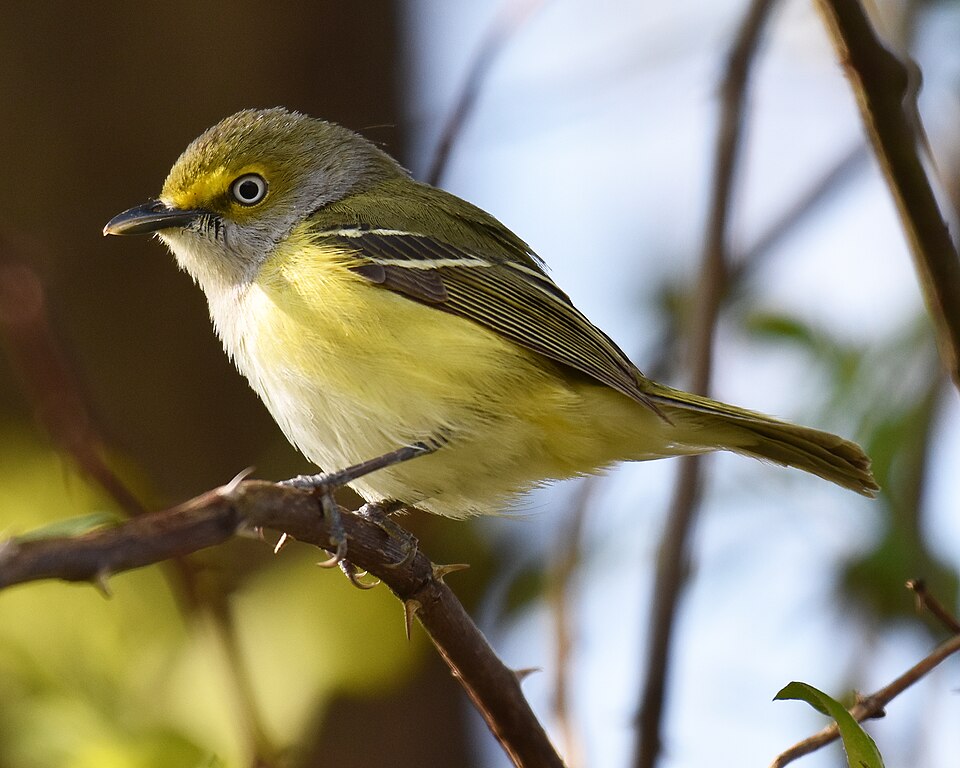

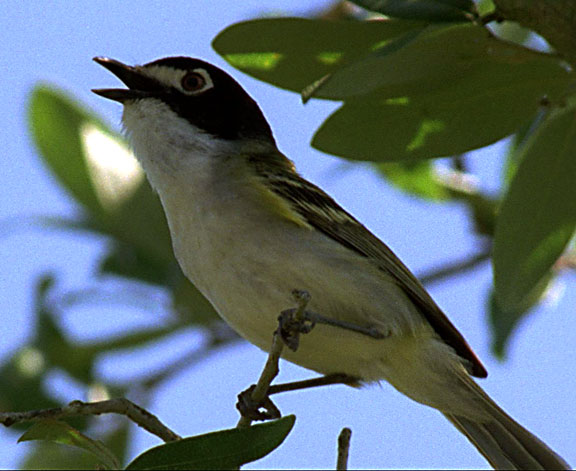

Birds Similar to the Cyclorhis coibae
These species are often confused with the Cyclorhis coibae due to similar appearance or overlapping range.
