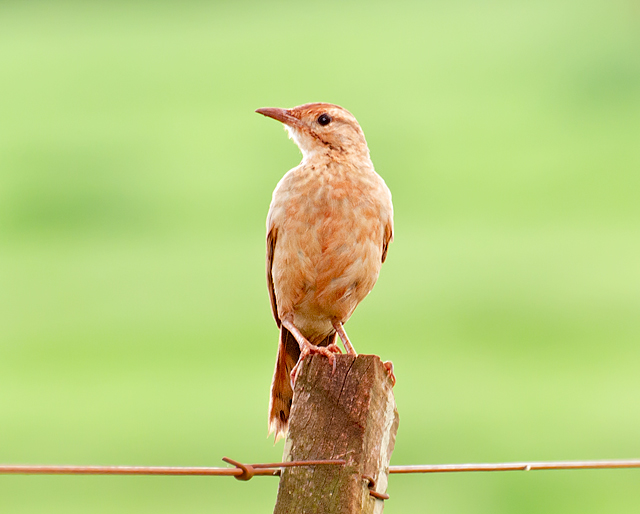
Des Murs's Wiretail
Sylviorthorhynchus desmurii
Order: Passeriformes / Family: Furnariidae

Wikimedia Commons
About the Des Murs's Wiretail
Des Murs's Wiretail (Sylviorthorhynchus desmurii) is a captivating bird species belonging to the Furnariidae family, native to the dense forests and shrubby areas of southern South America. This bird is primarily found in the Patagonian and Andean regions, specifically in Chile and Argentina, where it inhabits thickets and undergrowth in temperate forests. Its unique ecological role involves being an insectivore, actively participating in the control of insect populations within its habitat. The Des Murs's Wiretail exhibits notable seasonal behaviors, often remaining in areas with dense vegetation throughout the year, though some altitudinal movements occur in response to seasonal climate changes. The bird's presence in these regions underscores its adaptability and its importance in maintaining the ecological balance. The wiretail's long, thin, and wire-like tail feathers are especially striking, serving as a key identifying feature and aiding in navigation through thick vegetation. This bird's ecological significance extends to its role as a prey species for larger birds of prey and mammals, making it a vital link in the food web. Observing Des Murs's Wiretail in its natural habitat provides insights into the complexities of forest ecosystems, highlighting the intricate interactions between flora and fauna. The bird's preference for dense foliage and its reliance on specific habitat types make it an indicator species for the health of temperate forest ecosystems. Its presence or absence can signal changes in habitat quality, making it a valuable subject for ecological studies. As an inhabitant of temperate forests, Des Murs's Wiretail also serves as an important component of the avian biodiversity in the region. By studying its behavior, diet, and nesting habits, researchers can gain a deeper understanding of the ecosystem dynamics in which this species thrives. This bird's role in controlling insect populations and its interactions with other forest species help maintain a balanced ecosystem, demonstrating the interconnectedness of life in these unique habitats.
The Des Murs's Wiretail belongs to the family Furnariidae, within the order Passeriformes. These birds typically live average 3-4 years with a maximum recorded of 5 years..
How to Identify a Des Murs's Wiretail
Des Murs's Wiretail is a small bird, measuring about 15 cm in length, including its characteristic long tail feathers. The adult plumage is predominantly brown, with a rufous crown and back that blend seamlessly into its environment. The underparts are paler, often appearing white or light gray, providing a subtle contrast. Unlike many bird species, there is little sexual dimorphism; both males and females display similar coloration and tail length. Juveniles resemble adults but may exhibit slightly duller plumage and shorter tail feathers. The distinctive tail, composed of elongated, wire-like feathers, sets Des Murs's Wiretail apart from similar species. These tail feathers extend well beyond the body length, giving the bird its unique silhouette. In flight, the tail feathers trail behind, while perching, they often droop downward, accentuating the bird's agile, slender form. The wiretail can be confused with other members of the Furnariidae family, but its tail is a definitive distinguishing feature. Additionally, the bird's relatively plain coloration and preference for dense undergrowth make visual observation challenging, requiring keen observation skills to spot this elusive species in its natural habitat.
Having trouble telling birds apart? Upload a photo to our bird identification tool for an instant species match.
Des Murs's Wiretail Habitat and Range
Preferred Habitat
Des Murs's Wiretail thrives in dense, shrubby habitats within temperate forests, often found at elevations ranging from sea level to 2000 meters. The bird favors areas with thick undergrowth, such as bamboo thickets and secondary growth forests, where it can forage and nest with relative safety. Although primarily associated with forested regions, Des Murs's Wiretail can occasionally be found in open shrublands, particularly those adjacent to forest edges. Seasonal shifts in habitat are minimal, as the bird remains a resident of its chosen environment year-round, relying on its habitat's structural complexity for protection and sustenance. Urban presence is rare, as the wiretail prefers isolated, undisturbed areas, away from human activity. Its dependence on specific habitat types underscores the importance of conserving forested regions and maintaining biodiversity within these ecosystems.
Geographic Range
The range of Des Murs's Wiretail is confined to the southern regions of South America, specifically within Chile and Argentina. In Chile, it inhabits areas from the central regions southward to Tierra del Fuego, while in Argentina, its range extends across the Andean foothills and into the Patagonian steppes. The bird is non-migratory, maintaining a relatively stable presence within its range throughout the year. However, some individuals may undertake altitudinal movements in response to seasonal changes in temperature and food availability. Population density tends to be higher in regions with abundant dense vegetation, such as the Valdivian temperate rainforests, where suitable habitat conditions support a more substantial population. The wiretail's limited range and habitat specificity underscore its vulnerability to environmental changes, emphasizing the need for targeted conservation efforts in these regions.
Want to know which birds visit your area? Browse our backyard birds by location guides for region-specific species lists.
What Does the Des Murs's Wiretail Eat?
Des Murs's Wiretail primarily feeds on insects and other small arthropods, making it an integral part of the ecosystem's insect control. The bird employs a methodical foraging technique, moving through dense vegetation and probing bark, leaves, and ground litter for prey. Its diet includes beetles, caterpillars, spiders, and other invertebrates, with prey size generally small to medium. Seasonal variations in diet occur, with the wiretail adapting to the availability of different insect species throughout the year. During the breeding season, the bird may increase its intake of protein-rich prey to meet the nutritional demands of raising young. Foraging typically occurs during daylight hours, with the bird spending considerable time searching for food in the undergrowth, using its long tail for balance and maneuvers.
Des Murs's Wiretail Behavior and Social Structure
Des Murs's Wiretail exhibits a solitary or paired social structure, especially during the breeding season when it becomes territorial. Pairs remain monogamous, engaging in intricate courtship displays involving vocalizations and synchronized movements. The bird's territorial behavior includes defending its nesting area from intruders, often through vocal warnings and physical displays. Outside the breeding season, wiretails may join small mixed-species flocks, benefiting from the safety in numbers and increased foraging efficiency. The bird's daily activity pattern involves active foraging during the morning and late afternoon, with periods of rest and preening in between. In response to predators, the wiretail relies on its cryptic plumage and swift, darting flight to evade capture. Its behavior reflects a well-adapted strategy for surviving in dense, forested environments where concealment and agility are essential for survival.
Des Murs's Wiretail Nesting and Reproduction
Des Murs's Wiretail constructs its nest in densely vegetated areas, often selecting sites with ample cover to protect against predators. The nest, a cup-shaped structure, is composed of twigs, leaves, and plant fibers, meticulously woven together to create a secure environment for the eggs. Nesting sites are typically located in low shrubs or at the base of dense thickets, providing camouflage and protection. The clutch size usually consists of two to three eggs, with both parents sharing incubation duties over a period of approximately 14 days. Once hatched, the chicks are altricial, requiring extensive parental care and feeding. Fledging occurs after about 15 to 18 days, with parents continuing to feed the young until they become fully independent. Des Murs's Wiretail typically raises one brood per year, though conditions may allow for a second in particularly favorable seasons.
Des Murs's Wiretail Sounds and Vocalizations
The primary song of Des Murs's Wiretail is a series of melodious trills and whistles, delivered at a moderate pitch with a rhythmic cadence. This song is often used in territorial displays and courtship, providing a means of communication between mates. Call notes are soft and understated, consisting of short chirps and clicks used in close-range communication. Alarm calls, in contrast, are sharp and urgent, alerting conspecifics to potential threats. During the dawn chorus, the wiretail's song contributes to the symphony of forest sounds, blending seamlessly with other avian species. The bird's vocalizations play a crucial role in maintaining pair bonds and coordinating activities within dense, visually obscured habitats.
Interesting Facts About the Des Murs's Wiretail
- 1Des Murs's Wiretail was named after the French ornithologist Marc Athanase Parfait Œillet des Murs, who made significant contributions to avian studies.
- 2The bird's unique tail feathers can measure up to twice the length of its body, aiding in balance and maneuvering through dense foliage.
- 3Des Murs's Wiretail plays a crucial role in controlling insect populations in its habitat, feeding on a variety of invertebrates.
- 4Despite its small size, the wiretail is an agile flier, capable of rapid maneuvers in the dense forest undergrowth.
- 5The Des Murs's Wiretail's song, a series of trills and whistles, is often heard during the early morning hours, contributing to the forest's acoustic landscape.
- 6This bird species is non-migratory, remaining in its forest habitat throughout the year, with some altitudinal movements in response to seasonal changes.
- 7The Des Murs's Wiretail's cryptic plumage provides excellent camouflage, making it challenging to spot in its natural environment.
Des Murs's Wiretail Conservation Status
Des Murs's Wiretail is currently listed as Least Concern by the IUCN, with population trends considered stable. However, habitat destruction and fragmentation pose significant threats, particularly as agricultural expansion and logging encroach upon its natural habitats. Conservation efforts focus on protecting forested regions and promoting sustainable land-use practices to preserve the bird's habitat. Historical population changes have been influenced by both natural and anthropogenic factors, highlighting the need for ongoing monitoring and research. By maintaining healthy forest ecosystems, conservationists aim to ensure the long-term survival of Des Murs's Wiretail and the myriad species that share its habitat.
Other Furnariidae Species


Birds Similar to the Des Murs's Wiretail
These species are often confused with the Des Murs's Wiretail due to similar appearance or overlapping range.