
Dwarf Vireo
Vireo nelsoni
Order: Passeriformes / Family: Vireonidae

Wikimedia Commons
About the Dwarf Vireo
The Dwarf Vireo, scientifically known as Vireo nelsoni, represents a fascinating member of the Vireonidae family. This diminutive bird occupies a special niche in the montane forests of western and central Mexico, where it thrives in subtropical and temperate woodlands. Often found at elevations ranging from 1,500 to 2,500 meters, the Dwarf Vireo plays a crucial ecological role as an insectivore. Its presence helps control insect populations, contributing to the health of its forest ecosystem.
The bird's significance extends beyond its ecological contributions. The Dwarf Vireo holds cultural importance in regions where it resides, often appearing in local folklore and serving as an indicator species for the health of its habitat. Its reliance on specific forest types makes it a valuable subject for studies on habitat conservation and forest management strategies in the Neotropics. As climate change and deforestation threaten its habitat, understanding the needs and behaviors of the Dwarf Vireo becomes increasingly critical.
Seasonally, the Dwarf Vireo exhibits fascinating behaviors. During the breeding season, which spans from late March to July, it becomes more vocal and visible as it establishes territories and attracts mates. Outside the breeding months, the bird tends to be quieter and more secretive, blending seamlessly into the dense foliage. Its presence, however, remains vital all year round as it continues to engage in insect control and seed dispersion, supporting forest regeneration and health.
The Dwarf Vireo belongs to the family Vireonidae, within the order Passeriformes. These birds typically live average 3 years, with a maximum recorded of 5 years..
How to Identify a Dwarf Vireo
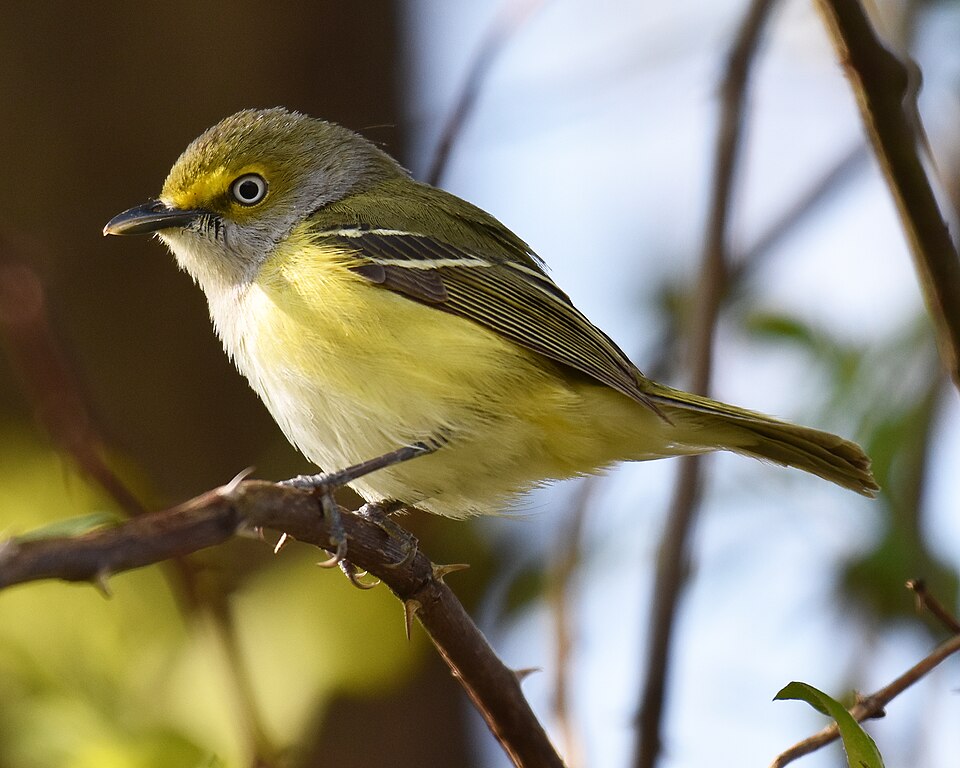
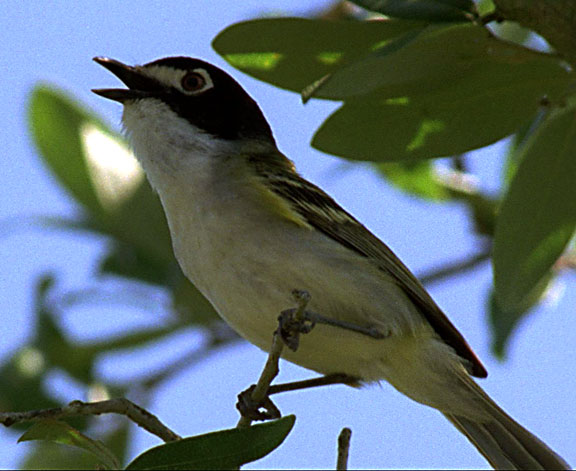
Identifying the Dwarf Vireo involves observing several key characteristics. Adults possess a striking olive-green plumage on their upperparts, which contrasts with a whitish underbelly. This coloration allows them to blend seamlessly into the foliage of their montane forest habitats. The bird's head features a hint of gray, complemented by a subtle white eye-ring, giving it a mild-mannered appearance. The bill is relatively short and stout, typical of the Vireo genus.
Juvenile Dwarf Vireos resemble adults but with slightly duller plumage, lacking the full intensity of the olive-green seen in mature birds. Both males and females exhibit similar plumage, making it challenging to distinguish between the sexes based solely on appearance. However, during the breeding season, males are usually more vocal and active in defending territories and attracting mates, which can aid in identification.
In flight, the Dwarf Vireo maintains a compact silhouette, with quick, direct wingbeats. When perched, it often adopts a horizontal posture, staying close to branches as it forages for insects. While there are other vireo species with which it could be confused, the Dwarf Vireo's smaller size and particular habitat preferences help differentiate it from its relatives.
Having trouble telling birds apart? Upload a photo to our bird identification tool for an instant species match.
Dwarf Vireo Habitat and Range
Preferred Habitat
The Dwarf Vireo primarily inhabits montane forests in western and central Mexico. It thrives in subtropical and temperate woodlands, often favoring oak-pine forests and areas with dense understory vegetation. These habitats provide ample food resources and nesting sites. The bird typically resides at elevations between 1,500 and 2,500 meters, where it benefits from the cooler, moist conditions that support diverse insect populations.
Seasonal habitat shifts are minimal, as the Dwarf Vireo remains a resident species throughout the year. However, it may move slightly in response to food availability or climatic variations, seeking lower elevations during harsh weather conditions. While the bird is primarily found in rural and natural forested areas, its presence in urban environments is rare due to its specific habitat requirements and reliance on dense forest cover.
Geographic Range
The Dwarf Vireo's range is geographically restricted to Mexico, where it is considered an endemic species. During the breeding season, it occupies montane forests across regions such as the Sierra Madre Occidental and the Trans-Mexican Volcanic Belt. These areas provide the dense, forested environments necessary for its reproductive activities.
Unlike many other vireo species, the Dwarf Vireo does not engage in long-distance migrations. It remains within its breeding range throughout the year, making minor movements within its habitat range to adjust to seasonal changes in food availability and weather conditions.
Population densities tend to be higher in areas where mature, undisturbed forests provide ample resources and suitable nesting sites. Conservation areas and national parks within its range often serve as population hotspots, given their protected status and habitat preservation efforts.
Want to know which birds visit your area? Browse our backyard birds by location guides for region-specific species lists.
What Does the Dwarf Vireo Eat?
The Dwarf Vireo primarily feeds on insects, making it an essential insectivore within its ecosystem. Its diet consists of a variety of small invertebrates, including caterpillars, beetles, and spiders, which it gleans from foliage and branches in its forest habitat.
Seasonal changes can influence its diet, with a higher intake of caterpillars during the breeding season when the demand for protein is increased for nesting and raising young. In the non-breeding season, the bird may also consume small quantities of berries and seeds, supplementing its diet when insect abundance declines.
Foraging techniques involve patient gleaning, where the Dwarf Vireo meticulously inspects leaves and branches for hidden prey. Its short, stout bill is adapted for capturing and consuming small insects efficiently. Feeding typically occurs throughout the day, with peaks in activity during the early morning and late afternoon when insects are most active.
Dwarf Vireo Behavior and Social Structure
The Dwarf Vireo exhibits intriguing behavioral patterns, particularly in its social structure and territoriality. During the breeding season, males become highly territorial, engaging in vocal displays to assert dominance and attract mates. This vocal activity is often accompanied by short, darting flights and wing flicks to deter potential rivals.
Courtship displays involve a combination of song and subtle physical gestures, with males often presenting food to females as part of the bonding ritual. Pair bonds are generally monogamous for the duration of the breeding season, with both partners sharing responsibilities such as nest building and feeding the young.
Outside the breeding season, the Dwarf Vireo tends to be more solitary, although it may join mixed-species foraging flocks to increase feeding efficiency and reduce predation risk. In response to predators, the bird employs alarm calls and seeks cover within dense foliage, relying on its camouflaged plumage to evade detection. Daily activity patterns follow a typical diurnal rhythm, with most foraging and social interactions occurring during daylight hours.
Dwarf Vireo Nesting and Reproduction
The Dwarf Vireo constructs a delicate, cup-shaped nest, typically situated in the fork of a tree branch within its montane forest habitat. The nest comprises fine twigs, grass, and spider silk, providing a sturdy yet camouflaged structure. Preferred nesting sites are usually at moderate heights, between 1.5 to 3 meters above the ground, offering protection from ground predators and easy access to food sources.
A typical clutch consists of 2 to 4 eggs, which are incubated primarily by the female over a period of approximately 14 days. During this time, the male supports the female by providing food and maintaining territorial defense. Once hatched, the chicks remain in the nest for about 12 to 14 days before fledging, during which both parents share the responsibilities of feeding and caring for the young.
The Dwarf Vireo typically raises one brood per year, although in favorable conditions, a second brood may be attempted. Parental roles are well defined, with both sexes actively participating in the rearing of offspring, ensuring high survival rates for the fledglings.
Dwarf Vireo Sounds and Vocalizations
The primary song of the Dwarf Vireo is a melodious series of short, whistled notes, often described as a cheerful and repetitive "chewee-chewee-chewee." This song serves as both a territorial declaration and an invitation to potential mates. The pitch remains consistent, with a clear and crisp quality that makes it easily distinguishable in the bird's dense forest habitat.
In addition to its primary song, the Dwarf Vireo emits various call notes, including a sharp "chip" used for communication between mates and to signal alarm in the presence of predators. During the dawn chorus, the bird's song becomes particularly prominent, as it competes with other avian species to establish its presence and territorial boundaries.
The alarm calls are notably louder and more urgent, serving to alert conspecifics of immediate threats. These vocalizations play a crucial role in the social dynamics of the species, facilitating coordination and cooperation among individuals.
Interesting Facts About the Dwarf Vireo
- 1Despite its small size, the Dwarf Vireo can be quite vocal, with songs that carry over considerable distances in its forest habitat.
- 2The Dwarf Vireo is named for its diminutive stature, being among the smallest members of the Vireonidae family.
- 3This bird's reliance on specific montane forests makes it an important indicator species for forest health in Mexico.
- 4Dwarf Vireos are known to form mixed-species flocks during the non-breeding season, enhancing foraging success.
- 5Unlike many of its vireo relatives, the Dwarf Vireo is a resident species, remaining in its breeding range year-round.
- 6The bird's diet primarily consists of insects, but it supplements with berries and seeds when insect abundance declines.
- 7Dwarf Vireos have a unique way of using spider silk to construct their nests, providing elasticity and strength.
Dwarf Vireo Conservation Status
Currently, the IUCN lists the Dwarf Vireo as a species of Least Concern, indicating a relatively stable population trend. However, ongoing threats such as habitat destruction and fragmentation due to logging and agricultural expansion pose significant challenges. Conservation efforts focus on habitat preservation and restoration, particularly in the montane forests of Mexico where the species is endemic. Historically, the Dwarf Vireo has persisted in its restricted range with little fluctuation in population numbers. However, localized declines have been noted in areas experiencing rapid deforestation. Conservation organizations advocate for the protection of critical habitats through the establishment of protected areas and sustainable land management practices. Public awareness campaigns and research initiatives aim to enhance understanding of the species' ecological role and habitat requirements, fostering community support for conservation measures that benefit not only the Dwarf Vireo but also the broader forest ecosystem.
Other Vireonidae Species


Birds Similar to the Dwarf Vireo
These species are often confused with the Dwarf Vireo due to similar appearance or overlapping range.