
Fairy Lorikeet
Charmosynopsis pulchella
Order: Psittaciformes / Family: Psittaculidae
Wikimedia Commons
About the Fairy Lorikeet
The Fairy Lorikeet, known scientifically as Charmosynopsis pulchella, inhabits the lush montane forests of New Guinea. This small yet striking parrot plays a significant ecological role as a pollinator in its native environment. The Fairy Lorikeet's vibrant colors contribute to its allure, drawing interest from both birdwatchers and researchers alike. Its presence is predominantly noted in the mountain ranges of the Central Highlands, where it thrives in the humid, dense canopy. Adapted to a specialized diet, this lorikeet is integral to the pollination of various native plants, contributing to the biodiversity of these ecosystems. Seasonal behaviors of the Fairy Lorikeet include altitudinal movements in response to flowering cycles, ensuring access to its primary food sources year-round. Despite its reliance on specific floral resources, it demonstrates remarkable adaptability within its range. The ecological significance of the Fairy Lorikeet extends to its interactions with other species, as it often participates in mixed-species foraging flocks. These interactions facilitate seed dispersal and enhance forest regeneration, underscoring its importance in maintaining the ecological balance of its habitat. The Fairy Lorikeet's bright plumage and lively behavior make it a charismatic representative of New Guinea's avian diversity, highlighting the island's unique role as a hotspot for speciation and endemism. Conservationists emphasize the importance of preserving the Fairy Lorikeet's habitat, as deforestation poses a significant threat to its population. The bird's presence in protected areas offers some reassurance, but ongoing habitat destruction necessitates continued conservation efforts. The Fairy Lorikeet's ecological contributions, coupled with its aesthetic appeal, make it a key species for conservationists aiming to preserve the rich avian diversity of New Guinea.
The Fairy Lorikeet belongs to the family Psittaculidae, within the order Psittaciformes. These birds typically live 6-10 years in the wild, with potential to reach 15 years in captivity..
How to Identify a Fairy Lorikeet
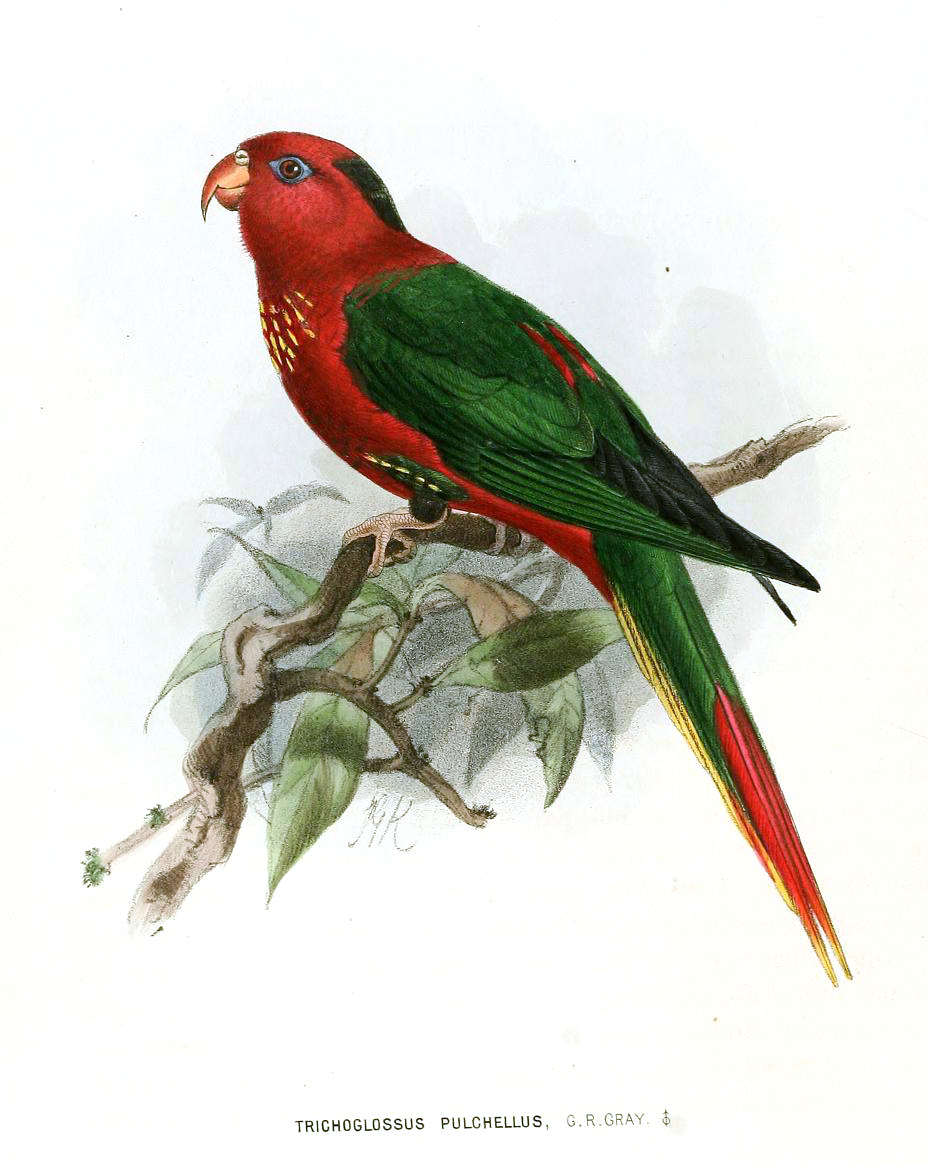
The Fairy Lorikeet is easily recognized by its small size, measuring about 18 cm in length. Its plumage is predominantly bright green, with a striking red crown and a yellow-tipped tail. Adults exhibit a vivid blue streak behind the eyes, which contrasts beautifully against their green face. Juveniles can be distinguished from adults by their slightly duller plumage and a less pronounced red crown. Males and females share similar plumage, making sex differentiation in the field challenging without behavioral observation. Compared to similar species, the Fairy Lorikeet's red crown and blue facial markings are distinctive features that aid in identification. In flight, its rapid wingbeat and agile maneuvering are characteristic, often seen darting swiftly between tree canopies. When perched, this lorikeet often adopts a horizontal posture, which, combined with its vibrant plumage, makes it conspicuous against the lush green backdrop of its forest habitat.
Having trouble telling birds apart? Upload a photo to our bird identification tool for an instant species match.
Fairy Lorikeet Habitat and Range
Preferred Habitat
The Fairy Lorikeet inhabits montane and submontane forests, typically found between 500 and 2000 meters above sea level. These birds favor dense, humid rainforests where they can access a variety of flowering plants. Seasonal variations in flowering patterns may prompt localized movements to different elevations, but the Fairy Lorikeet remains predominantly within forested areas. Unlike some other parrot species, it shows limited presence in urban or agricultural landscapes, preferring undisturbed forest environments. Its reliance on specific floral resources ties its distribution closely to areas with high plant diversity and minimal human disturbance, emphasizing the importance of intact forest ecosystems for its continued survival.
Geographic Range
The Fairy Lorikeet's range is largely confined to the island of New Guinea, including both the Papua New Guinea and Indonesian provinces. It is typically found in the central and eastern parts of the island, with concentrations in the Central Highlands and nearby mountain ranges. While it does not undertake long-distance migrations, the Fairy Lorikeet may exhibit altitudinal movements in response to changes in food availability. These shifts are usually confined to relatively small geographic areas, ensuring year-round presence in its native habitats. Population densities tend to be higher in undisturbed forest regions, where food resources are abundant, and human impact is minimal. Efforts to map the Fairy Lorikeet's distribution highlight the importance of these regions as critical habitats for maintaining its populations.
Want to know which birds visit your area? Browse our backyard birds by location guides for region-specific species lists.
What Does the Fairy Lorikeet Eat?
The Fairy Lorikeet primarily feeds on nectar and pollen, making flowers its main food source. Its specialized brush-tipped tongue is adapted for extracting nectar from various flowering plants, playing a vital role in pollination. Secondary food sources include fruits and occasional small insects. Seasonal dietary changes correspond to the flowering cycles of native plants, with peaks in nectar consumption observed during periods of high floral abundance. The Fairy Lorikeet employs an active foraging technique, often observed hanging upside down to access hard-to-reach blossoms. Its feeding habits usually occur during early morning and late afternoon when nectar production is at its peak, although it remains active throughout the day.
Fairy Lorikeet Behavior and Social Structure
The Fairy Lorikeet exhibits a highly social nature, often seen in small flocks that may consist of family groups. These flocks frequently join mixed-species foraging parties, enhancing their foraging efficiency and providing protection against predators. Territorial behavior is minimal, with little aggression observed between groups. Courtship involves mutual preening and vocal exchanges, reinforcing pair bonds. The Fairy Lorikeet's response to predators includes mobbing behavior, where individuals collectively harass the threat to deter it. Daily activity patterns are diurnal, with periods of high activity centered around feeding times. Roosting occurs communally in tree canopies, providing safety from nocturnal predators.
Fairy Lorikeet Nesting and Reproduction
Fairy Lorikeets nest in tree cavities, often selecting sites high in the forest canopy to minimize predation risk. They line their nests with decaying wood and leaves, creating a soft bed for their eggs. Clutch sizes typically range from 2 to 3 eggs. The incubation period lasts approximately 24 days, with both parents sharing duties. After hatching, chicks remain in the nest for about seven weeks before fledging. During this time, both parents actively feed and care for the young. The Fairy Lorikeet may raise multiple broods per year, depending on food availability and environmental conditions.
Fairy Lorikeet Sounds and Vocalizations
The Fairy Lorikeet's primary song consists of high-pitched, melodic chirps and whistles. These vocalizations are rhythmic and often include a series of rapid, twittering notes. Call notes are softer and include gentle warbles used in social interactions. Alarm calls are sharp and piercing, designed to alert nearby flock members of potential danger. The dawn chorus of the Fairy Lorikeet is particularly vibrant, with individuals contributing to a lively symphony that signals the start of their active day.
Interesting Facts About the Fairy Lorikeet
- 1The Fairy Lorikeet's vibrant plumage is not only for show but also plays a role in camouflaging among the brightly colored flowers it frequents.
- 2With its specialized tongue, the Fairy Lorikeet can consume nectar with remarkable efficiency, visiting up to 100 flowers in a single feeding session.
- 3Fairy Lorikeets have a lifespan of up to 15 years in the wild, though they face various natural predators that can impact longevity.
- 4Unlike many parrot species, the Fairy Lorikeet rarely visits human settlements, preferring the undisturbed tranquility of dense forests.
- 5Their social nature extends beyond feeding, with Fairy Lorikeets often engaging in mutual grooming and playful interactions within flocks.
Fairy Lorikeet Conservation Status
The IUCN currently lists the Fairy Lorikeet as a species of Least Concern, but its population is believed to be declining due to habitat loss. Deforestation for agriculture and logging poses significant threats, reducing available habitat. Conservation efforts focus on protecting remaining forest areas and establishing new protected zones. Historical population changes suggest a contraction of range in areas with significant human encroachment. Ongoing monitoring and habitat preservation are critical for ensuring the Fairy Lorikeet's continued survival.


