Flat-billed Vireo
Vireo nanus
Order: Passeriformes / Family: Vireonidae

Wikimedia Commons
About the Flat-billed Vireo
The Flat-billed Vireo, scientifically known as Vireo nanus, is a small passerine bird endemic to the island of Hispaniola, which comprises Haiti and the Dominican Republic. This bird plays a crucial ecological role in its habitat, primarily broadleaf forests and subtropical or tropical moist lowland areas. It is an integral component of the island's avian biodiversity, contributing to the control of insect populations and seed dispersal. The Flat-billed Vireo is adept at living in both primary and secondary growth forests, showing resilience to some habitat alterations, although it thrives best in undisturbed areas. Despite its adaptability, the species is vulnerable to the ongoing deforestation on the island, which threatens its natural habitat. The ecological significance of the Flat-billed Vireo extends to its role as both a predator and prey within its ecosystem. By consuming a variety of insects, it helps maintain the balance of invertebrate populations. During the breeding season, which typically spans from March to June, the Flat-billed Vireo becomes particularly active, engaging in elaborate courtship displays and territorial behaviors. Outside the breeding season, these birds may be seen foraging solitarily or in mixed-species flocks, a behavior that aids in reducing predation risk and increasing foraging efficiency. The Flat-billed Vireo's population is currently stable, but habitat loss remains a looming threat. Conservation efforts focusing on habitat preservation are crucial for ensuring the survival of this species. The bird's presence on Hispaniola highlights the island's unique biodiversity and the importance of protecting its natural environments. Seasonal behaviors of the Flat-billed Vireo include increased vocal activity during the breeding season, with males singing to attract mates and establish territories. As the seasons change, their behavior adapts, with a noticeable shift towards more covert foraging during the wetter months when food resources are more abundant.
The Flat-billed Vireo belongs to the family Vireonidae, within the order Passeriformes. These birds typically live average 3 years, with a maximum recorded of 5 years..
How to Identify a Flat-billed Vireo
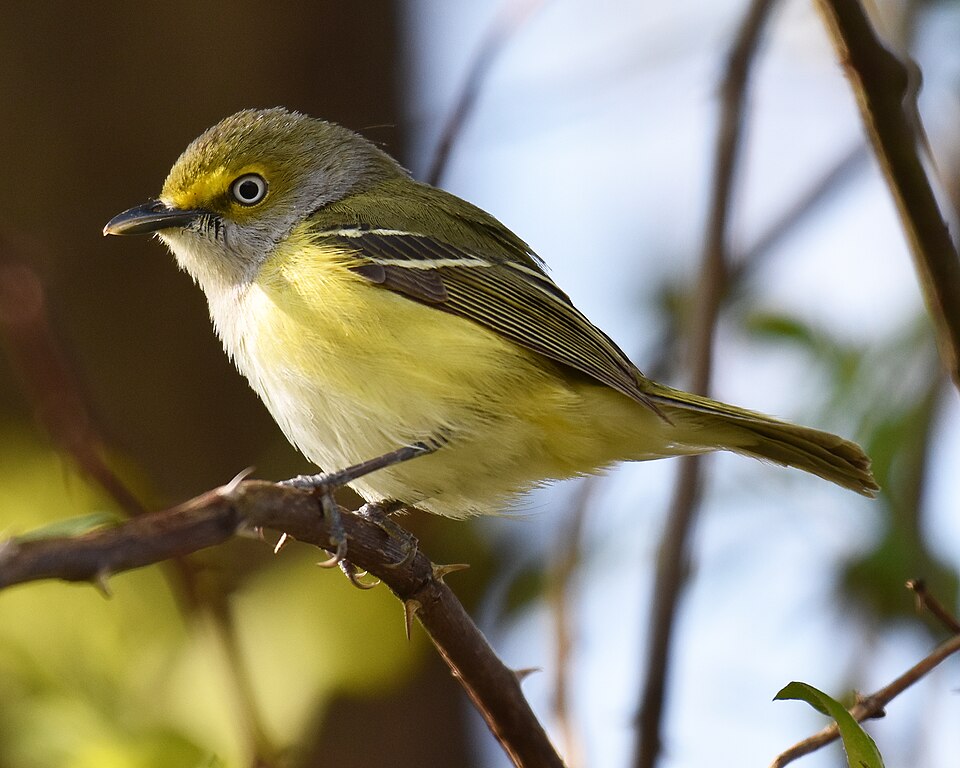
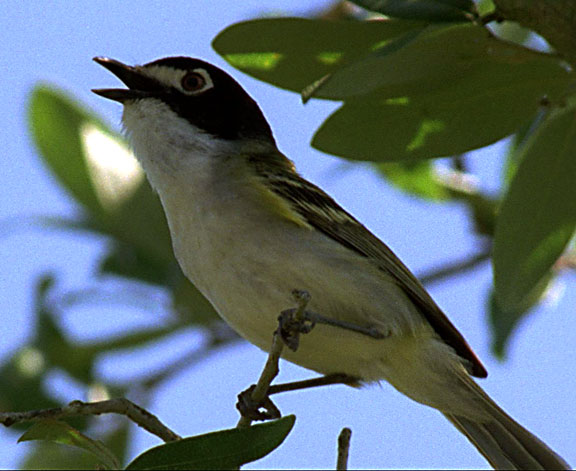
The Flat-billed Vireo is characterized by its small size, measuring approximately 12 centimeters in length. Its plumage is relatively dull, featuring an olive-green back and wings, with paler underparts that can appear yellowish in certain lights. The bird's most distinguishing feature is its flat, broad bill, which sets it apart from other vireos. Adults exhibit a subtle white eye-ring, adding to their identification keys. Juveniles resemble adults but generally show more muted colors and lack the pronounced eye-ring. There is little sexual dimorphism, meaning males and females look alike. However, during the breeding season, males may appear slightly brighter, especially when engaging in courtship displays. The Flat-billed Vireo can be confused with other vireo species, such as the Black-whiskered Vireo, but its bill shape and lack of distinct facial markings help differentiate it. In flight, the bird's compact silhouette and rapid wingbeats are noticeable, while its perching posture often involves a slight forward tilt, aiding in foraging. Observers should note the bird’s tendency to remain in the mid to upper canopy, making visual identification a rewarding challenge for birders.
Having trouble telling birds apart? Upload a photo to our bird identification tool for an instant species match.
Flat-billed Vireo Habitat and Range
Preferred Habitat
The Flat-billed Vireo is primarily found in subtropical or tropical moist lowland forests. It prefers broadleaf forests, thriving in both primary and secondary growth. The species generally inhabits elevations from sea level up to 1200 meters, though it is most abundant below 800 meters. It shows little affinity for urban areas, preferring rural landscapes with dense vegetation. Seasonal habitat shifts are minimal, as the species does not migrate. However, it may move to slightly higher elevations during wetter months when insect activity increases. While the Flat-billed Vireo can tolerate some habitat disturbance, it remains dependent on forested environments for breeding and foraging.
Geographic Range
The Flat-billed Vireo is endemic to Hispaniola, which includes the countries of Haiti and the Dominican Republic. It occupies a limited range, confined to the island itself, with no evidence of migration. Within this range, the bird is most commonly found in the lowland forests and foothills, avoiding the higher mountainous regions. The species exhibits higher population densities in the southwestern parts of the island, where suitable habitats remain relatively intact. Despite its restricted range, the Flat-billed Vireo is widespread within its suitable habitat, though localized population declines are noted in heavily deforested regions.
Want to know which birds visit your area? Browse our backyard birds by location guides for region-specific species lists.
What Does the Flat-billed Vireo Eat?
The primary diet of the Flat-billed Vireo consists of insects and other small invertebrates. It forages actively within the mid to upper canopy, employing a gleaning technique to pick insects from foliage. The bird's flat bill aids in capturing small prey, such as caterpillars, beetles, and spiders. During the breeding season, the need for high-energy food increases, leading to a focus on protein-rich insects. In wetter months, when insect populations surge, the Flat-billed Vireo may also consume fruits and berries, supplementing its diet with these resources. The bird typically forages during daylight hours, with peak activity occurring in the early morning and late afternoon.
Flat-billed Vireo Behavior and Social Structure
The Flat-billed Vireo exhibits a solitary and territorial behavior during the breeding season, with males actively defending their territories through song and displays. Courtship involves the male showcasing his singing prowess and engaging in display flights. Outside the breeding season, the bird may join mixed-species flocks to forage, benefiting from the safety in numbers and increased foraging efficiency. The Flat-billed Vireo demonstrates a typical vireo behavior of slow, deliberate movements through the canopy, often pausing to scan for prey. Its response to predators includes alarm calls and evasive maneuvers, relying on its camouflaged plumage to avoid detection. Daily activity patterns are diurnal, with the bird most active during cooler parts of the day.
Flat-billed Vireo Nesting and Reproduction
The Flat-billed Vireo builds a cup-shaped nest, typically placed in the fork of a tree branch. The nest is constructed from grass, twigs, and spider silk, providing both strength and flexibility. Preferred nesting sites are within dense foliage, offering protection from predators and harsh weather. The female usually lays a clutch of 2-3 eggs, which she incubates for about 12-14 days. Both parents participate in feeding the chicks, which fledge approximately 12-15 days after hatching. The species typically raises one brood per year, though in favorable conditions, a second brood may be attempted. Parental roles are shared, with males often taking on more active foraging duties.
Flat-billed Vireo Sounds and Vocalizations
The primary song of the Flat-billed Vireo is a series of short, melodious phrases with a clear, sweet quality, often repeated in rapid succession. The pitch is consistent, with notes that rise and fall gently, creating a soothing, rhythmic pattern. Call notes are short and sharp, serving as contact calls between mates or family groups. Alarm calls are harsher and more abrupt, used to alert others of potential danger. The dawn chorus features the Flat-billed Vireo prominently, with males singing vigorously to establish territory and attract mates. Compared to other songbirds, its song is less complex but distinctly pleasant.
Interesting Facts About the Flat-billed Vireo
- 1The Flat-billed Vireo's bill shape is unique among vireos, aiding in its specialized insect-foraging techniques.
- 2Despite being a non-migratory species, the Flat-billed Vireo exhibits seasonal dietary shifts to adapt to food availability.
- 3Hispaniola, the only home of the Flat-billed Vireo, is also home to many other endemic bird species, highlighting its ecological importance.
- 4The Flat-billed Vireo participates in mixed-species flocks during non-breeding seasons, showcasing its adaptability in social structures.
- 5Its song may not be as complex as other vireos, yet it plays a crucial role in territory establishment and mate attraction.
Flat-billed Vireo Conservation Status
Classified as Least Concern by the IUCN, the Flat-billed Vireo's population is currently stable. However, habitat loss due to deforestation poses a significant threat. Conservation efforts include habitat preservation and reforestation projects in Hispaniola. Historically, the species has withstood moderate habitat changes, but ongoing deforestation could lead to declines. Active monitoring and conservation initiatives are essential to safeguard its future. The bird's resilience to some habitat alteration offers hope, yet the preservation of intact forest ecosystems remains crucial.