
Frilled Coquette
Lophornis magnificus
Order: Apodiformes / Family: Trochilidae
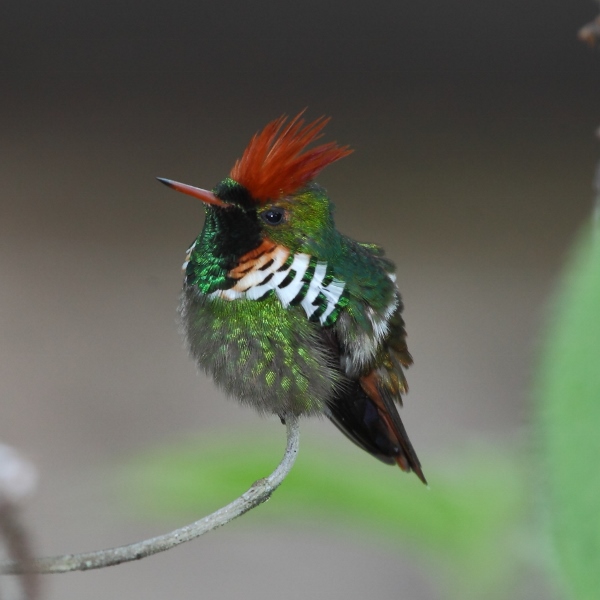
Wikimedia Commons
About the Frilled Coquette
The Frilled Coquette, Lophornis magnificus, stands out as one of the most visually striking members of the hummingbird family, Trochilidae. This species resides primarily in the humid lowland forests of southeastern Brazil, extending into parts of northeastern Argentina and Paraguay. The Frilled Coquette plays a crucial role in its ecosystem as a pollinator. Its interaction with flowering plants facilitates cross-pollination, contributing to the health and diversity of tropical forests. With its rapid wing beats and iridescent plumage, this bird is not just a wonder to behold but also an essential component of the ecological web.
In the vibrant undergrowth of these South American forests, the Frilled Coquette can often be observed darting between flowering shrubs and trees. Its primary habitat consists of edge environments within these forests, where sunlight penetrates to foster abundant blooms. As an agile flyer, the Frilled Coquette uses its speed and maneuverability to navigate dense vegetation, accessing nectar from flowers that other pollinators might find challenging to reach.
This species exhibits seasonal behaviors closely tied to the flowering cycles of its preferred plants. During peak flowering seasons, typically from September to December, the Frilled Coquette's activity levels increase as it seeks out floral resources. This period often coincides with its breeding season, driven by the ample availability of food. Outside these months, the bird may adjust its foraging strategies and even its range slightly, moving to areas where food remains plentiful. The Frilled Coquette's ecological significance extends beyond pollination as it serves as prey for larger birds and small mammals, thus contributing to the food web.
The Frilled Coquette belongs to the family Trochilidae, within the order Apodiformes. These birds typically live average 5 years, with a maximum recorded up to 8 years..
How to Identify a Frilled Coquette
The Frilled Coquette is a small hummingbird, measuring approximately 7-8.5 cm in length. Males possess a striking appearance, characterized by a brilliant green throat and crown, complemented by the eponymous frilled, elongated throat feathers that are vividly orange with a green iridescence. These frills flare out prominently when the male is displaying. Their back is a shimmering bronze-green, and the underparts are generally white with a subtle green wash.
Females are less flamboyant, lacking the ornate throat frill and instead showing a more subdued plumage. They exhibit a green upper body with a white underside and some buffy flanks. Juveniles resemble females but may have an even duller coloration, with less iridescence and more muted tones overall.
The Frilled Coquette can be confused with other small hummingbirds, particularly within its range. However, the male's distinctive frilled throat sets it apart. In flight, the bird maintains a rapid, insect-like hovering pattern, which, combined with its diminutive size and iridescent plumage, provides a distinctive silhouette against the forest canopy.
Having trouble telling birds apart? Upload a photo to our bird identification tool for an instant species match.
Frilled Coquette Habitat and Range
Preferred Habitat
The Frilled Coquette inhabits tropical and subtropical moist lowland forests, particularly favoring forest edges and clearings where flowering plants are abundant. This bird is primarily found at elevations ranging from sea level up to about 600 meters. Within its range, it prefers areas with dense vegetation that support a high density of blooming flowers.
Unlike some hummingbird species, the Frilled Coquette does not typically venture into urban environments. It remains closely tied to its forest habitats, relying on the rich diversity of plant life for sustenance. During certain times of the year, particularly in the dry season, it might move slightly within the forest to areas where water and flowers remain abundant.
Geographic Range
The Frilled Coquette is endemic to South America, with its range primarily covering southeastern Brazil, northeastern Argentina, and parts of Paraguay. Within Brazil, it is notably present in the states of Espírito Santo and Bahia, extending down to Santa Catarina.
It does not undertake long-distance migrations, instead exhibiting altitudinal and local movements in response to food availability and climatic conditions. Its range remains relatively stable throughout the year, but population densities may fluctuate seasonally based on the abundance of flowering plants.
In certain regions, particularly in Brazil, the Frilled Coquette is considered locally common, although its overall population density can vary significantly depending on habitat quality and availability.
Want to know which birds visit your area? Browse our backyard birds by location guides for region-specific species lists.
What Does the Frilled Coquette Eat?
The diet of the Frilled Coquette primarily consists of nectar from a variety of flowering plants, which it accesses using its specialized bill and long, extendable tongue. It prefers flowers that are tubular and brightly colored, often red or orange, which are typically rich in nectar. During periods of low floral abundance, the Frilled Coquette may also consume small insects and spiders to supplement its diet, providing essential proteins.
Foraging occurs throughout the day, with peak activity in the early morning and late afternoon when flowers are most likely to refill with nectar. The Frilled Coquette employs a hovering technique, rapidly flapping its wings to remain stationary while feeding. It has been observed to visit up to several dozen flowers per minute, demonstrating its efficiency as a forager.
Seasonal changes in the availability of food sources can influence its foraging behavior, leading to temporary shifts in range or feeding times to maximize resource acquisition.
Want to attract Frilled Coquettes to your yard? See our recommended feeders and seed types for the best results.
Frilled Coquette Behavior and Social Structure
The Frilled Coquette exhibits a solitary and territorial nature, particularly during the breeding season when males become highly defensive of their chosen territories. These territories are small, often centered around clusters of flowering plants that provide an essential food source. Males engage in elaborate aerial displays to deter rivals and attract potential mates, showcasing their vibrant throat frills in the process.
Courtship involves a series of rapid flights and hovering displays by the male, often accompanied by vocalizations that serve to both advertise and intimidate. Outside the breeding season, the Frilled Coquette remains largely solitary, though it may occasionally form loose associations with other hummingbirds at abundant feeding sites.
Predator avoidance behavior includes rapid evasive maneuvers and seeking shelter in dense foliage. The bird is most active during daylight hours, with a peak in activity around dawn and dusk when flower nectar is abundant.
Frilled Coquette Nesting and Reproduction
The Frilled Coquette constructs its nest in a meticulous and strategic manner, usually placing it on a thin horizontal branch or a fork in a tree, well-hidden among leaves. The nest is cup-shaped and crafted from soft plant fibers, bound together with spider silk to ensure elasticity and strength. The exterior is often camouflaged with bits of lichen and moss.
The female exclusively handles nesting duties, laying a clutch of two small, white eggs. The incubation period lasts approximately 14-16 days, during which the female remains vigilant, leaving the nest only briefly to feed. Once hatched, the chicks require constant care and feeding, with the mother providing regurgitated nectar and insects.
Fledging occurs roughly 20-22 days after hatching, although the young may continue to depend on the mother for food for a short period thereafter. The Frilled Coquette typically produces one to two broods per year, depending on environmental conditions.
Frilled Coquette Sounds and Vocalizations
The Frilled Coquette's primary song is a high-pitched, rapid series of 'tsee-tsee-tsee' notes, delivered in quick succession. This song serves to establish territory and attract females during the breeding season. In addition to its song, the Frilled Coquette makes short, sharp call notes, often described as 'chip' or 'tsip', used for communication and alerting to threats.
Alarm calls are more abrupt and harsher in tone, signaling nearby danger to conspecifics. The bird participates in the dawn chorus, joining other species in vocalizing at first light to declare territory boundaries and initiate daily activities.
Interesting Facts About the Frilled Coquette
- 1The Frilled Coquette weighs only about 2.5 to 3 grams, making it one of the smallest hummingbirds.
- 2Males use their frilled throat feathers to impress females and intimidate rival males.
- 3Despite their size, Frilled Coquettes can flap their wings up to 80 times per second.
- 4The bird's heart can beat up to 1,260 times per minute during flight.
- 5Frilled Coquettes can consume more than twice their body weight in nectar and insects daily.
- 6Their nests are often camouflaged with lichen and spider silk for protection.
- 7They play a crucial role in pollinating up to 10% of the plants in their habitat.
Frilled Coquette Conservation Status
The Frilled Coquette is currently classified as Least Concern by the IUCN, with a stable population trend. However, habitat loss due to deforestation and agricultural expansion poses a significant threat to its long-term survival. Conservation efforts focus on preserving its natural habitats through protected areas and sustainable land management practices. Historical data suggest that while populations remain stable in core areas, localized declines have occurred in regions with extensive habitat destruction. Continued monitoring and habitat restoration are essential to ensure the species' future viability.
Attracting Frilled Coquettes to Your Feeder
The Frilled Coquette is a regular visitor to backyard bird feeders across its range. At the Eye On The Fly feeding station, we observe Frilled Coquettes regularly and capture footage with our feeder cameras.


