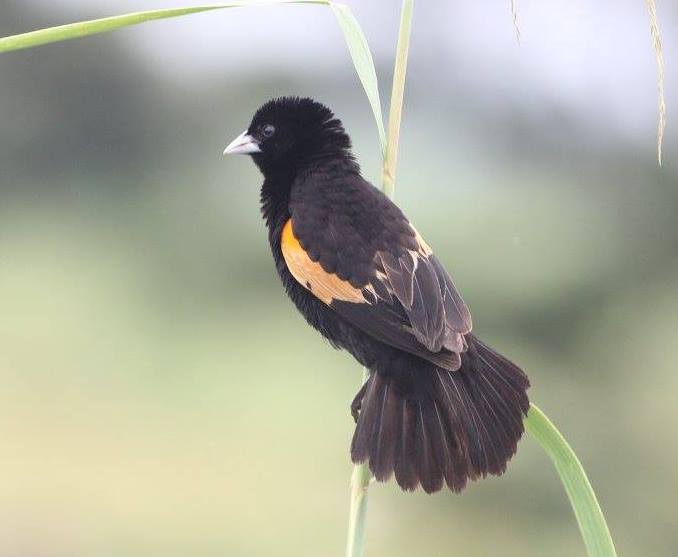
Golden-backed Bishop
Euplectes aureus
Order: Passeriformes / Family: Ploceidae

Wikimedia Commons
About the Golden-backed Bishop
The Golden-backed Bishop, or Euplectes aureus, is a striking bird renowned for its vibrant plumage and dynamic display behaviors. Native to parts of sub-Saharan Africa, this species thrives in the open grasslands and marshes of countries such as Angola, the Democratic Republic of the Congo, and Zambia. These birds are primarily associated with tropical and subtropical regions where they add a splash of color to the landscape. In these regions, the Golden-backed Bishop plays a crucial ecological role by participating in seed dispersal and maintaining the health of the grassland ecosystem.
The species is a member of the Ploceidae family, which consists of small passerine birds known for their elaborate weaving skills. Like many of its relatives, the Golden-backed Bishop constructs intricate nests, displaying a high level of craftsmanship. During the breeding season, males take on a dazzling courtship display, puffing out their feathers to attract potential mates. This period coincides with the rainy season, when food resources are most abundant, allowing the species to thrive.
Throughout the year, the Golden-backed Bishop engages in various behaviors aligned with the seasonal changes of its habitat. Outside the breeding season, these birds often join flocks with other weaver species, enhancing their foraging efficiency and providing additional protection against predators. Such social structures are essential for their survival, as they face threats from both natural predators and habitat loss due to human activities. Despite these challenges, the Golden-backed Bishop remains a common sight in many regions, a testament to its adaptability and resilience.
The Golden-backed Bishop belongs to the family Ploceidae, within the order Passeriformes. These birds typically live average 5 years with a maximum recorded of 10 years.
How to Identify a Golden-backed Bishop
The Golden-backed Bishop is a medium-sized songbird, easily recognized by its vivid yellow and black plumage. Adult males exhibit a striking golden-yellow back, contrasting sharply with their black head, throat, and underparts. The wings and tail are also predominantly black, further accentuating the bright back. In contrast, females and juveniles have a more subdued appearance, with brownish plumage that provides effective camouflage in their grassland habitats.
During the breeding season, males undergo a dramatic transformation, adopting their full breeding plumage to attract mates. This transformation is one of the most striking in the avian world, with the yellow feathers becoming even more vibrant. Outside of the breeding season, their plumage becomes more similar to that of the females, allowing them to blend into the non-breeding flocks more easily.
In flight, the Golden-backed Bishop has a distinctive silhouette, with rapid, fluttering wingbeats typical of many weaver species. When perched, these birds exhibit a characteristic upright posture, often seen in open areas or at the top of grasses where they can survey their surroundings. Their bright plumage and unique posture make them relatively easy to spot against the green backdrop of their habitat.
Having trouble telling birds apart? Upload a photo to our bird identification tool for an instant species match.
Golden-backed Bishop Habitat and Range
Preferred Habitat
The Golden-backed Bishop primarily inhabits tropical and subtropical grasslands, often in proximity to wetlands. These environments provide the necessary resources for feeding and nesting. They thrive in areas with tall grasses, reeds, and occasionally in cultivated fields where they can find abundant food sources. The elevation range for this species typically extends from lowland plains to moderate altitudes, usually not exceeding 2000 meters.
Seasonal shifts in habitat preferences occur, especially outside the breeding season. During these times, they may venture into more urban areas, although they primarily remain within rural landscapes. The presence of water bodies is crucial, as these areas support the growth of plants that provide both nesting materials and food.
Human-modified landscapes, such as agricultural fields, can also become suitable habitats for the Golden-backed Bishop, particularly when natural habitats are altered or diminished. However, this adaptability does not negate their preference for natural, undisturbed environments, where they can sustain their complex social and breeding behaviors.
Geographic Range
The Golden-backed Bishop is native to the grasslands of sub-Saharan Africa, with its range extending across several countries, including Angola, the Democratic Republic of the Congo, and Zambia. These regions provide the necessary climatic conditions and habitats that support their life cycle.
During the breeding season, they occupy specific territories in these countries where they find optimal conditions for nesting and raising young. The rainy season in these regions coincides with their breeding period, offering abundant food resources needed for chick development.
Outside of the breeding season, the Golden-backed Bishop demonstrates some local movements, often in search of food. These movements are not long-distance migrations but rather shifts to areas where resources are temporarily more plentiful. Population density can vary significantly, with certain hotspots emerging in areas with favorable conditions. While generally not considered a migratory species, their local movements ensure they can exploit varying seasonal resources effectively.
Want to know which birds visit your area? Browse our backyard birds by location guides for region-specific species lists.
What Does the Golden-backed Bishop Eat?
The diet of the Golden-backed Bishop primarily consists of seeds, which make up the bulk of their nutritional intake. They favor seeds from grasses, which are plentiful in their grassland habitats. During the breeding season, when energy demands increase, they may supplement their diet with insects, providing the necessary protein for growing chicks.
Foraging occurs mostly at dawn and dusk when the birds actively search for food in flocks. This communal foraging provides protection from predators and improves their efficiency in locating food sources. The Golden-backed Bishop employs a combination of gleaning and pecking techniques, often seen hopping on the ground or perching on grass stalks to access food.
Seasonal changes in food availability can influence their diet. During the dry season, when seed availability decreases, these birds may increase their insect intake. Their ability to adapt their feeding habits to the changing environment is a key factor in their survival across diverse landscapes.
Golden-backed Bishop Behavior and Social Structure
The Golden-backed Bishop exhibits a complex social structure, especially evident during the breeding season. Males become highly territorial, each claiming a territory where they perform elaborate courtship displays to attract females. These displays involve puffing out their bright feathers and engaging in rhythmic movements, showcasing their vibrant colors.
Outside the breeding season, these birds often form large flocks, sometimes mingling with other weaver species. Such flocking behavior provides several advantages, including increased protection from predators and improved foraging efficiency. Within these flocks, a clear social hierarchy can emerge, with dominant individuals often securing the best feeding spots.
Their response to predators includes alarm calls and collective mobbing behaviors, where multiple birds harass a potential threat to drive it away. Daily activity patterns typically revolve around feeding during the cooler morning and evening hours, with periods of rest or social interaction occurring during the hotter midday period.
Golden-backed Bishop Nesting and Reproduction
Golden-backed Bishops are known for their skillful nest construction. They create intricately woven nests using grass and other plant materials, often suspending them from reed stalks or other vegetation near water. These nests are spherical and have a side entrance, offering protection from predators and the elements.
During the breeding season, which coincides with the rainy period, the female typically lays a clutch of three to five eggs. Incubation lasts for about 12 to 14 days, with the female primarily responsible for keeping the eggs warm. Once hatched, both parents participate in feeding the chicks, which fledge approximately 14 to 18 days after hatching.
Golden-backed Bishops may raise multiple broods in a single breeding season if conditions remain favorable, with abundant food and suitable weather. The collaborative efforts in nest building and chick-rearing highlight the importance of social bonds in their reproductive success.
Golden-backed Bishop Sounds and Vocalizations
The primary song of the Golden-backed Bishop is a series of high-pitched, rapid notes that create a lively and vibrant soundscape in their habitat. These songs serve to establish territory and attract mates, particularly during the breeding season.
In addition to their song, these birds produce distinct call notes used for communication within flocks. Alarm calls are sharp and quick, alerting other birds to potential threats. During the dawn chorus, their songs can be heard mingling with those of other bird species, creating a rich auditory tapestry.
Compared to many other songbirds, the Golden-backed Bishop's song is relatively simple but effective in its purpose. The rhythm and pitch of their calls allow them to stand out in the noisy environments of grasslands and wetlands.
Interesting Facts About the Golden-backed Bishop
- 1Golden-backed Bishops are known to molt twice a year, an unusual trait among passerine birds.
- 2Their nests, made primarily from grass, are designed to sway with the wind, minimizing predator detection.
- 3Male Golden-backed Bishops can change color dramatically between breeding and non-breeding seasons.
- 4This species often engages in cooperative breeding, with older siblings helping to raise new chicks.
- 5Golden-backed Bishops have been observed to use tools, such as sticks, to manipulate their environment.
- 6They are capable of short-distance flights at speeds of up to 50 km/h, aiding in predator evasion.
- 7Their vibrant plumage can reflect ultraviolet light, which is visible to other birds but not to humans.
Golden-backed Bishop Conservation Status
The Golden-backed Bishop is currently listed as a species of Least Concern by the IUCN, indicating that the population is stable. However, habitat loss due to agricultural expansion and urban development poses a threat to their long-term survival. Conservation efforts focus on preserving grassland and wetland habitats, which are vital for their breeding and foraging needs. Local conservation initiatives in countries like Zambia aim to balance human land use with the preservation of natural habitats. Historically, the population of Golden-backed Bishops has remained stable, owing to their adaptability and wide distribution. Continued conservation efforts are essential to ensure that this vibrant species remains a common sight in its native habitats.
Other Ploceidae Species



Birds Similar to the Golden-backed Bishop
These species are often confused with the Golden-backed Bishop due to similar appearance or overlapping range.