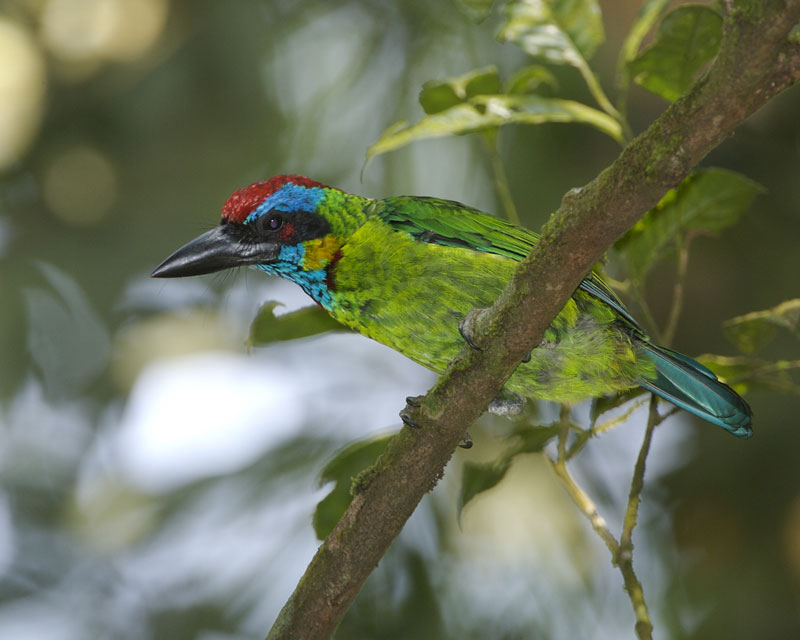
Golden-naped Barbet
Psilopogon pulcherrimus
Order: Piciformes / Family: Megalaimidae

Wikimedia Commons
About the Golden-naped Barbet
The Golden-naped Barbet, scientifically known as Psilopogon pulcherrimus, is a striking avian species belonging to the family Megalaimidae. This bird captures attention with its brilliant blue and green plumage, accentuated by the golden nape from which its common name derives. Endemic to the island of Borneo, the Golden-naped Barbet thrives in the lush montane forests of Malaysia and Indonesia. These forests, rich in biodiversity, provide the ideal environment for this species, offering abundant food sources and suitable nesting sites.
The ecological significance of the Golden-naped Barbet is underscored by its role as both a pollinator and a seed disperser. By feeding on fruits and flowers, this bird contributes to the health of its forest habitat, aiding in the regeneration of plant species. The Golden-naped Barbet plays a crucial role in maintaining the ecological balance of its environment, supporting the diverse array of flora and fauna that coexist within these forests.
During the breeding season, which typically occurs from March to June, the Golden-naped Barbet exhibits notable territorial behavior. Engaging in vocal displays, males announce their presence and ward off rivals, ensuring successful mating opportunities. Outside of the breeding season, these barbets often form small flocks, showcasing their social nature. As the seasons change, the Golden-naped Barbet adapts its behavior and dietary preferences to align with the availability of food resources, demonstrating its resilience and adaptability within its habitat.
The Golden-naped Barbet belongs to the family Megalaimidae, within the order Piciformes. These birds typically live average 5-7 years, with a maximum recorded of 9 years..
How to Identify a Golden-naped Barbet
Adult Golden-naped Barbets exhibit a vibrant blend of colors that make them unmistakable. The most prominent feature is the golden-yellow patch on the nape, contrasting sharply with the rich blue of the head and face. The back and wings are a deep green, while the underparts are lighter, often displaying a mix of green and blue hues. Juveniles are similar but lack the fully developed golden nape, appearing more subdued in coloration.
Both male and female Golden-naped Barbets look alike, making sex differentiation challenging without closer inspection during breeding season behaviors. Unlike many other bird species, these barbets do not exhibit sexual dimorphism in plumage. In flight, the Golden-naped Barbet presents a robust silhouette with rounded wings and a short tail, typical of the barbet family. When perched, they maintain an upright posture, often seen clinging to tree trunks or branches.
The Golden-naped Barbet can be mistaken for other barbet species found in Borneo, such as the Blue-eared Barbet. However, the golden nape is a distinctive feature that sets it apart. Observers should note the barbet's unique call and habitat preferences to accurately identify it in the field.
Having trouble telling birds apart? Upload a photo to our bird identification tool for an instant species match.
Golden-naped Barbet Habitat and Range
Preferred Habitat
The Golden-naped Barbet inhabits the montane forests of Borneo, thriving at elevations ranging from 900 to 2,000 meters. These forests, characterized by dense vegetation and high humidity, provide an ideal environment for this species. The barbet prefers areas with abundant fruiting trees and a rich understory, which support its dietary and nesting needs.
While primarily found in undisturbed montane forests, the Golden-naped Barbet can also be seen in secondary forests, demonstrating some adaptability to habitat changes. However, it is less frequently encountered in lowland areas and urban environments, where suitable habitat is sparse. Seasonal shifts in habitat use are minimal, as the barbet remains a year-round resident of its montane forest home.
Geographic Range
The range of the Golden-naped Barbet is restricted to the island of Borneo, encompassing parts of Malaysia and Indonesia. Within Borneo, the species is primarily found in the central mountain ranges, including the Crocker Range in Sabah and the highlands of Sarawak. These areas serve as population density hotspots, providing the necessary resources for the barbet's survival.
As a non-migratory species, the Golden-naped Barbet does not undertake long-distance movements, remaining within its montane forest habitat throughout the year. This limited range underscores the importance of protecting the forested regions of Borneo to ensure the continued survival of this unique and vibrant bird.
Want to know which birds visit your area? Browse our backyard birds by location guides for region-specific species lists.
What Does the Golden-naped Barbet Eat?
The diet of the Golden-naped Barbet consists primarily of fruits, which are abundant in its montane forest habitat. Figs, berries, and other small fruits form the staple of its diet, providing essential nutrients and energy. In addition to fruits, the barbet supplements its diet with insects, particularly during the breeding season when protein demands increase.
Foraging typically occurs in the canopy and mid-story of the forest, where the barbet uses its strong bill to pluck fruit and glean insects from leaves and bark. This species exhibits a degree of dietary flexibility, adjusting its consumption patterns based on seasonal fruit availability. During times of fruit scarcity, the barbet may rely more heavily on insects and other animal prey.
The feeding schedule of the Golden-naped Barbet aligns with daylight hours, with peak activity occurring in the morning and late afternoon. This pattern allows the bird to take advantage of cooler temperatures and reduced competition from other frugivores.
Golden-naped Barbet Behavior and Social Structure
The Golden-naped Barbet displays a range of intriguing behaviors that reflect its social and territorial nature. During the breeding season, males engage in pronounced vocal displays to establish and defend territories. These vocalizations serve not only to deter rivals but also to attract potential mates. Once paired, the barbet displays cooperative behavior, with both members of the pair participating in nesting and chick-rearing activities.
Outside of the breeding season, Golden-naped Barbets often form small flocks, moving through the forest in search of food. These flocks may consist of family groups or unrelated individuals, emphasizing the species' sociable disposition. Flocking behavior also aids in predator detection, with multiple eyes scanning for threats such as raptors and arboreal snakes.
Daily activity patterns are diurnal, with the barbet most active during the cooler morning and late afternoon hours. During the heat of midday, the bird may retreat to the shade of the canopy, conserving energy and avoiding predators.
Golden-naped Barbet Nesting and Reproduction
Golden-naped Barbets nest in tree cavities, either natural or excavated by the birds themselves. Preferred nesting sites are often found in dead or decaying trees, where the wood is softer and easier to manipulate. The nest cavity is typically lined with wood chips, providing a soft and insulated environment for the eggs.
A typical clutch consists of two to three eggs, which the parents incubate for approximately 14 to 16 days. Both male and female barbets share incubation duties, demonstrating a high degree of parental cooperation. Once hatched, the chicks remain in the nest for several weeks, with both parents involved in feeding and protecting the young.
Fledging occurs around 30 days after hatching, with the young barbets gradually increasing their independence. The species typically produces one brood per year, although favorable conditions may allow for a second brood.
Golden-naped Barbet Sounds and Vocalizations
The Golden-naped Barbet's primary song is a series of loud, resonant notes that rise and fall in pitch, often described as a 'po-po-po' pattern. This rhythmic and melodious call is a common sound in its montane forest habitat, particularly during the breeding season when males vocalize to establish territories.
In addition to its song, the barbet produces a variety of calls, including sharp alarm notes used to warn of predators. These calls are shorter and more staccato compared to the primary song. During the dawn chorus, the Golden-naped Barbet participates actively, its calls blending with those of other forest birds to create a vibrant auditory tapestry.
Interesting Facts About the Golden-naped Barbet
- 1The Golden-naped Barbet is endemic to Borneo, making it one of the island's unique avian treasures.
- 2Despite its vibrant colors, the Golden-naped Barbet often blends seamlessly into the canopy, thanks to its green and blue plumage.
- 3The Golden-naped Barbet contributes to forest regeneration by dispersing seeds of the fruits it consumes.
- 4This species' scientific name, Psilopogon pulcherrimus, reflects its striking beauty, with 'pulcherrimus' meaning 'most beautiful' in Latin.
- 5Golden-naped Barbets are known for their resilience, adapting their diet and behavior to seasonal changes in their forest environment.
- 6The barbet's call is a distinctive feature of its montane forest habitat, often heard before the bird is seen.
- 7Golden-naped Barbets excavate their own nest cavities, displaying impressive skill and persistence.
Golden-naped Barbet Conservation Status
The Golden-naped Barbet is currently listed as Near Threatened on the IUCN Red List, with populations experiencing a decline due to habitat loss. Deforestation and land conversion for agriculture pose significant threats to its montane forest habitat on Borneo. Despite these challenges, the species persists in protected areas where conservation efforts aim to preserve critical habitats. Organizations are working to mitigate habitat destruction through reforestation initiatives and the establishment of new protected areas. These efforts, coupled with increased awareness and research on the species, are crucial for stabilizing and eventually reversing the decline in Golden-naped Barbet populations.
Other Megalaimidae Species


Birds Similar to the Golden-naped Barbet
These species are often confused with the Golden-naped Barbet due to similar appearance or overlapping range.