
Golden Vireo
Vireo hypochryseus
Order: Passeriformes / Family: Vireonidae

Wikimedia Commons
About the Golden Vireo
The Golden Vireo, known scientifically as Vireo hypochryseus, thrives in the subtropical and tropical regions of Mexico. This small songbird is particularly prominent in the Pacific slope, from southern Sonora to Oaxaca. It plays a crucial role in its ecosystem by aiding in insect population control and seed dispersal. Its presence is a good indicator of healthy, undisturbed forest ecosystems. The bird frequents semi-deciduous forests and often inhabits areas with dense underbrush, where its bright yellow appearance stands in stark contrast to the greenery. During breeding season, the Golden Vireo is more conspicuous as it sings to establish its territory. Outside the breeding season, its presence becomes less noticeable as it moves to slightly different habitats in search of food. Seasonal behavior includes a marked increase in vocal activity during early spring, where males engage in complex songs to attract mates and ward off rivals. These birds are also known for their adaptability to changing environmental conditions, often shifting habitats based on food availability and nesting requirements. The Golden Vireo's ecological role extends beyond mere aesthetics as it helps check insect populations, thus maintaining the balance within its habitat. Furthermore, its seed dispersal activities contribute to forest regeneration, highlighting its importance in sustaining forest biodiversity. Golden Vireos are non-migratory, residing year-round in their preferred habitats. However, slight altitudinal movements may occur when food becomes scarce. Understanding the behavior and ecological significance of the Golden Vireo provides insights into the health of subtropical forest ecosystems.
The Golden Vireo belongs to the family Vireonidae, within the order Passeriformes. These birds typically live average of 6 years in the wild..
How to Identify a Golden Vireo
The Golden Vireo is a small songbird, typically measuring about 12 cm in length. Its most striking feature is its bright golden-yellow plumage, which covers most of its body. The wings and tail display a more muted olive tone, providing slight contrast. Adults have a distinctive white eye ring and a short, slightly hooked bill, characteristic of the Vireonidae family. Juveniles resemble adults but have a duller, more olive-yellow coloration. There is no significant sexual dimorphism, as males and females appear similar in the field. In flight, the Golden Vireo exhibits a compact silhouette with rapid wingbeats. It often perches in an upright posture on branches, making it easier to spot against the foliage. Compared to other vireos, such as the Bell's Vireo and the Warbling Vireo, the Golden Vireo's more vibrant coloration and specific geographic range help in accurate identification. Its song, along with its distinctive eye ring and plumage, provides reliable identification markers for birders in the field.
Having trouble telling birds apart? Upload a photo to our bird identification tool for an instant species match.
Golden Vireo Habitat and Range
Preferred Habitat
The Golden Vireo primarily inhabits semi-deciduous and tropical deciduous forests. It thrives at elevations ranging from sea level to 1,500 meters. In the dry season, it can also be found in areas with dense undergrowth and thickets. The bird shows a preference for regions with a mix of open spaces and dense vegetation. Urban presence is minimal, as the species favors more secluded natural habitats. During breeding season, its habitat is marked by areas with abundant foliage for nesting. In non-breeding times, the Golden Vireo may be found in slightly different habitats as it searches for food, though it remains within its overall geographic range.
Geographic Range
The Golden Vireo is endemic to Mexico, with a range stretching along the Pacific coast from southern Sonora to Oaxaca. It does not migrate extensively, remaining primarily within this region throughout the year. Some populations may exhibit altitudinal movements in response to climatic changes and food availability. Despite its limited geographic range, the bird is fairly common in suitable habitats within this range. Regions such as the Sierra Madre del Sur host relatively dense populations, particularly during the breeding season. Its non-migratory behavior means it has developed strong ties to its regional ecosystems, relying on the local flora and insect populations for sustenance.
Want to know which birds visit your area? Browse our backyard birds by location guides for region-specific species lists.
What Does the Golden Vireo Eat?
The diet of the Golden Vireo consists mainly of insects and other small invertebrates. It forages actively among leaves and branches, using its keen eyesight to spot prey. The bird's diet includes caterpillars, beetles, and spiders, which provide the protein necessary for its energy-intensive lifestyle. During certain seasons, the Golden Vireo supplements its diet with fruits and berries, which offer essential vitamins and nutrients. Its foraging technique is methodical, often involving short flights between branches and brief hoverings to capture prey. Feeding activity peaks during the early morning and late afternoon, aligning with the availability of its insect prey. This adaptive feeding strategy ensures the Golden Vireo remains well-nourished throughout the year, even as food availability fluctuates with the seasons.
Golden Vireo Behavior and Social Structure
Golden Vireos are primarily solitary or found in pairs, especially during the breeding season when they exhibit strong territorial behavior. Males sing frequently to establish territory boundaries and attract mates, often engaging in vocal duets with females. Courtship displays include wing fluttering and mutual feeding. The species exhibits moderate aggression towards intruders within its territory, particularly males of the same species. Outside the breeding season, the Golden Vireo may join mixed-species flocks, which provides safety in numbers and increased foraging efficiency. While generally diurnal, these vireos exhibit peak activity during the cooler parts of the day, such as early morning and late afternoon. Their response to predators includes alarm calls and evasive flight, with a preference for remaining concealed within dense foliage. The Golden Vireo's daily routine revolves around foraging, preening, and singing, with occasional rest periods during the hottest part of the day.
Golden Vireo Nesting and Reproduction
The Golden Vireo constructs cup-shaped nests, often placed on thin branches of trees or shrubs at heights ranging from 1 to 4 meters above ground. The nest is made from woven grasses, leaves, and spider silk, providing a sturdy yet flexible structure. Females lay 2 to 4 eggs per clutch, which are white with fine brown speckles. The incubation period lasts about 13 to 15 days, with both parents sharing incubation duties. After hatching, nestlings remain in the nest for approximately 11 to 14 days before fledging. Both parents partake in feeding and caring for the young, ensuring a high survival rate. The Golden Vireo typically raises one brood per year, with some pairs attempting a second brood if conditions are favorable.
Golden Vireo Sounds and Vocalizations
The Golden Vireo's primary song is a series of clear, melodious notes delivered in a rhythmic pattern. The song lasts several seconds and consists of short phrases repeated consistently. Their calls include short, sharp 'chip' notes used for communication between mates or alerting of danger. Alarm calls are harsher, serving to warn of predators. During the dawn chorus, males sing more frequently and with greater intensity, establishing territory and attracting mates. The song of the Golden Vireo is distinctive within its range, facilitating easy identification for experienced birders.
Interesting Facts About the Golden Vireo
- 1The Golden Vireo's vibrant yellow plumage makes it one of the most visually striking members of the Vireonidae family.
- 2Despite its vivid coloration, the Golden Vireo is adept at remaining hidden within dense foliage, making it challenging to spot in the wild.
- 3The species is endemic to Mexico, meaning it is not naturally found anywhere else in the world.
- 4Golden Vireos are known to participate in mixed-species flocks, which can include other vireos and warblers.
- 5Their song is often mistaken for that of other vireo species, but their unique rhythm and pitch provide helpful identification clues.
- 6The Golden Vireo's diet shifts seasonally to include more fruit and berries during times of insect scarcity.
- 7These birds exhibit strong site fidelity, often returning to the same territories and nesting sites year after year.
Golden Vireo Conservation Status
The Golden Vireo is currently listed as a species of Least Concern by the IUCN, indicating a stable population trend. However, deforestation and habitat degradation pose potential threats to its habitat, particularly in regions experiencing agricultural expansion. Conservation efforts focus on preserving large tracts of deciduous forest and promoting sustainable land-use practices. Historical data suggest that while the population remains stable, localized declines could occur if current threats are not managed. Efforts to monitor population trends continue, ensuring that any negative changes are addressed promptly.
Other Vireonidae Species
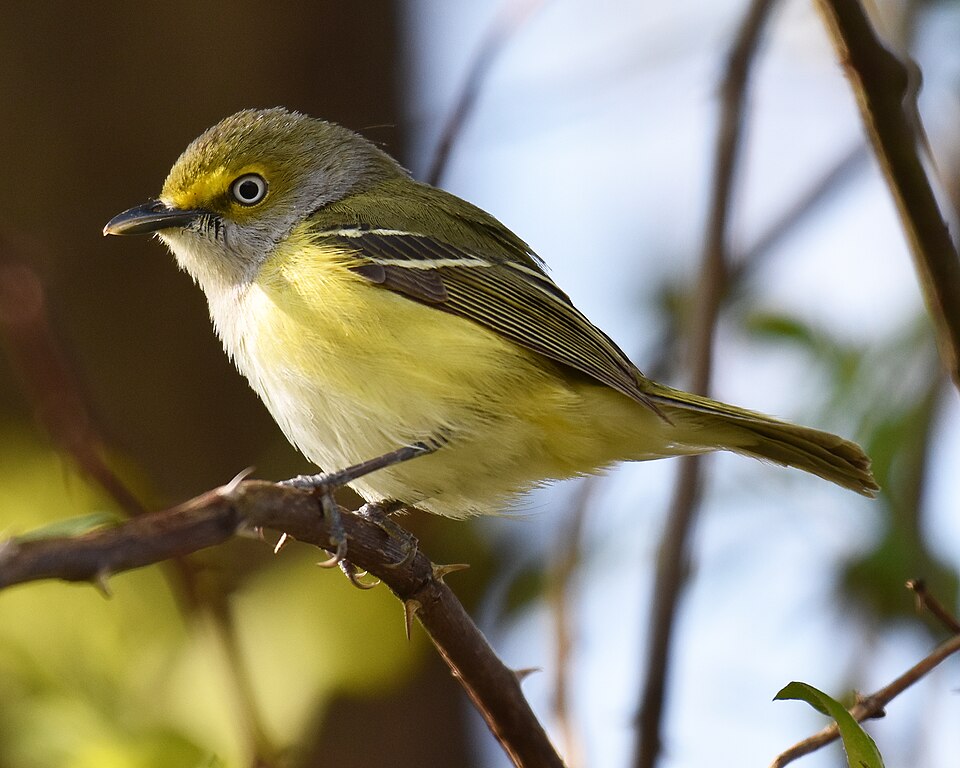

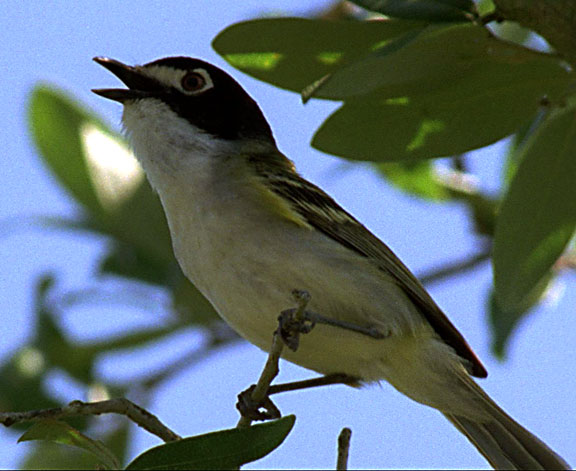

Birds Similar to the Golden Vireo
These species are often confused with the Golden Vireo due to similar appearance or overlapping range.

