
Gray-legged Tinamou
Crypturellus duidae
Order: Tinamiformes / Family: Tinamidae
Wikimedia Commons
About the Gray-legged Tinamou
The Gray-legged Tinamou, Crypturellus duidae, is a fascinating bird species found primarily in the dense forests of the Amazon Basin. This bird is notable for its preference for lowland tropical forests, where it leads a largely terrestrial lifestyle. As a member of the family Tinamidae, the Gray-legged Tinamou is part of a group of ground-dwelling birds closely related to the more widely known ratites such as ostriches and emus. Unlike its flightless relatives, the Gray-legged Tinamou is capable of flight, though it tends to remain close to the ground, using its wings more for short bursts of escape rather than sustained flight.
The ecological significance of the Gray-legged Tinamou is substantial in its native habitat. As a seed disperser, it plays a crucial role in the maintenance and regeneration of forest ecosystems. Its diet consists mainly of fruits, seeds, and small invertebrates, which it forages from the leaf litter. The bird's foraging habits contribute to seed dispersal, promoting plant diversity and forest health.
In addition to its ecological role, the Gray-legged Tinamou serves as an indicator species for the health of its environment. Its presence suggests an intact, undisturbed forest habitat, as the species is sensitive to habitat fragmentation and deforestation. Conservationists often use the tinamou’s status as a measure of the impact of human activities on forest ecosystems. The Gray-legged Tinamou’s shyness and preference for dense vegetation make it a challenging subject for study, yet it remains a species of interest for ornithologists due to its unique behaviors and adaptations.
Seasonally, the Gray-legged Tinamou does not undergo significant migrations. It tends to remain within its preferred habitat year-round, though slight movements may occur in response to changes in food availability or environmental conditions. This sedentary lifestyle is common among tinamous, which have a limited capacity for long-distance flight. As a result, maintaining pristine forest habitats is vital for the survival of this intriguing bird species.
The Gray-legged Tinamou belongs to the family Tinamidae, within the order Tinamiformes. These birds typically live average 10 years, max recorded 15 years.
How to Identify a Gray-legged Tinamou
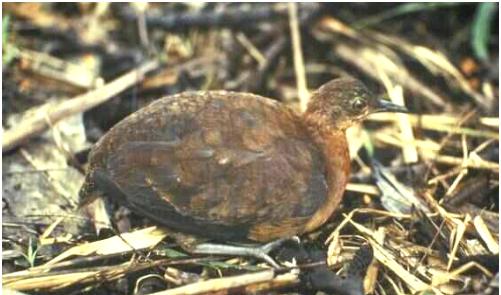
Identifying the Gray-legged Tinamou requires a keen eye, as its subtle plumage blends seamlessly into the forest floor. Adult Gray-legged Tinamous exhibit predominantly brown upperparts, which serve as excellent camouflage against the leaf litter and forest debris. Their underparts are lighter, with a more grayish hue, and the bird’s namesake gray legs are a key distinguishing feature. Unlike many other birds, the sexes are similar in appearance, making it difficult to differentiate males from females in the field.
Juvenile Gray-legged Tinamous resemble adults but may have slightly duller plumage and less pronounced leg coloration. The similarities between adults and juveniles are advantageous in avoiding predation, as the cryptic coloration aids in concealment. One must be cautious not to confuse this species with other tinamous in the region, such as the Brown Tinamou. However, the Gray-legged Tinamou's slightly smaller size and distinctly gray legs provide a reliable means of differentiation.
In flight, the Gray-legged Tinamou's silhouette is characterized by its rounded wings and relatively short, rounded tail. It is more commonly observed running through the underbrush than taking to the air. When perched, the bird remains inconspicuous, often adopting a crouched posture that minimizes its profile and enhances its ability to remain undetected in the dense forest environment.
Having trouble telling birds apart? Upload a photo to our bird identification tool for an instant species match.
Gray-legged Tinamou Habitat and Range
Preferred Habitat
The Gray-legged Tinamou thrives in the lowland tropical rainforests of the Amazon Basin, favoring areas with dense undergrowth and ample leaf litter. These habitats provide both the cover and the food resources needed for survival. The bird typically inhabits elevations ranging from sea level to around 500 meters, although it may venture slightly higher in some regions. Seasonal habitat shifts are minimal, as the Gray-legged Tinamou generally remains within its preferred forest environment throughout the year.
Unlike some bird species that adapt to urban settings, the Gray-legged Tinamou is strictly a forest dweller. Its reliance on undisturbed forest habitat makes it particularly vulnerable to deforestation and habitat fragmentation. Conservation of these pristine habitats is crucial for its continued survival. The Gray-legged Tinamou’s presence is a strong indicator of a healthy forest ecosystem, and its absence often signifies environmental degradation.
Geographic Range
The Gray-legged Tinamou is primarily found in the Amazon Basin, with its range extending across several South American countries, including Brazil, Venezuela, Colombia, and Peru. Within these countries, the bird occupies dense lowland rainforests, where it remains year-round due to its non-migratory nature. The species does not exhibit distinct breeding or wintering ranges, as it tends to stay within a defined area throughout the year.
Population density is highest in regions where the forest remains relatively undisturbed by human activity. Areas such as the Amazon River basin and lesser-known tributaries provide ideal habitats for this species. Due to its elusive nature and preference for dense cover, the Gray-legged Tinamou is not often observed in open or fragmented landscapes, contributing to its status as a less commonly seen bird.
Conservation efforts focus on protecting these vital forest habitats to ensure the bird's continued presence. The Gray-legged Tinamou serves as an indicator of forest health, and efforts to conserve its habitat also benefit a wide range of other species that share the ecosystem.
Want to know which birds visit your area? Browse our backyard birds by location guides for region-specific species lists.
What Does the Gray-legged Tinamou Eat?
The Gray-legged Tinamou primarily feeds on a diverse diet of fruits, seeds, and small invertebrates, which it forages from the forest floor. This omnivorous diet allows the bird to adapt to seasonal fluctuations in food availability. During the wet season, when fruits are more abundant, the tinamou's diet leans heavily towards a variety of berries and small fleshy fruits. In the dry season, seeds and invertebrates such as insects and small snails become more prominent components of its diet.
Foraging behavior involves a methodical search through leaf litter and underbrush, using its feet to scratch and uncover hidden food items. The Gray-legged Tinamou's bill is adapted for picking up small items, and its keen sense of smell aids in locating food. The bird typically forages alone or in pairs, often during the cooler morning and late afternoon hours when the forest is less active.
Prey size is generally small, consistent with the bird's modest size. The Gray-legged Tinamou's feeding schedule reflects its need to remain alert to predators, thus tending to feed more intensely during periods of low activity in the forest. Its role as a seed disperser is vital for the ecosystem, as it aids in the propagation of various plant species within its habitat.
Gray-legged Tinamou Behavior and Social Structure
The Gray-legged Tinamou exhibits a solitary or loosely paired social structure, often avoiding large flocks. This reserved behavior is typical among tinamous, who prefer the cover of dense vegetation to open areas where they might be more vulnerable to predators. Territorial behavior is not strongly pronounced, as individuals maintain a home range that overlaps with others without significant conflict.
Courtship displays are subtle, involving vocalizations and brief displays of plumage. Males may call to attract females, with vocalizations consisting of a series of low, resonant notes that carry well through the forest understory. Once paired, the birds engage in mutual preening and other bonding behaviors.
In response to predators, the Gray-legged Tinamou relies on its cryptic coloration and agility. When threatened, it will swiftly run through the underbrush, using its wings for short, rapid bursts to evade capture. The bird's daily activity pattern includes periods of foraging interspersed with rest and preening. It is most active during the early morning and late afternoon, avoiding the heat of midday when predator activity may be higher.
Gray-legged Tinamou Nesting and Reproduction
The nesting habits of the Gray-legged Tinamou are characteristic of ground-nesting birds, with the nest typically consisting of a simple depression in the leaf litter, sometimes lined with small twigs and leaves for added camouflage. The location preference for nests is in areas with dense cover, providing protection from predators and a stable microclimate.
Clutch size is generally small, consisting of 2 to 4 eggs, which are glossy and often exhibit a blue or greenish hue. The incubation period lasts approximately 16 to 20 days, with both male and female tinamous taking turns incubating the eggs. This shared responsibility enhances the survival prospects of the clutch by ensuring constant vigilance and warmth.
After hatching, the chicks are precocial, meaning they are relatively mature and mobile shortly after birth. They leave the nest quickly, following the parents through the forest as they forage. The fledging timeline is rapid, with young birds capable of independent foraging within weeks. Typically, the Gray-legged Tinamou raises one brood per year, though favorable conditions may occasionally allow for a second.
Gray-legged Tinamou Sounds and Vocalizations
The vocalizations of the Gray-legged Tinamou are a distinctive feature, with its primary song consisting of a series of low, melodious whistles that rise and fall in pitch. These calls serve as both territorial markers and mating calls, echoing through the dense forest understory. The rhythm is moderate, with each note lasting about a second, creating a haunting, flute-like quality that can be quite enchanting.
In addition to its song, the Gray-legged Tinamou produces various call notes, including soft clucks and purrs used for communication between mates or family groups. Alarm calls are sharp and abrupt, designed to alert nearby birds to the presence of potential threats. During the dawn chorus, the tinamou's voice blends with other forest sounds, contributing to the rich tapestry of early morning bird song.
These vocalizations play a critical role in maintaining contact within the dense vegetation where visual communication is often limited. The calls of the Gray-legged Tinamou are an integral part of its survival strategy, allowing it to navigate the challenges of its complex forest environment.
Interesting Facts About the Gray-legged Tinamou
- 1The Gray-legged Tinamou's eggs are notably glossy and are often a striking blue or green color, making them quite distinctive among bird eggs.
- 2Despite being capable of flight, the Gray-legged Tinamou prefers to run through the forest understory, using its wings primarily for short, quick escapes.
- 3The Gray-legged Tinamou is a close relative of large flightless birds like ostriches and emus, though it retains the ability to fly unlike its larger cousins.
- 4Its call is often described as flute-like, a haunting and melodious sound that can carry a considerable distance through the dense forest.
- 5The Gray-legged Tinamou's role as a seed disperser makes it essential for maintaining the diversity and health of tropical rainforest ecosystems.
- 6Unlike many bird species, the Gray-legged Tinamou shows little sexual dimorphism, with males and females appearing nearly identical.
- 7Despite its elusive nature, the presence of the Gray-legged Tinamou often indicates a healthy, undisturbed forest environment.
Gray-legged Tinamou Conservation Status
The Gray-legged Tinamou is currently listed as Least Concern by the IUCN, reflecting a stable population trend across much of its range. However, ongoing threats such as habitat loss due to deforestation and land conversion for agriculture pose significant challenges for the species. The bird's reliance on intact forest habitats makes it particularly vulnerable to these pressures, highlighting the need for effective conservation measures. Conservation efforts focus on habitat protection, with emphasis on preserving large tracts of tropical rainforest. Initiatives include the establishment of protected areas and sustainable land-use practices that balance human needs with environmental conservation. Historically, the tinamou's population has fluctuated with the extent of forest cover, and continued vigilance is necessary to ensure its long-term survival. Public awareness campaigns and community involvement in conservation projects also play a vital role in protecting the Gray-legged Tinamou. By promoting the importance of biodiversity and the ecological role of species like the tinamou, these efforts aim to foster a greater appreciation for the natural world and the necessity of preserving it.


