
Green-backed Firecrown
Sephanoides sephaniodes
Order: Apodiformes / Family: Trochilidae
Wikimedia Commons
About the Green-backed Firecrown
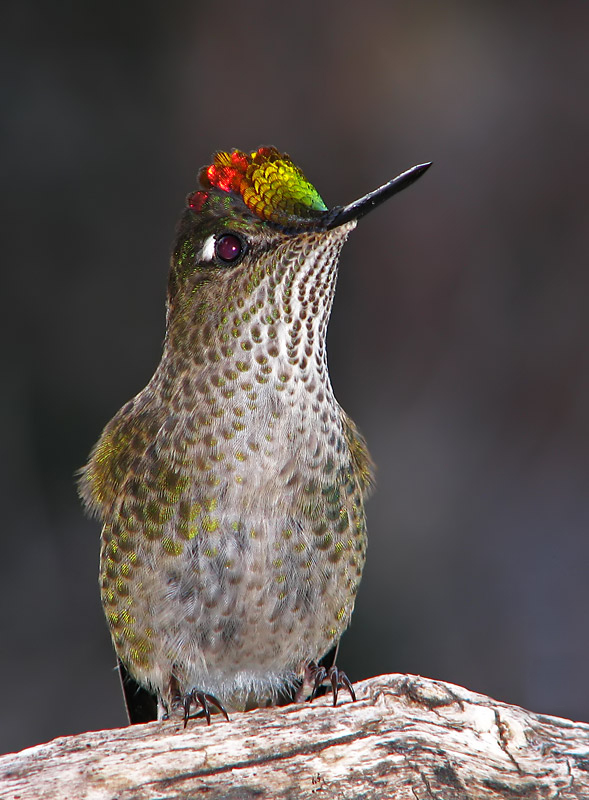
The Green-backed Firecrown (Sephanoides sephaniodes) is a captivating member of the hummingbird family found predominantly in South America. This small bird is renowned for its shimmering green plumage and the striking crown that can appear fiery red depending on the angle of light. The Green-backed Firecrown plays a vital role in its ecosystem as a pollinator, visiting numerous flowering plants and thus contributing to the genetic diversity and reproduction of flora. This hummingbird primarily inhabits the temperate forests of Chile and Argentina but is also found in peri-urban areas, demonstrating its adaptability to human presence. During the breeding season, males exhibit territorial aggression, often engaging in aerial displays to ward off intruders and attract mates. Seasonal behaviors of the Green-backed Firecrown include altitudinal migrations, where individuals move to lower elevations during the colder months in search of abundant food sources. This seasonal shift is crucial for their survival, allowing them to exploit different ecological niches throughout the year. Their presence in temperate rainforests is significant, as they contribute to the pollination of native plants such as fuchsias and various native shrubs. In addition to their ecological importance, the Green-backed Firecrown holds cultural significance in the regions it inhabits, often celebrated in folklore and art for its vibrant colors and agile flight. As climate change and habitat destruction pose increasing threats to their environment, the Green-backed Firecrown serves as an indicator species, reflecting the health of its ecosystem. Conservation efforts focusing on preserving native forests are essential to ensure the survival of this species and maintain the ecological balance in these biodiverse regions.
The Green-backed Firecrown belongs to the family Trochilidae, within the order Apodiformes. These birds typically live average 4-6 years, with some individuals reaching 8 years..
How to Identify a Green-backed Firecrown
Identifying the Green-backed Firecrown involves observing several key characteristics. Adult males are particularly striking, with an iridescent green body and a bright, fiery crown that can appear red or orange depending on light conditions. Females, while similar in size, typically exhibit a less conspicuous crown, which may appear more coppery. Juvenile Green-backed Firecrowns resemble females but often have duller plumage overall. When perched, they maintain an upright posture that highlights their streamlined bodies and relatively short tails. In flight, their rapid wing beats and agile maneuvers are typical of hummingbirds, making them distinguishable from other small birds. Although they could be confused with the Juan Fernandez Firecrown, the Green-backed Firecrown's habitat range and slightly different coloring help separate the two species. The Green-backed Firecrown's silhouette is characterized by a compact body and slightly curved bill, which is essential for accessing nectar from tubular flowers. Observers should note these features when identifying the bird in its native habitat.
Having trouble telling birds apart? Upload a photo to our bird identification tool for an instant species match.
Green-backed Firecrown Habitat and Range
Preferred Habitat
The Green-backed Firecrown prefers temperate forests, particularly those dominated by southern beeches and other native flora in Chile and Argentina. It thrives in dense, moist forest environments where flowering plants are abundant. During the winter months, these hummingbirds migrate to lower elevations, often venturing into open woodlands and shrubby areas, where they continue to find nectar-rich flowers. This altitudinal migration helps them avoid colder temperatures and scarce food resources at higher elevations. While typically associated with forested regions, the Green-backed Firecrown is also adaptable to urban environments, frequently visiting gardens and parks where suitable flowers are available. This adaptability allows them to persist in areas where natural habitats have been altered or diminished by human activity.
Geographic Range
The Green-backed Firecrown is predominantly found in the southern regions of South America, with its range spanning across Chile and Argentina. During the breeding season, these birds are commonly observed in the temperate rainforests of Chile, from the central regions to the southernmost areas. In winter, they may migrate to lower elevations and even reach the northern parts of Patagonia in Argentina. This movement is influenced by the availability of food sources and suitable climatic conditions. The Green-backed Firecrown does not undertake long-distance migrations typical of many other hummingbird species, instead opting for localized, seasonal shifts in elevation. Within their range, population density tends to be higher in areas with abundant flowering plants, such as national parks and protected reserves where their natural habitat remains intact.
Want to know which birds visit your area? Browse our backyard birds by location guides for region-specific species lists.
What Does the Green-backed Firecrown Eat?
The primary diet of the Green-backed Firecrown consists of nectar from a variety of flowering plants. They exhibit a preference for tubular flowers such as those of the fuchsia and other native shrubs. This diet is supplemented by small insects and spiders, which provide necessary proteins and nutrients. During the breeding season, when energy demands are high, they increase their intake of insects. The Green-backed Firecrown employs a hovering technique while feeding, using its long bill to access nectar deep within flowers. They forage throughout the day, with peak feeding times occurring during the early morning and late afternoon. Seasonal changes in flowering patterns influence their diet, prompting them to seek different plant species as they become available throughout the year.
Want to attract Green-backed Firecrowns to your yard? See our recommended feeders and seed types for the best results.
Green-backed Firecrown Behavior and Social Structure
The Green-backed Firecrown exhibits fascinating behaviors characteristic of hummingbirds. They are territorial, with males often defending their feeding and breeding territories aggressively against intruders. This territoriality is most pronounced during the breeding season when males perform elaborate aerial displays to attract females and deter rivals. These displays involve rapid, acrobatic flights and vocalizations that serve as both a courtship ritual and a warning to other males. Outside the breeding season, the Green-backed Firecrown may be less aggressive, occasionally forming loose flocks when food resources are abundant. In the face of predators, such as hawks or domestic cats, these hummingbirds rely on their agility and speed to evade capture. Their daily activity patterns include intense bursts of feeding followed by periods of rest, during which they conserve energy by perching quietly in secluded spots.
Green-backed Firecrown Nesting and Reproduction
Green-backed Firecrowns construct small, cup-shaped nests using plant fibers, moss, and spider silk, which provide flexibility and strength. These nests are often located on tree branches, camouflaged by surrounding foliage. The female alone is responsible for nest building and incubation. A typical clutch consists of two eggs, which she incubates for about 14-16 days. After hatching, the chicks are altricial and depend entirely on the mother for warmth and feeding. The fledging period lasts approximately 20-25 days, during which the female feeds the chicks a diet rich in insects to support their rapid growth. The Green-backed Firecrown usually raises one brood per year, though in areas with extended flowering seasons, two broods may occur.
Green-backed Firecrown Sounds and Vocalizations
The Green-backed Firecrown's primary song is a series of high-pitched, rapid notes that can be described as a tinkling or metallic chime. These vocalizations are often heard during the breeding season when males sing to establish territories and attract mates. In addition to their song, these hummingbirds produce sharp call notes that serve as communication between individuals, particularly when alerting others to the presence of predators. Alarm calls are typically harsher and more rapid, conveying urgency. During the dawn chorus, the Green-backed Firecrown contributes to the symphony of forest sounds with its distinctive, buzzy trills, which can be likened to the sound of a distant bell.
Interesting Facts About the Green-backed Firecrown
- 1The Green-backed Firecrown can hover in place for up to 15 seconds while feeding, showcasing its agility.
- 2This hummingbird can flap its wings up to 80 times per second, creating a humming sound that gives the family its name.
- 3The fiery crown of the Green-backed Firecrown is not always visible, appearing only when sunlight hits at the right angle.
- 4Green-backed Firecrowns are capable of remembering the location of individual flowers, optimizing their foraging efficiency.
- 5Despite their small size, these birds can travel over 500 kilometers during their altitudinal migrations.
- 6The Green-backed Firecrown contributes to pollination of over 20 plant species in its native range.
- 7Females alone are responsible for raising the young, showcasing dedication to their offspring's survival.
Green-backed Firecrown Conservation Status
The Green-backed Firecrown is currently listed as Least Concern by the IUCN, with stable population trends. However, habitat loss due to deforestation and human encroachment poses ongoing threats to their natural environments. Conservation efforts in Chile and Argentina focus on preserving native forests and creating protected areas that support biodiversity. Historical records indicate that while populations have fluctuated due to habitat changes, conservation initiatives have been successful in maintaining stable numbers. Continued efforts are necessary to address the impacts of climate change, which could alter flowering patterns and food availability, crucial for the Green-backed Firecrown's survival.
Attracting Green-backed Firecrowns to Your Feeder
The Green-backed Firecrown is a regular visitor to backyard bird feeders across its range. At the Eye On The Fly feeding station, we observe Green-backed Firecrowns regularly and capture footage with our feeder cameras.
Other Trochilidae Species


Birds Similar to the Green-backed Firecrown
These species are often confused with the Green-backed Firecrown due to similar appearance or overlapping range.

