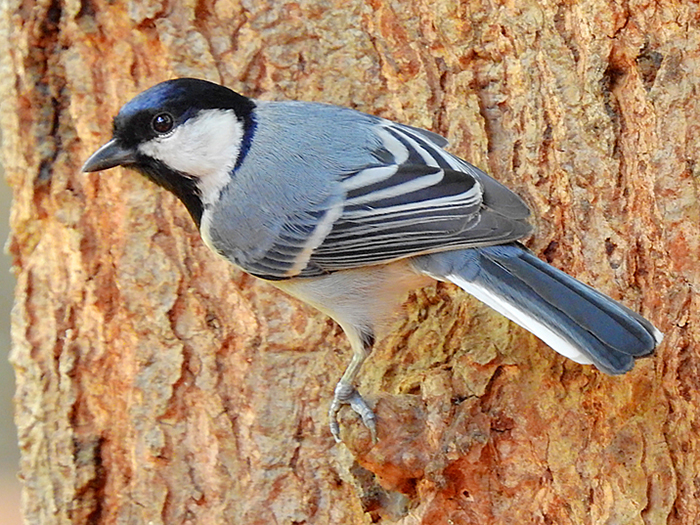
Green-backed Tit
Parus monticolus
Order: Passeriformes / Family: Paridae

Wikimedia Commons
About the Green-backed Tit
The Green-backed Tit (Parus monticolus) stands out in the avian world with its vibrant green plumage and bold black markings. This small passerine bird is a member of the family Paridae, which is known for its diverse and adaptive species. The Green-backed Tit occupies a significant ecological role in its habitat, primarily found across the temperate and subtropical forests of the Himalayas, Indochina, and parts of Southeast Asia. Its presence in these regions indicates a healthy forest ecosystem, as it contributes to insect control and facilitates seed dispersal. In northern India, Nepal, and Bhutan, the Green-backed Tit can be observed flitting through the dense foliage of oak and pine forests. During the breeding season in spring, these birds are particularly active, engaging in dynamic foraging behaviors and vocal communications that signal the onset of the nesting period. Their adaptability allows them to exploit a variety of forest types, from temperate broadleaf to mixed and coniferous forests, extending their range into the deciduous forests of Myanmar and southern China. The Green-backed Tit plays a crucial role in its ecosystem, primarily due to its diet of insects and seeds, which helps in controlling pest populations and facilitating plant regeneration. Seasonal behaviors of the Green-backed Tit include altitudinal movements in response to temperature changes and food availability. In winter, they may descend to lower elevations or explore new territories as they search for food, joining mixed-species flocks that offer protection and increased foraging opportunities. This seasonal adaptability underscores the bird's resilience and ecological importance. The Green-backed Tit's presence in diverse habitats across Asia not only highlights its adaptability but also its role as an ecological indicator, reflecting the health and stability of forest ecosystems. Observing these birds provides valuable insights into the intricate balances within these environments, marking the Green-backed Tit as a species of both scientific interest and aesthetic appeal.
The Green-backed Tit belongs to the family Paridae, within the order Passeriformes. These birds typically live average lifespan of 3-4 years, with the potential to live up to 7 years in the wild..
How to Identify a Green-backed Tit
The Green-backed Tit is a medium-sized passerine, measuring around 13-14 cm in length. Adult birds exhibit a striking appearance with a vivid green back and wings, contrasting with a sharp black crown and bib. The underparts are a bright yellow, accentuated by a narrow black band across the chest. This distinctive band can help differentiate them from similar species, such as the Great Tit, which lacks the green back. Juveniles resemble adults but have a duller coloration, with less defined black markings. Male and female Green-backed Tits are similar in appearance, although males may exhibit slightly brighter plumage during the breeding season. When observing these birds, note their perching posture, which is typically upright and alert, allowing them to scan for food and predators. In flight, their silhouette is compact, with rapid wingbeats characteristic of the Paridae family. The Green-backed Tit's combination of colors and distinctive markings makes it relatively easy to identify in its natural habitat, even amidst dense foliage.
Having trouble telling birds apart? Upload a photo to our bird identification tool for an instant species match.
Green-backed Tit Habitat and Range
Preferred Habitat
The Green-backed Tit thrives in a variety of forest habitats, predominantly in temperate and subtropical zones. It is most commonly found in oak and pine forests, but it can also inhabit mixed and coniferous forests. In the Himalayan region, these birds are typically seen at elevations ranging from 1,000 to 3,500 meters. They favor areas with dense tree cover and rich undergrowth, which provide ample foraging opportunities and nesting sites. During winter, the Green-backed Tit may shift to lower elevations or different forest types in search of food. While primarily a forest bird, it occasionally ventures into urban parks and gardens, especially in areas where natural habitat has been encroached upon by development. These birds demonstrate remarkable adaptability to various forested environments, showcasing their ability to thrive in both pristine and disturbed habitats.
Geographic Range
The Green-backed Tit's range spans several Asian countries, including India, Nepal, Bhutan, Myanmar, and China. It is a resident breeder in the Himalayas, where it occupies montane forests throughout the year. In regions like northern India and Bhutan, the Green-backed Tit is a common sight in forests at elevations from 1,000 to 3,500 meters. During the non-breeding season, some populations may undertake altitudinal migrations, moving to lower elevations in response to colder temperatures and reduced food availability. In China, its range extends into the subtropical forests of Yunnan and Sichuan, where dense vegetation offers abundant resources. Although not a long-distance migrant, the Green-backed Tit's adaptability to seasonal changes in its environment allows it to maintain stable populations across its range.
Want to know which birds visit your area? Browse our backyard birds by location guides for region-specific species lists.
What Does the Green-backed Tit Eat?
The diet of the Green-backed Tit consists primarily of insects and other small invertebrates, which it actively seeks out in the forest canopy and understory. Beetles, caterpillars, and spiders make up a significant portion of its diet, providing essential protein during the breeding season. During autumn and winter, when insect populations decline, the Green-backed Tit supplements its diet with seeds and berries. This seasonal shift in diet highlights the species' adaptability to changing food availability. Foraging behavior involves agile movements through foliage, often hanging upside down to reach hidden insects. These birds are known to join mixed-species foraging flocks, which increases their efficiency in locating food while reducing the risk of predation. The Green-backed Tit's diverse diet and foraging techniques play a vital role in maintaining the ecological balance within its habitat.
Want to attract Green-backed Tits to your yard? See our recommended feeders and seed types for the best results.
Green-backed Tit Behavior and Social Structure
The Green-backed Tit exhibits complex social behavior, often forming small flocks outside the breeding season. These flocks are sometimes part of larger mixed-species groups, which provide safety in numbers and enhance foraging success. Territorial during the breeding season, these birds aggressively defend their nesting sites against intruders. Courtship displays include vocalizations and physical displays such as wing flapping and tail fanning. The Green-backed Tit responds to predators with alarm calls and evasive flying. Its daily activity pattern involves early morning and late afternoon foraging, with periods of rest during midday. These birds display a high level of adaptability, adjusting their social structures and foraging strategies according to environmental conditions.
Green-backed Tit Nesting and Reproduction
Green-backed Tits construct their nests in tree cavities, often utilizing abandoned woodpecker holes or natural crevices. The nests are lined with moss, feathers, and animal hair to provide insulation and comfort for the eggs and chicks. A typical clutch consists of 4-8 eggs, which the female incubates for about 14-16 days. Both parents participate in feeding the chicks, which fledge approximately 18-20 days after hatching. The Green-backed Tit may raise one or two broods per year, depending on environmental conditions and food availability. Parental roles are shared, with males assisting in feeding and protecting the family. This cooperative breeding strategy ensures high survival rates for the young.
Green-backed Tit Sounds and Vocalizations
The Green-backed Tit's primary song is a melodious series of high-pitched notes, often described as a ringing ‘ti-ti-chu’ that carries well through the forest. This song serves as both a territorial marker and a mate attraction call during the breeding season. The bird also produces a variety of call notes, including sharp ‘chick’ sounds used for communication within flocks. Alarm calls are louder and more insistent, alerting other birds to potential threats. During the dawn chorus, the Green-backed Tit's vocalizations contribute to the vibrant soundscape of its habitat, marking its presence in the ecosystem.
Interesting Facts About the Green-backed Tit
- 1Green-backed Tits have been observed using tools, such as twigs, to extract insects from crevices.
- 2They can join mixed-species flocks of up to 30 birds, enhancing foraging efficiency.
- 3The Green-backed Tit's coloration provides excellent camouflage among the leaves and branches of its forest habitat.
- 4During winter, these birds often descend to lower elevations, showcasing their adaptability to changing conditions.
- 5Green-backed Tits are known for their acrobatic foraging, often seen hanging upside down to access food sources.
Green-backed Tit Conservation Status
The Green-backed Tit is currently listed as Least Concern on the IUCN Red List, with stable population trends across its range. Despite habitat loss due to deforestation in some areas, this species remains widespread and resilient. Conservation efforts focus on preserving forest habitats and monitoring population dynamics to prevent future declines. The adaptability of the Green-backed Tit to various forest types aids its survival in fragmented landscapes, although continued vigilance is necessary to ensure long-term stability. Historical population data suggest that the species has maintained stable numbers, benefiting from its wide range and varied diet.
Attracting Green-backed Tits to Your Feeder
The Green-backed Tit is a regular visitor to backyard bird feeders across its range. At the Eye On The Fly feeding station, we observe Green-backed Tits regularly and capture footage with our feeder cameras.
Other Paridae Species


Birds Similar to the Green-backed Tit
These species are often confused with the Green-backed Tit due to similar appearance or overlapping range.