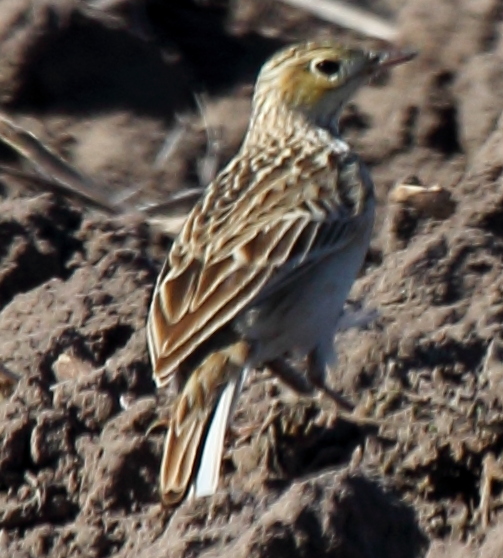
Grimwood's Longclaw
Macronyx grimwoodi
Order: Passeriformes / Family: Motacillidae

Wikimedia Commons
About the Grimwood's Longclaw
Grimwood's Longclaw (Macronyx grimwoodi) is a remarkable bird endemic to the grasslands of south-central Africa. It belongs to the family Motacillidae, which also includes pipits and wagtails. This species is named after the ornithologist M. Grimwood who first documented its unique presence. Found primarily in Zambia and Angola, Grimwood's Longclaw inhabits open grasslands and moist savannas, where it plays a vital ecological role as both a predator of insects and a prey species for larger birds. These longclaws are particularly important for maintaining the balance of insect populations, which in turn supports the health of the grassland ecosystem. Seasonal behaviors of Grimwood's Longclaw include territorial displays during the breeding season and more secretive habits when not breeding. During the wet season, these birds are most active and vocal, maximizing their chances of attracting mates and deterring rivals. Their presence is a good indicator of healthy grassland habitats, as they are sensitive to habitat degradation and fragmentation. Conservation efforts focus on preserving these grassland areas, which are increasingly threatened by agriculture and urban expansion.
The Grimwood's Longclaw belongs to the family Motacillidae, within the order Passeriformes. These birds typically live average 5-7 years with a max recorded of 9 years..
How to Identify a Grimwood's Longclaw
Grimwood's Longclaw is most easily identified by its vibrant yellow underparts that contrast sharply with its darker back and wings. Adult plumage features a distinctive yellow throat and breast, bordered by a bold black band, which is absent in juveniles. The upperparts are generally brown with streaks, aiding camouflage among the grasses. Males and females appear similar, though males usually exhibit slightly more vivid coloration. In flight, the long tail and pointed wings are notable, resembling those of a pipit. Unlike pipits, however, Grimwood's Longclaw has longer legs and a more robust build, which are adaptations for its ground-dwelling lifestyle. When perched, it often adopts a horizontal posture, accentuating its long legs and tail. While it can be confused with other longclaws, the clear yellow and black throat markings are distinctive. Observers should note these features when attempting to differentiate it from similar species in overlapping ranges.
Having trouble telling birds apart? Upload a photo to our bird identification tool for an instant species match.
Grimwood's Longclaw Habitat and Range
Preferred Habitat
Grimwood's Longclaw thrives in open grasslands and moist savannas, particularly favoring areas with tall grasses. These habitats provide ample cover and abundant insect prey, crucial for their survival and reproduction. They typically inhabit elevations ranging from 1,000 to 2,000 meters, where the climate and vegetation suit their ecological needs. While primarily a resident of rural landscapes, Grimwood's Longclaw occasionally ventures into the fringes of urban areas, provided suitable grassland patches remain. Seasonal habitat shifts occur, with individuals moving short distances to find optimal conditions for breeding and feeding, particularly during periods of drought or heavy rainfall. Conservation of these habitats is critical, as they are increasingly encroached upon by agricultural development.
Geographic Range
The range of Grimwood's Longclaw is largely confined to Zambia and Angola, with its presence most concentrated in the miombo woodlands and surrounding grasslands of these regions. Breeding territories are established in the heart of these grasslands, with population density hotspots in areas where grassland conservation efforts have been successful. As a non-migratory species, their movements are relatively localized, often dictated by seasonal changes in food availability and habitat conditions. While not known to undertake long migrations, Grimwood's Longclaw may disperse more widely during the non-breeding season in search of resources. The species' historical range has contracted slightly due to habitat loss, making the preservation of existing grasslands a conservation priority.
Want to know which birds visit your area? Browse our backyard birds by location guides for region-specific species lists.
What Does the Grimwood's Longclaw Eat?
Grimwood's Longclaw primarily feeds on insects, which they capture through a methodical foraging technique, often walking slowly and deliberately through grasslands to flush out prey. Their diet includes beetles, grasshoppers, caterpillars, and other small invertebrates. During the breeding season, their diet shifts slightly to include more protein-rich insects to support the increased energy requirements of reproduction. This seasonal diet change illustrates the bird's adaptability and the importance of diverse insect populations in their habitats. Prey size is typically small to medium, consistent with the bird's ability to handle and consume it effectively. Feeding generally occurs during early morning and late afternoon when insect activity is high.
Grimwood's Longclaw Behavior and Social Structure
Grimwood's Longclaw exhibits a predominantly solitary lifestyle, though it may form loose associations with other grassland birds when not breeding. Social structure during the breeding season is characterized by strong territoriality, with males performing aerial displays and singing to establish and defend territories. These displays are crucial for attracting mates and deterring potential rivals. Courtship often involves elaborate song sequences and visual displays. Outside the breeding season, Grimwood's Longclaw becomes more elusive, minimizing interactions to conserve energy. Flocking patterns are not common, but individuals may gather in areas of abundant food. When threatened by predators, they rely on their cryptic plumage and quick, low flights to evade capture. Their daily activity patterns are diurnal, with peak activities occurring in cooler parts of the day.
Grimwood's Longclaw Nesting and Reproduction
The nesting habits of Grimwood's Longclaw involve constructing cup-shaped nests made from grass and lined with finer materials. Nests are usually placed on the ground, well concealed among tall grasses to protect from predators. A typical clutch consists of two to three eggs, with the incubation period lasting about two weeks. Both parents participate in feeding the chicks, which fledge approximately two weeks after hatching. Parental roles are well defined, with both male and female involved in feeding and protection of the nestlings. Usually, only one brood is raised per breeding season, although favorable conditions may allow for a second. Nest site selection is crucial for reproductive success, with preference given to locations that offer ample cover and proximity to reliable food sources.
Grimwood's Longclaw Sounds and Vocalizations
The primary song of Grimwood's Longclaw is a series of melodious, rising and falling notes, delivered with a clear, flute-like quality. This song serves both to attract mates and to establish territory. Their call notes are sharp and distinctive, often used for communication between mates or signaling alarm. The alarm call, a loud and abrupt 'chip', is used to warn of potential dangers. During the dawn chorus, Grimwood's Longclaw contributes its unique song to the symphony of grassland birds. Its vocalizations, while not as varied as some songbirds, are nonetheless characteristic and serve important social functions.
Interesting Facts About the Grimwood's Longclaw
- 1Grimwood's Longclaw was named in honor of M. Grimwood, an ornithologist who first documented its distinctiveness.
- 2Despite resembling pipits, Grimwood's Longclaw is not closely related and belongs to a different genus altogether.
- 3The bird's distinctive black necklace is a key feature that sets it apart from other grassland species.
- 4Grimwood's Longclaw plays a crucial role in controlling insect populations in its grassland habitat.
- 5This species prefers habitats at elevations between 1,000 and 2,000 meters, making it a unique resident of high grasslands.
- 6Its voice, a clear and melodious flute-like song, is a signature sound of the African grasslands.
- 7Grimwood's Longclaw adapts well to changes in its environment, modifying its diet and behavior with seasonal shifts.
Grimwood's Longclaw Conservation Status
Grimwood's Longclaw is currently listed as Vulnerable on the IUCN Red List, with a declining population trend. Primary threats include habitat loss due to agricultural expansion and human encroachment on grasslands. Conservation efforts focus on habitat preservation and restoration, particularly in regions where grassland ecosystems are under threat. Historically, population numbers have fluctuated with changes in land use, emphasizing the need for targeted conservation strategies. Collaborative initiatives between governments and conservation organizations aim to promote sustainable land management practices that benefit both human and avian communities.