
Hellmayr's Pipit
Anthus hellmayri
Order: Passeriformes / Family: Motacillidae

Wikimedia Commons
About the Hellmayr's Pipit
Hellmayr's Pipit (Anthus hellmayri) inhabits the expansive grasslands of South America, specifically thriving in Argentina, Uruguay, and southern Brazil. This small passerine bird plays a crucial role in the ecosystem by controlling insect populations and serving as prey for various predators. It occupies open grasslands and pampas regions, where it finds ample food and shelter. During breeding season, Hellmayr's Pipit becomes particularly active, showcasing its melodious song to attract mates and establish territory. The bird adapts well to the seasonal shifts in these areas, often altering its foraging behavior to make the most of available resources. Seasonal movements see Hellmayr's Pipit migrate within its range, with some populations undertaking short-distance migrations to find optimal conditions. The species' presence in these regions highlights the interconnectedness of grassland ecology, as it contributes to seed dispersal and soil aeration through its foraging activities. Conservation of its habitat is vital, as agricultural activities increasingly threaten the grasslands it calls home. In addition to its ecological roles, Hellmayr's Pipit serves as an indicator species for the health of grassland ecosystems, providing insights into the impacts of climate change and habitat degradation. Its adaptability to different conditions within its range suggests a resilience that is crucial for its survival amid environmental changes. Dedicated conservation efforts focus on protecting and restoring grassland habitats to ensure that Hellmayr's Pipit and other grassland species can continue to thrive. Understanding the ecological significance of Hellmayr's Pipit requires a comprehensive approach that considers its interactions with other species and its habitat. This understanding is vital for developing effective conservation strategies that balance human activities with the preservation of natural ecosystems.
The Hellmayr's Pipit belongs to the family Motacillidae, within the order Passeriformes. These birds typically live average 3-5 years with a max recorded of 7 years..
How to Identify a Hellmayr's Pipit
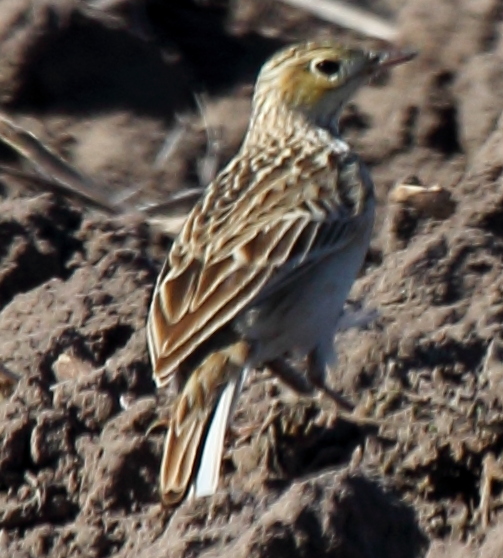
Hellmayr's Pipit is a small, streaked brown songbird with a length of approximately 15 centimeters. Adult plumage features a warm brown back with darker streaks, a white belly, and a subtly streaked breast, which helps it blend into its grassland environment. The face exhibits a pale supercilium and a slender, pointed bill. Juveniles appear similar to adults but tend to have fresher plumage and more prominent streaking. Males and females are alike in appearance, making sex differentiation challenging without behavioral observation during breeding season. In flight, Hellmayr's Pipit displays a distinctive silhouette with rapid, bounding flight patterns typical of pipits. When perched, it often assumes an upright posture, frequently bobbing its tail. This species can be confused with other pipit species, such as the Correndera Pipit, but Hellmayr's Pipit can be distinguished by its finer streaking and more melodic song. Observers must note subtle differences in plumage and calls to accurately identify this bird in the field.
Having trouble telling birds apart? Upload a photo to our bird identification tool for an instant species match.
Hellmayr's Pipit Habitat and Range
Preferred Habitat
Hellmayr's Pipit primarily inhabits open grasslands, pampas, and occasionally agricultural fields in South America. It prefers lowland regions but can be found at elevations up to 1,500 meters. The species demonstrates some flexibility in habitat use, shifting between native grasslands and modified landscapes such as pastures. During the breeding season, it favors areas with dense vegetation for nesting, while in non-breeding months, it may move to areas with sparser cover. Urban presence is rare, as Hellmayr's Pipit typically avoids heavily developed areas, relying on rural landscapes for feeding and breeding. The bird's habitat preferences make it vulnerable to habitat loss due to agricultural expansion and land conversion.
Geographic Range
Hellmayr's Pipit breeds across southern South America, with concentrations in Argentina, Uruguay, and southern Brazil. During winter, some populations undertake short migrations within these countries, moving to milder climates or areas with abundant food. Notably, Hellmayr's Pipit does not migrate over long distances, but its range shifts can be significant within its relatively confined geographic area. Population density is highest in the open grasslands and pampas of northern Argentina and Uruguay. The species is generally absent from the heavily forested regions of Brazil, preferring the open spaces of its preferred grassland habitats. Although its range is somewhat limited, Hellmayr's Pipit is widespread within its preferred habitat zones, making it a common sight for birders in these regions.
Want to know which birds visit your area? Browse our backyard birds by location guides for region-specific species lists.
What Does the Hellmayr's Pipit Eat?
Hellmayr's Pipit's diet consists primarily of insects and other small invertebrates. It feeds on grasshoppers, beetles, ants, and spiders, supplementing its diet with seeds and plant matter, particularly in the non-breeding season. The bird employs a ground foraging technique, walking and hopping through grasslands while pecking at prey items. Hellmayr's Pipit carefully selects prey based on size and availability, often consuming insects that measure up to 1 centimeter in length. Feeding occurs throughout the day, with peaks in activity during the early morning and late afternoon when insect availability is highest. Seasonal dietary shifts are common, as the bird adjusts its feeding habits to exploit the most abundant resources in its environment.
Hellmayr's Pipit Behavior and Social Structure
Hellmayr's Pipit exhibits solitary or loosely territorial behavior during the breeding season. Males sing prominently from elevated perches to establish territory and attract females. The song, a series of melodious trills and whistles, serves as both a mate attraction and territorial declaration. Outside of the breeding season, Hellmayr's Pipit may form small, loose flocks for foraging, particularly in areas where food is abundant. The species displays a cautious demeanor when approached by potential predators, often relying on its camouflaged plumage and low profile to avoid detection. Daily activity patterns include periods of active foraging interspersed with rest, especially during the hottest parts of the day when the bird seeks shade. Hellmayr's Pipit remains vigilant, frequently scanning its surroundings for threats.
Hellmayr's Pipit Nesting and Reproduction
Hellmayr's Pipit constructs a cup-shaped nest on the ground, often hidden among dense grass or low shrubs. The nest consists of grass, leaves, and rootlets, providing insulation and camouflage. Nest sites are carefully chosen to minimize exposure to predators and harsh weather conditions. A typical clutch contains 2 to 4 eggs, which are incubated by the female for approximately 12 to 14 days. Once hatched, both parents participate in feeding the chicks, which fledge around 12 to 15 days after hatching. Hellmayr's Pipit may raise two broods per year, depending on environmental conditions and food availability. Parental roles are well-defined, with both sexes sharing responsibilities for chick rearing and nest defense.
Hellmayr's Pipit Sounds and Vocalizations
The primary song of Hellmayr's Pipit is a series of melodious trills and whistles, delivered from elevated perches. The rhythm is fluid, with variations in pitch that create a complex, pleasant soundscape. Call notes consist of soft, high-pitched 'tsip' sounds used for communication between individuals. Alarm calls are sharper and more insistent, alerting conspecifics to potential danger. During the dawn chorus, males sing frequently, establishing territories and reinforcing pair bonds. The song of Hellmayr's Pipit is often compared to that of other grassland birds, but its unique combination of melodic elements sets it apart.
Interesting Facts About the Hellmayr's Pipit
- 1Hellmayr's Pipit was named in honor of ornithologist Carl Eduard Hellmayr, who made significant contributions to avian taxonomy.
- 2This species exhibits a remarkable ability to adapt its foraging strategies based on seasonal insect availability.
- 3Hellmayr's Pipit can cover over 10 kilometers in a day while foraging, illustrating its active lifestyle.
- 4Despite its small size, Hellmayr's Pipit maintains a diverse diet, consuming over 50 species of insects and invertebrates.
- 5The bird's melodic song plays a vital role in territorial disputes and mate selection during the breeding season.
- 6Hellmayr's Pipit's breeding habitats are some of the most threatened ecosystems in South America, highlighting its conservation importance.
- 7The species' preference for grassland habitats makes it an important indicator of ecosystem health and biodiversity.
Hellmayr's Pipit Conservation Status
Hellmayr's Pipit is currently listed as Least Concern by the IUCN, but its population trends are uncertain due to habitat loss and degradation. The primary threats include agricultural expansion, land conversion, and pesticide use, which reduce available habitat and food sources. Conservation efforts focus on preserving and restoring natural grasslands and promoting sustainable agricultural practices. Historical population changes have not been well-documented, but ongoing monitoring is essential to detect shifts in distribution and abundance. Grassland conservation initiatives play a crucial role in ensuring the long-term survival of Hellmayr's Pipit and other species that depend on these ecosystems.
Other Motacillidae Species



Birds Similar to the Hellmayr's Pipit
These species are often confused with the Hellmayr's Pipit due to similar appearance or overlapping range.
