
Humblot's Heron
Ardea humbloti
Order: Pelecaniformes / Family: Ardeidae
Wikimedia Commons
About the Humblot's Heron
Humblot's Heron, scientifically known as Ardea humbloti, is an impressive wading bird most notable for its substantial size and distinctive grayish plumage. This heron is native to Madagascar, where it plays a crucial ecological role in the island's wetland environments. It is often observed in both freshwater and brackish habitats, including lakes, marshes, and riverbanks. The presence of Humblot's Heron indicates a healthy ecosystem due to its position as a top predator within its habitat.
This species of heron is particularly significant because it highlights the unique biodiversity of Madagascar, a country known for its high levels of endemism. The Humblot's Heron is named in honor of Charles Humblot, a French naturalist who contributed significantly to the study of Madagascar's wildlife. Unfortunately, Ardea humbloti is currently listed as endangered on the IUCN Red List, primarily due to habitat destruction and degradation, which threatens its survival.
Ecologically, Humblot's Heron aids in controlling fish populations, thus contributing to the balance within aquatic ecosystems. The heron is generally solitary outside of the breeding season, which aligns with its territorial nature. During the breeding season, however, it becomes more sociable, forming loose colonies. Seasonal behaviors include shifts in feeding habits and a more pronounced presence in less disturbed areas, as it avoids human activity when possible. Protecting its habitat remains essential for the conservation of this remarkable species.
The Humblot's Heron belongs to the family Ardeidae, within the order Pelecaniformes. These birds typically live average 12 years, with limited data on maximum lifespan..
How to Identify a Humblot's Heron
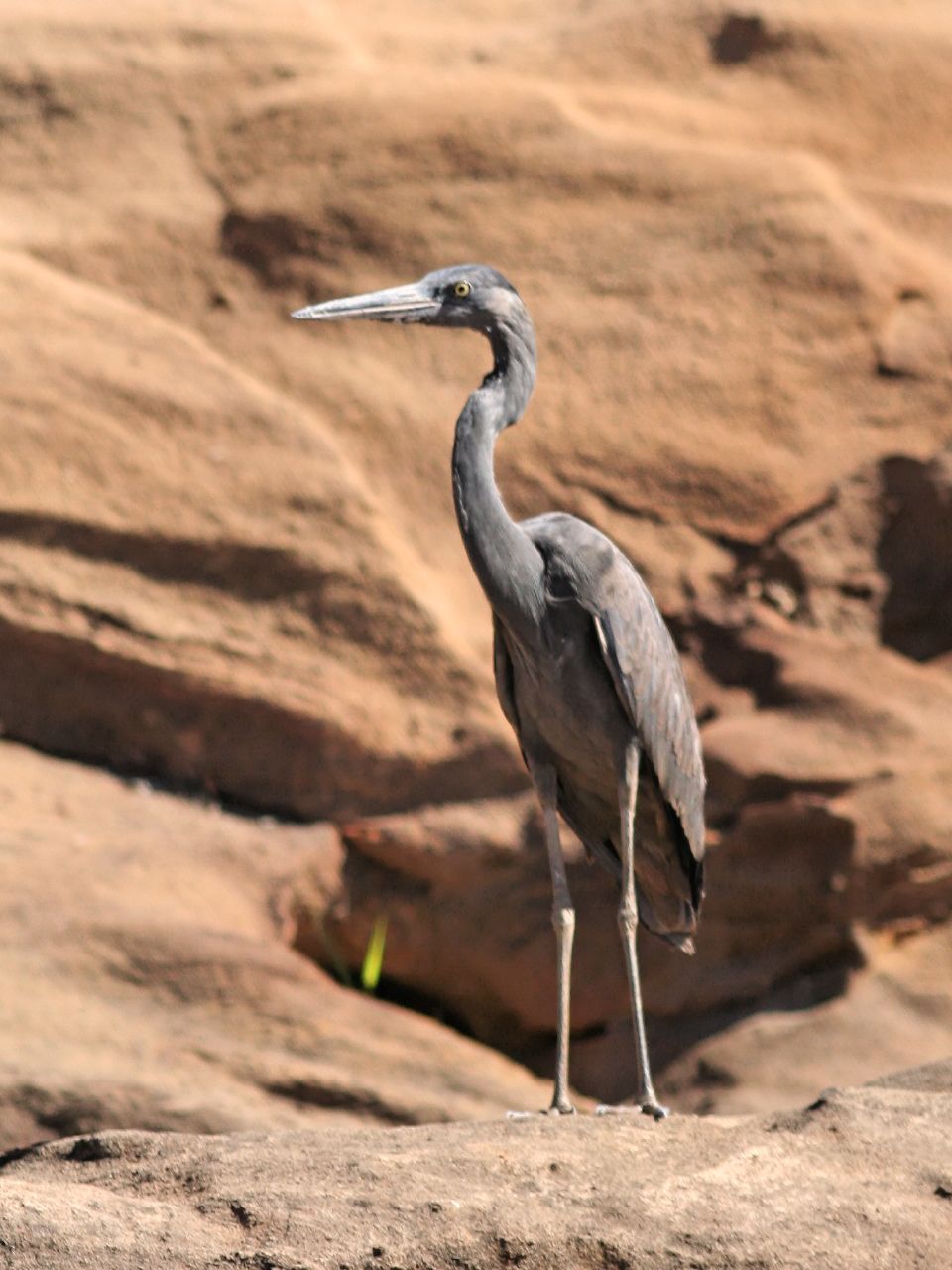
The Humblot's Heron is one of the larger species within the Ardeidae family, with adults reaching up to 92-100 cm in length and a wingspan that can exceed 150 cm. Its plumage is predominantly gray, with a paler underbelly and darker streaks along the neck. The neck is long and sinuous, a characteristic feature of many heron species. Unlike some herons, there is little sexual dimorphism, meaning males and females appear similar in plumage and size.
Juvenile Humblot's Herons can be distinguished by their slightly duller coloration and more ruffled plumage. Their necks might display less pronounced streaking compared to adults. In flight, the heron exhibits a characteristic silhouette with its neck retracted and long legs extending beyond the tail. This posture, combined with its large wingspan, makes it quite recognizable against the skyline.
Confusion may arise with other heron species, such as the Grey Heron, but Humblot's Heron can be distinguished by its specific range and slightly bulkier build. Perching posture includes standing still for extended periods, often in shallow water, where it waits patiently for prey.
Having trouble telling birds apart? Upload a photo to our bird identification tool for an instant species match.
Humblot's Heron Habitat and Range
Preferred Habitat
Humblot's Heron predominantly inhabits Madagascar's diverse wetland ecosystems, including lakes, marshes, and riverine areas. It prefers lowland regions but can occasionally be found at elevations up to 1,500 meters. This preference for wetlands makes it a key indicator species for the health of these environments.
Seasonal shifts may occur as the heron moves to areas with optimal water levels and abundant food supply. While it remains largely in rural areas, Humblot's Heron can also adapt to more developed locations, provided there is suitable habitat. Unlike some other heron species, it does not commonly venture into urban settings, maintaining a preference for undisturbed natural habitats.
Geographic Range
The range of Humblot's Heron is highly localized, with its primary population residing in Madagascar. There are no significant migratory behaviors, and the heron is considered a year-round resident of the island. Its range spans various parts of Madagascar, particularly in regions that offer suitable wetland habitats.
Populations are concentrated in areas with abundant water bodies, such as Lake Alaotra and the wetlands surrounding the Betsiboka River. These locations support higher densities of Humblot's Heron due to the availability of food and nesting sites. The absence of significant migration means that conservation efforts must focus on these key regions to ensure the survival of the species.
Want to know which birds visit your area? Browse our backyard birds by location guides for region-specific species lists.
What Does the Humblot's Heron Eat?
Humblot's Heron's diet primarily consists of fish, which it catches with remarkable precision using its long, sharp bill. This heron employs a patient, stalking approach, often standing still in shallow waters before striking quickly to capture unsuspecting prey.
In addition to fish, the heron consumes amphibians, small reptiles, and occasionally small mammals and insects. Seasonal changes in diet are minimal, although availability of prey can shift with water levels and environmental conditions. The heron typically forages during the day, with peak activity in the early morning and late afternoon when prey is most accessible.
Humblot's Heron Behavior and Social Structure
Humblot's Heron exhibits solitary behavior outside of the breeding season, maintaining distinct territories often marked by vocalizations and displays. During the breeding season, it becomes more social, forming loose colonies near suitable nesting sites.
Courtship displays involve mutual preening and bill snapping, a behavior that strengthens pair bonds. Territorial behavior is pronounced, with individuals defending feeding and nesting areas against conspecifics and other potential threats. The heron is primarily diurnal, with activity patterns revolving around foraging and nesting duties.
In response to predators, the Humblot's Heron employs a combination of camouflage and alert posturing. Its gray plumage blends well with the wetland environment, providing it with a degree of stealth against both natural predators and human disturbances.
Humblot's Heron Nesting and Reproduction
Humblot's Heron builds nests in reed beds or low trees, often using sticks and twigs to create a sturdy platform. Nesting sites are typically located near water, ensuring close proximity to feeding grounds.
The clutch size usually ranges from 2 to 4 eggs, with both parents sharing incubation duties over a period of approximately 25-28 days. After hatching, chicks remain in the nest for another 50-60 days before fledging. Parental roles include feeding and protecting the young, with both parents contributing equally until the chicks become independent.
Humblot's Heron typically raises one brood per year, though in some cases, a second brood might be attempted if conditions are favorable. Nesting success is highly dependent on habitat quality and the availability of food resources.
Humblot's Heron Sounds and Vocalizations
The primary vocalization of Humblot's Heron is a deep, resonant call that can be heard as a series of 'kraah kraah' notes, especially during the breeding season. These calls serve both as territorial markers and communication between mates.
Alarm calls are more abrupt and harsh, often emitted when the heron senses potential danger. During the dawn chorus, Humblot's Heron adds its voice to the symphony of the wetland, creating a complex acoustic landscape.
Comparatively, its calls are deeper and more resonant than those of the more common Grey Heron, providing a distinct auditory identifier for experienced birders.
Interesting Facts About the Humblot's Heron
- 1Humblot's Heron is one of the largest heron species native to Madagascar, reaching up to 100 cm in length.
- 2Despite their size, Humblot's Herons are known for their stealth and patience when hunting fish in shallow waters.
- 3The heron is named after Charles Humblot, a noted French naturalist and explorer of Madagascar.
- 4Humblot's Heron exhibits minimal sexual dimorphism, making males and females difficult to distinguish visually.
- 5This species is critically dependent on Madagascar's wetland ecosystems, serving as an indicator of environmental health.
- 6Humblot's Heron has adapted to a diet that includes amphibians and reptiles, showcasing its opportunistic feeding behavior.
- 7The heron contributes to the ecological balance by controlling fish populations in its native waterways.
Humblot's Heron Conservation Status
Currently listed as endangered on the IUCN Red List, Humblot's Heron faces several threats, primarily habitat destruction due to agriculture and human encroachment. Wetland drainage and pollution further exacerbate these challenges. Conservation efforts focus on habitat protection and restoration, alongside initiatives to prevent further degradation. Historical population declines highlight the need for ongoing monitoring and protection measures. Community-based conservation projects in Madagascar strive to balance human needs with the survival of this remarkable bird.
Other Ardeidae Species


Birds Similar to the Humblot's Heron
These species are often confused with the Humblot's Heron due to similar appearance or overlapping range.
