
Hylophilus bulunensis
Hylophilus bulunensis
Order: Passeriformes / Family: Vireonidae
About the Hylophilus bulunensis
The Hylophilus bulunensis, a member of the Vireonidae family, is a small passerine bird that captivates ornithologists and birdwatchers with its vibrant olive-green plumage and elusive nature. Found primarily in the Amazon Basin, this bird thrives in the humid, densely forested regions of South America, including countries such as Brazil, Colombia, and Peru. Its presence in these biodiverse ecosystems plays a crucial role in maintaining the ecological balance, as it participates in seed dispersal and insect population control.
The species is of significant interest due to its restricted range and specialized habitat preferences. Its adaptation to the upper canopy layers of rainforests allows it to exploit a niche that few other birds occupy. The Hylophilus bulunensis contributes to the intricate web of life by aiding in the pollination of certain plant species and serving as prey for larger avian predators, thus supporting the food chain.
Despite its importance, the Hylophilus bulunensis faces threats from habitat destruction and deforestation, pressing issues in the Amazon region. Seasonal behaviors include varying vocal activity and potential slight altitudinal migrations to adapt to environmental changes. These behaviors highlight the bird's resilience and its ability to navigate the challenges of its ever-changing environment. Understanding the ecological role and conservation status of the Hylophilus bulunensis is vital for preserving the delicate balance of the rainforest ecosystems it inhabits.
The Hylophilus bulunensis belongs to the family Vireonidae, within the order Passeriformes. These birds typically live lifespan is estimated at 5-7 years, though precise information is lacking..
How to Identify a Hylophilus bulunensis
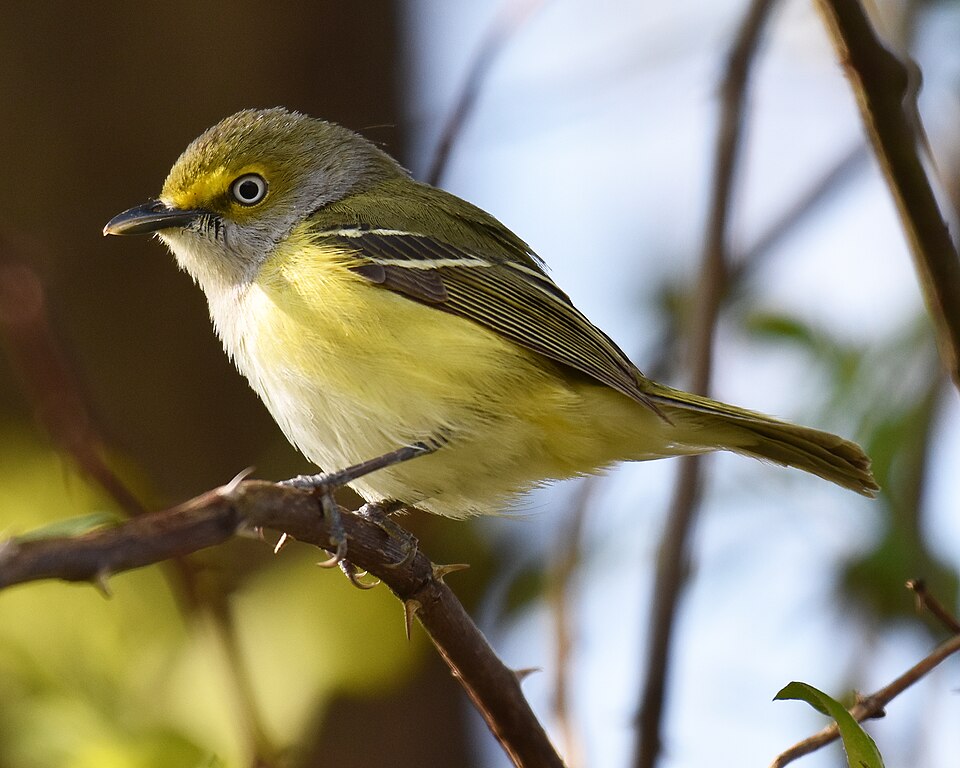
The Hylophilus bulunensis is distinguished by its olive-green upperparts and yellowish undersides, providing excellent camouflage among the foliage. Adult birds exhibit a subtle grayish crown, while the face features a delicate yellow lore, emphasizing the bird's expressive dark eyes. Juveniles, although similar in appearance, tend to display duller coloration, lacking the full vibrancy of adults.
There is minimal sexual dimorphism in this species, making it challenging to distinguish between males and females in the field. However, keen observers might notice that males are slightly larger, although this difference is subtle. When perched, the Hylophilus bulunensis adopts a horizontal posture, which, combined with its small size and agile movements, can make it difficult to spot among the dense foliage.
In flight, the Hylophilus bulunensis exhibits a rapid, undulating pattern, characterized by short bursts of flapping interspersed with glides. This flight silhouette, along with its distinctive plumage, helps differentiate it from similar species such as the Red-eyed Vireo, which inhabits overlapping regions but displays a more pronounced eye stripe and a larger size.
Having trouble telling birds apart? Upload a photo to our bird identification tool for an instant species match.
Hylophilus bulunensis Habitat and Range
Preferred Habitat
The Hylophilus bulunensis primarily inhabits the tropical rainforests of the Amazon Basin, where it favors the upper canopy layers. These dense forests, rich in biodiversity, provide the ideal environment for the bird's feeding and nesting activities. The species is most commonly found at elevations ranging from 100 to 800 meters above sea level, thriving in both primary and secondary forest growth.
Unlike many avian species, the Hylophilus bulunensis shows a marked preference for pristine forest conditions, often avoiding heavily degraded or fragmented habitats. While it is less commonly observed in urban areas, its presence in rural forested regions underscores its reliance on undisturbed natural environments.
Seasonal shifts in habitat use are not well-documented, but the bird's adaptability suggests potential altitudinal movements in response to changes in food availability and weather patterns. This adaptability is crucial for its survival in a region experiencing significant ecological changes.
Geographic Range
The Hylophilus bulunensis boasts a relatively limited range, predominantly within the Amazon Basin. Its breeding range extends across several South American countries, including Brazil, Colombia, and Peru. Within these regions, dense rainforest environments provide the necessary resources for successful reproduction and survival.
Throughout the year, the Hylophilus bulunensis remains largely within its breeding range, exhibiting minimal migratory behavior. However, some individuals might undertake short-distance movements to exploit seasonal food resources or find suitable nesting sites. Migration corridors, if present, are characterized by altitudinal shifts rather than long-distance travel.
Population density hotspots appear to correlate with areas of high forest integrity, where the species can exploit the rich biodiversity of the Amazon. Despite its stable presence within its range, ongoing deforestation poses a significant threat to its habitat, potentially leading to future range contractions.
Want to know which birds visit your area? Browse our backyard birds by location guides for region-specific species lists.
What Does the Hylophilus bulunensis Eat?
The diet of the Hylophilus bulunensis primarily consists of insects and small invertebrates, which it adeptly gleans from the foliage during its foraging expeditions. This insectivorous diet plays a crucial role in controlling pest populations within its rainforest habitat. The bird's foraging technique involves flitting through the canopy, using its sharp bill to extract prey from leaves and branches.
Seasonal changes in food availability may prompt the Hylophilus bulunensis to adjust its diet, incorporating more fruit and seeds when insect populations decline. The inclusion of fruit not only supplements its nutritional intake but also aids in seed dispersal, contributing to forest regeneration.
The bird's feeding schedule aligns with the diurnal activity patterns of its prey, with peak foraging occurring during the early morning and late afternoon hours. This timing allows the Hylophilus bulunensis to exploit the periods of highest insect activity, ensuring a reliable food supply throughout the year.
Hylophilus bulunensis Behavior and Social Structure
The Hylophilus bulunensis exhibits a solitary or paired lifestyle, rarely forming large flocks. Its territorial behavior is evident during the breeding season, when males engage in vocal displays to assert dominance and secure territory boundaries. These displays consist of a series of melodious calls, which serve both to attract mates and deter rivals.
Courtship involves a series of intricate displays, where the male presents food offerings to the female as a demonstration of his fitness and ability to provide for potential offspring. Once a pair bond forms, both partners participate in nest building and territory defense.
The species is generally active during daylight hours, with peak activities occurring during the cooler parts of the day. Its response to predators includes rapid, evasive flight maneuvers and the use of dense foliage for concealment. Despite its small size, the Hylophilus bulunensis displays remarkable agility, allowing it to navigate the complex rainforest environment with ease.
Hylophilus bulunensis Nesting and Reproduction
The nesting habits of the Hylophilus bulunensis reflect its adaptation to the rainforest canopy. Nests are typically cup-shaped structures, intricately woven from fine plant fibers, moss, and spider silk. These nests are strategically placed on horizontal branches, often several meters above ground, to deter predators and provide a stable environment for rearing young.
A typical clutch consists of two to three eggs, which are incubated by both parents over a period of approximately 12 to 14 days. The eggs are a pale bluish-white, speckled with brown, providing camouflage against the nest's natural materials.
After hatching, the nestlings remain under the care of both parents, who diligently provide food and protection until fledging occurs at about 10 to 12 days post-hatching. The Hylophilus bulunensis often raises two broods per year, capitalizing on the abundant resources available during the rainy season.
Hylophilus bulunensis Sounds and Vocalizations
The vocalizations of the Hylophilus bulunensis are a distinctive aspect of its presence in the rainforest. Its primary song consists of a series of melodious, flute-like notes that rise and fall in pitch, creating a soothing and musical quality. These songs serve as a means of communication between mates and as territorial markers.
In addition to its primary song, the species emits a variety of call notes, ranging from sharp, single 'chip' sounds to more complex sequences used in alarm situations. These calls can vary in intensity and frequency, depending on the level of perceived threat.
During the dawn chorus, the Hylophilus bulunensis often contributes a harmonious layer to the symphony of sounds that characterize the rainforest morning. Its songs and calls, though subtle, play an important role in maintaining social bonds and coordinating group activities.
Interesting Facts About the Hylophilus bulunensis
- 1The Hylophilus bulunensis can often be heard before it is seen, due to its melodious song that blends with the rainforest ambiance.
- 2Although primarily insectivorous, the Hylophilus bulunensis plays a crucial role in seed dispersal, aiding in forest regeneration.
- 3This bird's olive-green coloration provides excellent camouflage, making it a challenge for birdwatchers to spot among the dense foliage.
- 4Hylophilus bulunensis displays remarkable agility, able to maneuver through the complex canopy layers with ease.
- 5Despite its small size, the Hylophilus bulunensis is known for its territorial behavior, often engaging in vocal displays to deter rivals.
- 6The nesting success of the Hylophilus bulunensis is closely tied to the preservation of intact rainforest habitats.
- 7Its cup-shaped nests, built from natural materials, exemplify the bird's ability to adapt and thrive in its environment.
Hylophilus bulunensis Conservation Status
The Hylophilus bulunensis is currently listed as a species of Least Concern by the IUCN, due to its relatively stable population numbers and extensive range within the Amazon Basin. However, the ongoing threat of habitat destruction, primarily through deforestation and land conversion, poses significant risks to its habitat and long-term survival. Conservation efforts focus on preserving large tracts of intact rainforest to ensure the continued existence of this and other forest-dependent species. Legal protections and sustainable land-use practices are critical components in safeguarding the biodiversity of the Amazon. Historically, population trends have remained stable, but continued monitoring is essential to detect any negative impacts from environmental changes and human activities. Conservationists emphasize the importance of public awareness and involvement in rainforest conservation to secure a future for the Hylophilus bulunensis.
Other Vireonidae Species


Birds Similar to the Hylophilus bulunensis
These species are often confused with the Hylophilus bulunensis due to similar appearance or overlapping range.

