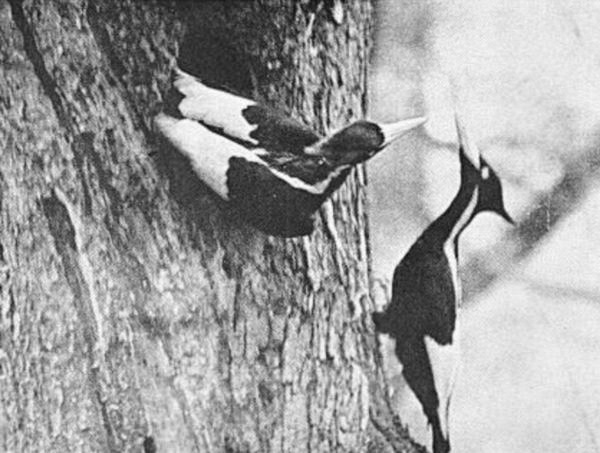
Imperial Woodpecker
Campephilus imperialis
Order: Piciformes / Family: Picidae
Wikimedia Commons
About the Imperial Woodpecker
The Imperial Woodpecker, scientifically known as Campephilus imperialis, is an extraordinary bird that once graced the forests of western Mexico. As the largest woodpecker in the world, it is renowned for its impressive size, measuring up to 56-60 centimeters (22-24 inches) in length. The Imperial Woodpecker's ecological significance is profound, as it played a critical role in the forest ecosystems by controlling insect populations and facilitating the decomposition of dead wood. Found primarily in the high-altitude pine forests of the Sierra Madre Occidental, this species has shown a preference for old-growth forests dominated by pine and pine-oak mixtures. This habitat preference is crucial because these forests provide the large, decaying trees needed for nesting and foraging. Historically, the bird's range extended through the Sierra Madre Occidental, from Sonora and Chihuahua down to Jalisco and Michoacán. However, sightings have been exceedingly rare, with the last confirmed observation occurring several decades ago. Seasonal behaviors of the Imperial Woodpecker included extensive foraging during the warmer months when insect prey is most abundant, while in winter, the birds likely relied on stored fat reserves and any available food. The Imperial Woodpecker's absence from the landscape has had cascading effects on the forest ecosystems where it once thrived, highlighting its ecological importance.
The Imperial Woodpecker belongs to the family Picidae, within the order Piciformes. These birds typically live unknown due to presumed extinction, but likely similar to related species with an average of 8-10 years..
How to Identify a Imperial Woodpecker
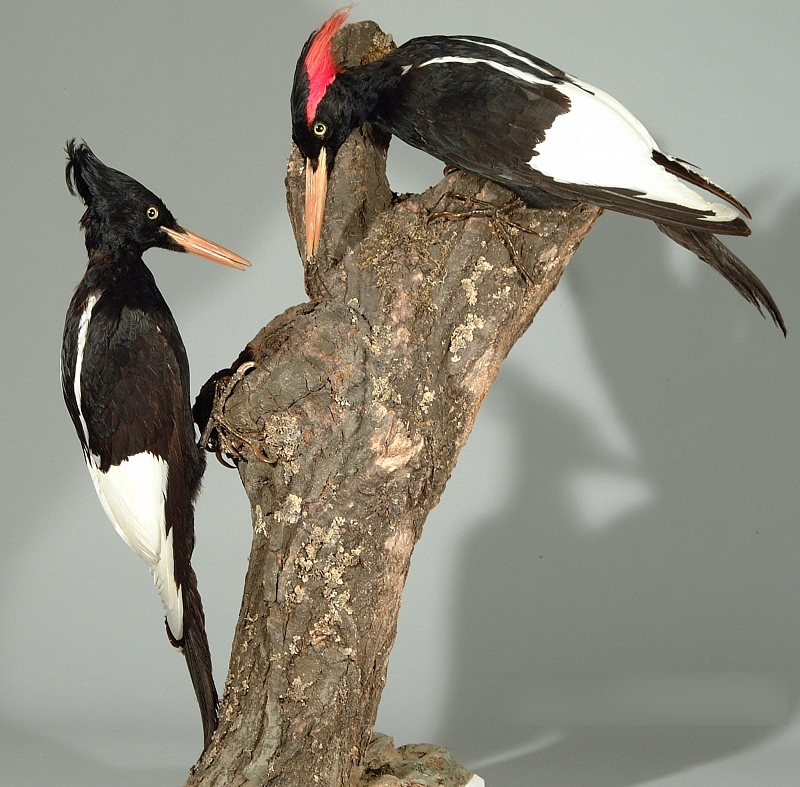
In the field, the Imperial Woodpecker is unmistakable due to its sheer size and bold coloration. Adults display a striking black-and-white plumage with a prominent white stripe running down the neck and onto the wings. The males have a distinctive red crest, which makes them distinguishable from the females, who possess a black crest. Juveniles resemble adults but with less vibrant coloration and a less developed crest. When comparing with similar species, the Imperial Woodpecker can be confused with the related Ivory-billed Woodpecker, but it can be differentiated by its larger size and different vocalizations. The flight silhouette of the Imperial Woodpecker is characteristic, with deep, powerful wingbeats and a direct flight path. When perching, these woodpeckers often assume an upright posture on large tree trunks, using their stiff tails for support. This posture, combined with their size and coloration, makes them conspicuous when present.
Having trouble telling birds apart? Upload a photo to our bird identification tool for an instant species match.
Imperial Woodpecker Habitat and Range
Preferred Habitat
The Imperial Woodpecker historically inhabited mature pine and pine-oak forests at elevations ranging from 1500 to 3000 meters (5000 to 9800 feet). These forests are primarily found in the Sierra Madre Occidental, characterized by tall trees, open understories, and an abundance of dead or decaying trees. Such habitats provide the necessary resources for feeding and nesting. There is no evidence of the Imperial Woodpecker adapting to urban environments, as it relies heavily on large, uninterrupted tracts of forest. Seasonal habitat shifts are not well-documented, but the species likely remained within its high-altitude forest range year-round, given its specialized habitat needs and lack of migratory behavior.
Geographic Range
Historically, the Imperial Woodpecker's range spanned the Sierra Madre Occidental, running from the southern regions of Sonora and Chihuahua through Durango and Sinaloa, reaching as far south as Jalisco and Michoacán. Its range was limited to specific high-altitude forests that provided the necessary resources. There is no evidence to suggest that this species engaged in long-distance migration. While some woodpeckers are known for nomadic movements in response to food availability, the Imperial Woodpecker's range was relatively stable, confined to the old-growth forests of western Mexico. Population density hotspots are challenging to determine due to the scarcity of recent observations, but historical data suggests that the densest populations once existed in the more remote, less disturbed regions of its range.
Want to know which birds visit your area? Browse our backyard birds by location guides for region-specific species lists.
What Does the Imperial Woodpecker Eat?
The diet of the Imperial Woodpecker primarily consisted of wood-boring beetle larvae, which it extracted from trees using its powerful bill. This woodpecker also consumed other insects and arthropods found within the bark and wood of decaying trees. Seasonal changes in diet were likely minimal, as the bird relied heavily on the availability of insect prey within its forest habitat. Foraging techniques included pecking and hammering at dead or dying trees to expose insect larvae. This method not only provided food but also helped in the decomposition process of the forest. While the exact size of prey targeted by the Imperial Woodpecker is not documented, it likely included a range of sizes, from small insects to substantial larvae. The bird's feeding schedule was primarily diurnal, with foraging activities peaking during the day when insect activity was highest.
Imperial Woodpecker Behavior and Social Structure
Imperial Woodpeckers exhibited a complex social structure, often seen in pairs or small family groups. Territorial behavior was pronounced, with individuals defending their chosen areas from intruding woodpeckers. Courtship displays included vocalizations and drumming, with both sexes participating in these rituals to establish pair bonds. Flocking patterns were not well-documented, but the species likely engaged in social foraging during periods of abundant food. In response to predators, these woodpeckers used alarm calls to warn others of potential danger. Daily activity patterns consisted of morning and late afternoon foraging sessions, with rest periods during the midday heat. The bird's behavior reflected its adaptation to a specific ecological niche, relying on its size and strength to access food resources unavailable to smaller woodpeckers.
Imperial Woodpecker Nesting and Reproduction
The nesting habits of the Imperial Woodpecker were deeply tied to its forest environment. Nests were typically excavated in large, decaying pine trees, with both males and females participating in the excavation process. The nesting cavity was usually placed high above the ground, providing protection from ground predators. Clutch size ranged from 2 to 4 eggs per brood, with an incubation period of approximately 14 to 17 days. Both parents shared duties in incubation and feeding, demonstrating a high level of parental cooperation. Fledging occurred about 30 days after hatching, with young woodpeckers remaining dependent on the adults for several weeks post-fledging. The species likely produced one brood per year, given the lengthy development period of the young.
Imperial Woodpecker Sounds and Vocalizations
The primary song of the Imperial Woodpecker was a series of loud, resonant drumming sounds, characterized by a strong, rhythmic pattern. These drumming sequences were used to communicate territory ownership and attract mates. The bird's call notes included sharp, metallic 'kak' sounds, which could be heard over considerable distances. Alarm calls were distinct and urgent, serving to warn others of nearby threats. During dawn, the Imperial Woodpecker engaged in a chorus of drumming and calling, asserting its presence in the early morning light. These sounds, distinctive and powerful, were essential for maintaining social bonds and defending territory.
Interesting Facts About the Imperial Woodpecker
- 1The Imperial Woodpecker is the largest woodpecker in the world, reaching lengths of up to 60 centimeters.
- 2Despite its size, the Imperial Woodpecker was known for its ability to fly swiftly and silently through dense forests.
- 3The last confirmed sighting of the Imperial Woodpecker was in the mid-20th century, making it one of the rarest birds in the world.
- 4The bird's powerful drumming could be heard echoing through the forest, a sound that once defined its habitat.
- 5The Imperial Woodpecker played a crucial role in its ecosystem, aiding in the decomposition of dead trees and controlling insect populations.
- 6This woodpecker's specialized diet primarily consisted of wood-boring beetle larvae, highlighting its role as a pest controller.
- 7Conservationists regard the Imperial Woodpecker as a flagship species for old-growth forest conservation efforts in Mexico.
Imperial Woodpecker Conservation Status
Currently listed as Critically Endangered by the IUCN, the Imperial Woodpecker faces an uncertain future, with its population trend decreasing due to habitat loss and fragmentation. Extensive logging and land conversion have severely reduced the availability of suitable habitats. Conservation efforts are ongoing, focusing on habitat protection and restoration within its historic range. Historically, the bird's population saw a sharp decline in the mid-20th century, correlating with increased human activity in its forest habitats. Conservationists emphasize the need for stringent protection measures and habitat management to prevent the species' extinction.
Other Picidae Species


Birds Similar to the Imperial Woodpecker
These species are often confused with the Imperial Woodpecker due to similar appearance or overlapping range.