
Iris Lorikeet
Saudareos iris
Order: Psittaciformes / Family: Psittaculidae

Wikimedia Commons
About the Iris Lorikeet
The Iris Lorikeet (Saudareos iris) is a strikingly beautiful bird species native to the southeastern islands of Indonesia, particularly Timor and nearby islets. This small parrot, belonging to the family Psittaculidae, stands out not only for its vivid colors but also for its ecological importance in the regions it inhabits. The Iris Lorikeet plays a crucial role in pollination and seed dispersal, contributing to the health of tropical forest ecosystems. It primarily inhabits lowland and montane moist forests, where it often associates with flowering trees and shrubs.
The significance of the Iris Lorikeet extends beyond its ecological contributions. Its presence in the wild serves as an indicator of forest health and biodiversity. The forests of Timor, where the bird is most commonly found, are rich in plant species that depend on birds like the Iris Lorikeet for reproduction. The lorikeet has evolved a highly specialized tongue adapted for feeding on nectar, which makes it an effective pollinator of native flowers.
Seasonally, the Iris Lorikeet may exhibit slight altitudinal movements, typically remaining within the forested areas of its island range. During the breeding season, usually coinciding with the dry season, these birds become more vocal and conspicuous. Their role as a pollinator becomes even more crucial during this time, as many plants rely on the lorikeet's activity for successful reproduction. As a species adapted to dense forest environments, the Iris Lorikeet also highlights the importance of conserving these habitats, which face threats from deforestation and habitat fragmentation.
The Iris Lorikeet belongs to the family Psittaculidae, within the order Psittaciformes. These birds typically live average 10-15 years, with some individuals reaching 20 years in captivity..
How to Identify a Iris Lorikeet
The Iris Lorikeet is easily identifiable by its striking plumage. Adults exhibit bright green feathers across their bodies, with a contrasting deep blue head and a yellow-tinted throat. Juvenile birds are similar in appearance but tend to have duller colors and less pronounced blue on their heads. Unlike many bird species, there are no significant differences between males and females in terms of coloration, making visual sex differentiation challenging.
In flight, the Iris Lorikeet displays a compact silhouette typical of lorikeets, with rapid wing beats and agile maneuvers. Their tails are relatively short and slightly rounded. When perched, these birds often display a relaxed posture, frequently engaging in mutual preening and social interactions within small groups.
The Iris Lorikeet can be confused with other lorikeet species within its range, such as the Olive-headed Lorikeet. However, the Iris Lorikeet's distinctive blue head and green body serve as reliable identification markers. Observers should also note the bright red beak, which adds to the bird's vivid appearance.
Having trouble telling birds apart? Upload a photo to our bird identification tool for an instant species match.
Iris Lorikeet Habitat and Range
Preferred Habitat
The Iris Lorikeet primarily inhabits tropical lowland and montane forests on the islands of Timor and Wetar. These areas, characterized by dense vegetation and a diversity of flowering plants, provide ideal foraging grounds. The lorikeet typically resides at elevations ranging from sea level up to 1,500 meters, showing adaptability to various forest types within this range.
Although primarily a forest-dweller, the Iris Lorikeet can occasionally be found in secondary forests and plantations, where native flora persists. Seasonal shifts in habitat are minimal, as the bird remains year-round within the forested environments that offer its dietary needs. Urban presence is rare, as the species prefers the seclusion of natural habitats over human-altered landscapes.
Geographic Range
The breeding range of the Iris Lorikeet is restricted to the islands of Timor and Wetar, situated in the eastern part of the Lesser Sunda Islands of Indonesia. These isolated locations support dense populations of the species, although they are limited by the small geographic area.
The Iris Lorikeet does not exhibit migratory behavior, maintaining a year-round presence within its native range. Population density is highest in areas where flowering trees are abundant, providing ample food resources. The lack of migration and limited range make the Iris Lorikeet susceptible to habitat changes and environmental threats, underscoring the importance of conservation efforts in these regions.
Want to know which birds visit your area? Browse our backyard birds by location guides for region-specific species lists.
What Does the Iris Lorikeet Eat?
The primary diet of the Iris Lorikeet consists of nectar and pollen extracted from a variety of flowering plants. Their specialized brush-tipped tongues allow them to efficiently gather these food sources. During certain times of the year, the Iris Lorikeet supplements its diet with fruits and occasionally insects, providing additional nutrition.
Foraging often occurs in the early morning and late afternoon, when flowers are at their most productive. The lorikeets usually feed in small flocks, moving through the forest canopy in search of blooms. They prefer large flowering trees, where they can find abundant nectar to sustain their energetic lifestyle.
Seasonal changes in flower availability can influence their diet, prompting the birds to travel short distances within their range to locate new food sources. The Iris Lorikeet's role as a pollinator is vital, as it facilitates the reproduction of many native plant species.
Iris Lorikeet Behavior and Social Structure
Iris Lorikeets exhibit highly social behavior, often forming small, cohesive flocks. These groups engage in mutual grooming and cooperative foraging, strengthening social bonds. The birds display a playful nature, frequently engaging in acrobatics and chasing each other through the forest canopy.
Territorial behavior is minimal, with flocks overlapping in range and foraging areas. During the breeding season, pairs become more distinct, with both partners participating in courtship displays that involve synchronized flight patterns and vocalizations.
In response to predators, Iris Lorikeets rely on their agility and speed to evade capture. They exhibit alertness and will rapidly disperse into the forest if threatened. Their daily activity patterns include periods of feeding interspersed with rest and social interactions, maintaining a dynamic presence within their habitat.
Iris Lorikeet Nesting and Reproduction
The Iris Lorikeet nests in tree hollows, often selecting sites high above the ground to avoid predators. Nest construction involves minimal material use, primarily relying on the cavity's natural structure to provide shelter and protection.
Clutch sizes typically range from two to three eggs, with both parents sharing incubation duties. The incubation period lasts approximately 23 days, after which the chicks hatch and are cared for by both parents.
Fledging occurs around six weeks post-hatching, with young birds remaining under parental care for several weeks thereafter. The species generally raises one brood per year, aligning reproductive efforts with the availability of food resources in the environment.
Iris Lorikeet Sounds and Vocalizations
The vocalizations of the Iris Lorikeet include a variety of high-pitched calls and chatters. Their primary song consists of rhythmic sequences of sharp, melodic notes, often given in rapid succession. Call notes are shorter and more abrupt, serving as contact calls between flock members.
Alarm calls are louder and more intense, alerting others to potential threats. During the dawn chorus, Iris Lorikeets contribute to the forest's symphony with their lively and distinctive sounds, making them a prominent feature of their environment's soundscape.
Interesting Facts About the Iris Lorikeet
- 1The Iris Lorikeet relies on its brush-tipped tongue to extract nectar, showcasing an adaptation unique to the Lorikeet family.
- 2During courtship, pairs of Iris Lorikeets engage in aerial displays that include synchronized flights and intricate maneuvers.
- 3Despite their vivid colors, Iris Lorikeets blend into the forest canopy, their green plumage providing effective camouflage.
- 4Iris Lorikeets play a crucial role in pollinating over 20 native plant species, highlighting their ecological importance.
- 5The species' name, 'Iris', refers to the rainbow-like colors of its plumage, reminiscent of the Greek goddess of the rainbow.
- 6With a wingspan of about 20 cm, the Iris Lorikeet is a small bird, yet it covers vast distances daily in search of nectar.
- 7Iris Lorikeets are known for their vocal mimicry abilities, often imitating other bird calls and environmental sounds.
Iris Lorikeet Conservation Status
The IUCN currently lists the Iris Lorikeet as Near Threatened, with populations facing pressure from habitat loss and degradation. Deforestation for agriculture and logging poses significant threats to their native forests. Conservation efforts focus on habitat protection and restoration, aiming to secure the remaining forest areas. Historical population changes have been influenced by fluctuating environmental conditions, but recent trends indicate a gradual decline due to human activities. Protecting the Iris Lorikeet requires collaborative efforts between conservation organizations and local communities to ensure the long-term survival of this vibrant species.
Other Psittaculidae Species


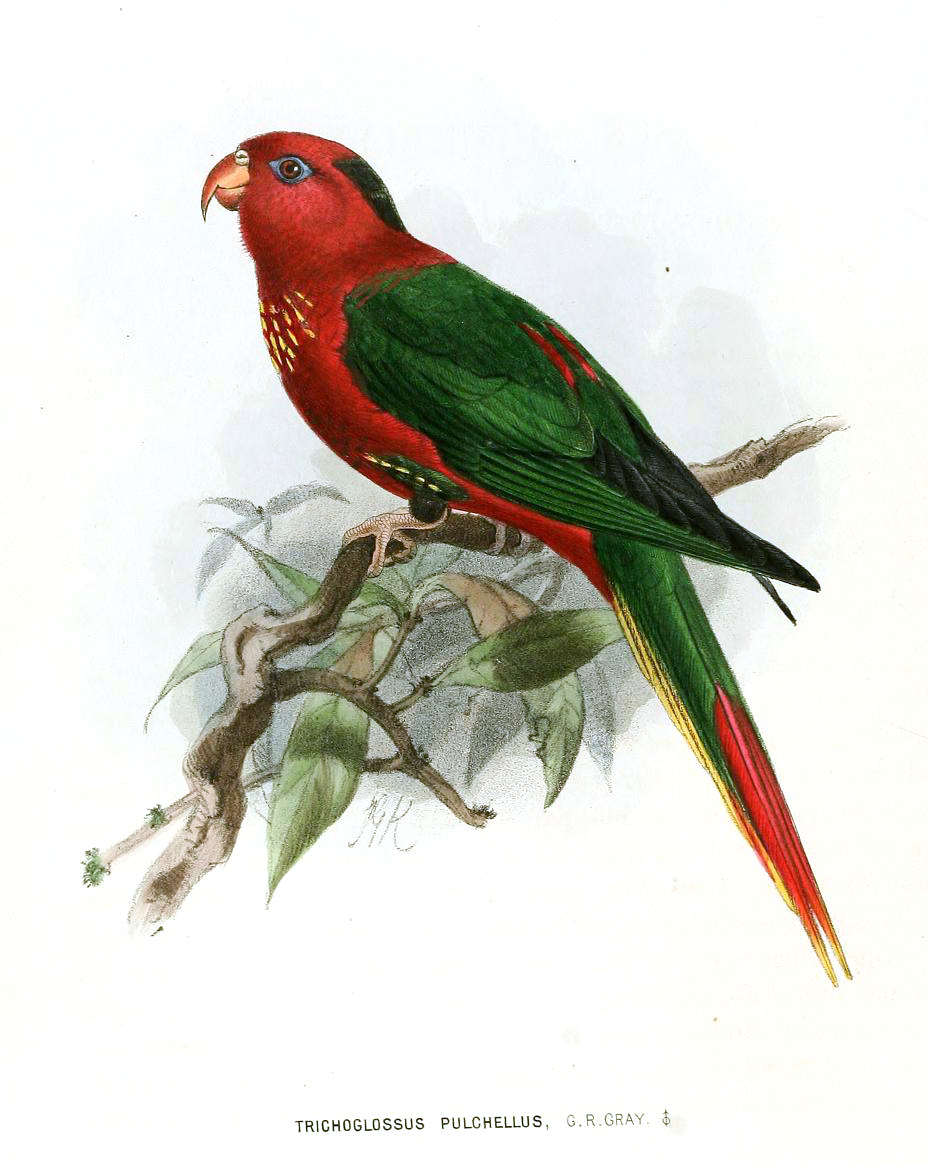
Birds Similar to the Iris Lorikeet
These species are often confused with the Iris Lorikeet due to similar appearance or overlapping range.

