
Isabelline Bush-hen
Amaurornis isabellina
Order: Gruiformes / Family: Rallidae
Wikimedia Commons
About the Isabelline Bush-hen
The Isabelline Bush-hen, scientifically known as Amaurornis isabellina, is a medium-sized rail that belongs to the family Rallidae and is native to the tropical and subtropical regions of Southeast Asia. This elusive bird is primarily found in the Philippines, where it inhabits dense undergrowth and marshy areas. Its significance lies in its role as an indicator species for wetland health, as it relies heavily on pristine, undisturbed habitats. The Isabelline Bush-hen is known for its cryptic coloration, which provides excellent camouflage against the reed beds and vegetation it frequents.
Ecologically, the Isabelline Bush-hen plays a crucial role in the food web of its habitat. It helps control insect populations and disperses seeds through its droppings, thus aiding in the regeneration of plant life in its environment. This bird is predominantly active during the wet season, when it takes advantage of the abundance of food resources. During this period, it engages in breeding activities, building nests in secluded, dense vegetation to protect its young from predators. The Isabelline Bush-hen's presence in an area is a strong indicator of the health and diversity of wetland ecosystems, making it vital for conservationists to monitor its population trends closely.
The Isabelline Bush-hen is also a species of interest due to its restricted range and specialized habitat requirements. It is most commonly found in lowland areas of the Philippines, such as Luzon, Mindoro, and Mindanao. These regions provide the perfect mix of wetland and forested environments that the bird requires for feeding and nesting. As a species that relies heavily on specific habitat conditions, the Isabelline Bush-hen is particularly vulnerable to habitat destruction caused by agricultural expansion, logging, and urban development. Conservation efforts are essential to ensure the survival of this unique bird and the ecosystems it inhabits.
The Isabelline Bush-hen belongs to the family Rallidae, within the order Gruiformes. These birds typically live average 4-6 years with a maximum recorded of 8 years..
How to Identify a Isabelline Bush-hen
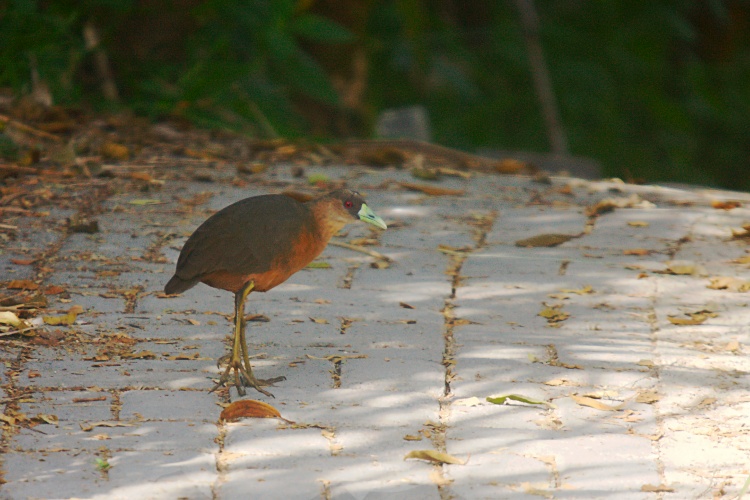
The Isabelline Bush-hen is a medium-sized rail that exhibits distinct field marks, making it identifiable to the keen birder. Adults possess a unique isabelline, or pale brown, plumage that serves as effective camouflage in their natural habitat. This coloration is consistent across both sexes, with no significant differences between males and females. The bird has a long, slightly curved bill, which is typically a dull yellow or greenish hue, complementing its muted plumage.
Juvenile Isabelline Bush-hens exhibit a slightly duller plumage than adults, which can appear more rufous in tone. This color difference helps juveniles blend into the ground cover of their habitat, offering them protection from predators. The bird's legs are long and relatively slender, with a yellowish or greenish coloration that matches its bill. When in flight, the Isabelline Bush-hen reveals a distinct flight silhouette characterized by its short, rounded wings and long legs trailing behind.
In terms of posture, the Isabelline Bush-hen often adopts a crouched position, which aids its concealment in dense vegetation. It can be confused with similar species like the Slaty-breasted Rail due to its comparable size and habitat preferences. However, the Isabelline Bush-hen's lighter plumage and more subdued color palette distinguish it from these relatives. Observers should note its distinctive calls and behavior for accurate identification.
Having trouble telling birds apart? Upload a photo to our bird identification tool for an instant species match.
Isabelline Bush-hen Habitat and Range
Preferred Habitat
The Isabelline Bush-hen primarily inhabits dense wetlands and marshy areas within the tropical regions of the Philippines. These habitats provide the thick vegetation and abundant water sources necessary for the bird's survival. It favors areas with a combination of tall grasses, reeds, and sedges, which offer cover from predators and nesting sites.
In addition to wetlands, the Isabelline Bush-hen can occasionally be found in adjacent forested areas, particularly those with dense undergrowth. These forests provide additional foraging opportunities and are essential during dry seasons when water levels in wetlands drop. The bird's elevation range typically extends from sea level to around 1,000 meters, although it is most commonly found in lowland areas.
Unlike some other rail species, the Isabelline Bush-hen shows limited adaptability to urban environments. It rarely ventures into human settlements and prefers undisturbed areas where natural vegetation remains intact. Seasonal habitat shifts occur mainly in response to water level changes and food availability, prompting the bird to move between wetlands and forested areas as needed.
Geographic Range
The Isabelline Bush-hen is a resident species primarily found in the Philippines, with its range encompassing several major islands including Luzon, Mindoro, and Mindanao. Within these islands, it occupies a variety of wetland and forest ecosystems, although it shows a marked preference for lowland marshes and swamps.
During the breeding season, the bird is more likely to be seen in denser, undisturbed wetlands where it can find adequate nesting sites and food resources. These areas often feature dense reed beds and an abundance of aquatic insects and other prey. Outside of the breeding season, the Isabelline Bush-hen may disperse slightly but tends to remain within the same general regions, as it does not engage in long-distance migrations.
Population density hotspots for the Isabelline Bush-hen are typically found in well-preserved wetland areas that have not been heavily impacted by human activity. However, as suitable habitats face increasing threats from agriculture and development, these hotspots are at risk of fragmentation. Conservation efforts are essential to maintaining the connectivity of these critical habitats and ensuring the survival of the Isabelline Bush-hen across its range.
Want to know which birds visit your area? Browse our backyard birds by location guides for region-specific species lists.
What Does the Isabelline Bush-hen Eat?
The diet of the Isabelline Bush-hen primarily consists of insects and other small invertebrates, which it forages for in the dense undergrowth of its wetland habitats. This bird uses its long bill to probe the soft, muddy ground for prey, relying on its sense of touch to detect movement beneath the surface.
In addition to insects, the Isabelline Bush-hen's diet includes a variety of seeds, grains, and small aquatic organisms such as snails and crustaceans. Seasonal changes in food availability can lead to slight variations in its diet. During the wet season, when insect populations are at their peak, these form the bulk of its diet. In drier periods, the bird may consume more plant matter and small vertebrates, adapting to the changing resource landscape.
The Isabelline Bush-hen typically forages alone or in pairs, employing a methodical walking pattern as it searches for food. It is most active during the early morning and late afternoon hours when temperatures are cooler and prey is more accessible. Its foraging activity decreases significantly during the hottest parts of the day, when it seeks shelter in shaded areas.
Isabelline Bush-hen Behavior and Social Structure
The Isabelline Bush-hen exhibits a range of behaviors that are characteristic of the rail family, including a preference for dense cover and a shy, elusive nature. This bird is generally solitary or found in pairs, especially during the breeding season when it becomes more territorial.
Territorial behavior includes vocal displays and occasional aggressive encounters with intruders. The Isabelline Bush-hen uses a variety of calls to communicate, particularly during courtship and when establishing territory boundaries. These vocalizations are often heard at dawn and dusk, when the bird is most active in defending its space.
Courtship displays involve both vocal and visual elements, with males performing a series of calls and physical displays to attract females. Once paired, the birds work together to build a nest and raise their young. Outside of the breeding season, the Isabelline Bush-hen is less vocal and more reclusive, spending much of its time foraging quietly in the undergrowth.
In response to predators, the Isabelline Bush-hen relies on its excellent camouflage and ability to remain motionless among the reeds. It is also capable of short bursts of flight to escape danger, although it prefers to run and hide rather than take to the air.
Isabelline Bush-hen Nesting and Reproduction
The Isabelline Bush-hen constructs its nest in dense, marshy vegetation, often choosing locations that offer maximum concealment from predators. The nest itself is a simple structure, typically built from grasses, reeds, and other plant materials found in the surrounding habitat.
Nest sites are usually situated low to the ground, sometimes within clumps of tall grasses or at the base of shrubs. This strategic placement helps protect the nest from both terrestrial and aerial predators. The Isabelline Bush-hen lays a clutch of 4-6 eggs, which are incubated by both parents over a period of approximately 18-21 days.
Once the eggs hatch, both parents share the responsibility of feeding and caring for the chicks. The young birds are precocial, meaning they are relatively mature and mobile shortly after hatching. They remain under the care of their parents for several weeks until they are capable of foraging independently. The Isabelline Bush-hen typically raises one to two broods per year, depending on environmental conditions and food availability.
Isabelline Bush-hen Sounds and Vocalizations
The primary vocalization of the Isabelline Bush-hen is a series of low-pitched, repetitive calls that serve both as territorial markers and communication between mates. These calls are often described as a sequence of 'kek-kek-kek' sounds, which gradually increase in tempo and can be heard over considerable distances.
In addition to these primary calls, the Isabelline Bush-hen emits softer contact notes and harsher alarm calls in response to threats. The alarm call is a sharp, quick series of notes that alerts nearby birds to potential danger. During the dawn chorus, the bird's calls blend into the symphony of wetland sounds, adding to the rich acoustic environment of its habitat.
The Isabelline Bush-hen's vocalizations are integral to its social interactions and are particularly prominent during the breeding season. These sounds serve not only to establish territory but also to strengthen pair bonds between mates.
Interesting Facts About the Isabelline Bush-hen
- 1The Isabelline Bush-hen is named after its distinctive isabelline coloration, a pale greyish-yellow that provides excellent camouflage.
- 2Despite being elusive, the Isabelline Bush-hen is often detected by its distinctive vocalizations, which can carry over long distances in its wetland habitat.
- 3The bird's preference for dense vegetation makes it a challenging subject for birdwatchers, requiring patience and a keen ear.
- 4The Isabelline Bush-hen's diet includes a variety of insects, making it a natural pest controller within its ecosystem.
- 5While generally solitary, the Isabelline Bush-hen becomes more social during the breeding season, engaging in complex vocal interactions.
- 6Unlike many other rail species, the Isabelline Bush-hen rarely ventures into open areas, preferring the safety of dense cover.
- 7The species' restricted range in the Philippines makes it a target for conservation efforts focused on preserving unique island biodiversity.
Isabelline Bush-hen Conservation Status
The Isabelline Bush-hen is currently classified as Least Concern by the IUCN, although its population trends are not well-documented due to its elusive nature. The primary threats to its survival include habitat destruction and degradation, particularly in the form of wetland drainage for agriculture and urban expansion. Conservation efforts focusing on the preservation and restoration of wetland habitats are crucial for the Isabelline Bush-hen's continued existence. Protected areas and sustainable land management practices can help mitigate the impact of human activities on its habitat. Additionally, raising awareness about the importance of wetland ecosystems can contribute to broader conservation goals. Historically, the Isabelline Bush-hen's population has remained relatively stable, but ongoing threats necessitate continuous monitoring to ensure that this stability persists. Conservationists must prioritize maintaining healthy wetland habitats to support the diverse species, including the Isabelline Bush-hen, that depend on these environments.
Other Rallidae Species


Birds Similar to the Isabelline Bush-hen
These species are often confused with the Isabelline Bush-hen due to similar appearance or overlapping range.
