Jamaican Vireo
Vireo modestus
Order: Passeriformes / Family: Vireonidae

Wikimedia Commons
About the Jamaican Vireo
The Jamaican Vireo, scientifically known as Vireo modestus, is a small passerine bird endemic to the island of Jamaica. This bird is a member of the family Vireonidae, a group known for their relatively plain appearance yet melodious songs. The Jamaican Vireo thrives in the lush, tropical forests that cover much of the island, particularly favoring areas with dense foliage which provide ample feeding opportunities and nesting sites. Its presence is a vital component of the local ecosystem, contributing to both seed dispersal and insect population control.
Ecologically, the Jamaican Vireo serves as both a predator and a prey species. By feeding on a variety of insects, it helps manage insect populations that might otherwise harm the vegetation. In turn, it is preyed upon by larger birds and animals, playing its role in the food web. The bird is typically found in lowland and montane forests but can also inhabit scrub and edge habitats, especially where human activities have altered the landscape.
During the breeding season, which aligns with Jamaica's wetter months, the Jamaican Vireo becomes more territorial, often heard singing vigorously to defend its nesting area. Outside of the breeding season, it exhibits less territorial behavior and may join mixed-species flocks. Its adaptability to various forest types, including secondary and degraded forests, highlights its resilience and ecological significance. However, ongoing habitat loss due to deforestation and land conversion poses threats to its population, underscoring the need for conservation efforts to ensure this species continues to thrive.
The Jamaican Vireo belongs to the family Vireonidae, within the order Passeriformes. These birds typically live 5-8 years with a maximum recorded lifespan of 10 years.
How to Identify a Jamaican Vireo
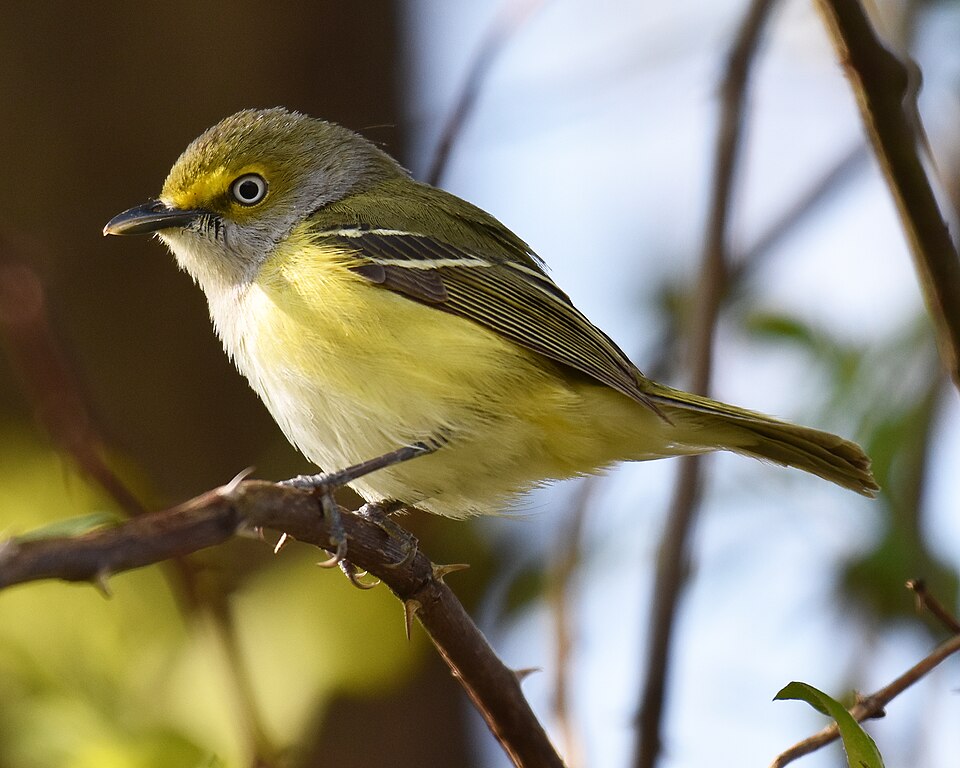
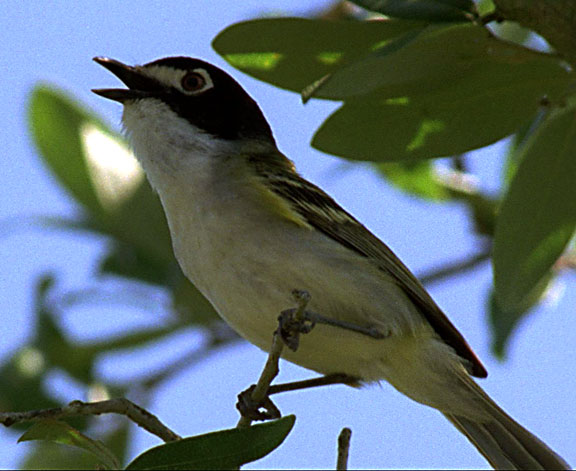
The Jamaican Vireo is a small bird, measuring about 12 centimeters in length. It has a distinct olive-green upper body, which seamlessly transitions into a paler, yellowish underbody. The crown and nape are usually an ash-gray, providing a subtle contrast to the rest of its plumage. A key identification feature is its white eye-ring, often described as 'spectacled' due to its prominence against the bird's darker feathers.
Adult Jamaican Vireos are not sexually dimorphic, meaning males and females look similar. Juveniles, however, show slightly duller plumage with less pronounced eye-rings, making them a bit more challenging to identify. In terms of posture, the Jamaican Vireo often appears upright when perched, frequently seen flitting through foliage in search of food.
While similar in size to other vireos, such as the White-eyed Vireo, the Jamaican Vireo can be differentiated by its unique coloration and song. In flight, its silhouette is compact with a steady, direct flight pattern. When comparing to other species, pay particular attention to its olive-green hue and the lack of wing bars, which are present on many vireo species.
Having trouble telling birds apart? Upload a photo to our bird identification tool for an instant species match.
Jamaican Vireo Habitat and Range
Preferred Habitat
The Jamaican Vireo occupies a variety of habitats, but is most commonly associated with dense, tropical forests. These include both lowland and montane forests, where it finds the necessary cover and food sources. It thrives at elevations ranging from sea level to about 1,500 meters, showing a preference for areas with abundant foliage and mature trees.
In addition to pristine forests, the Jamaican Vireo can also be found in secondary growth forests and regenerating areas, demonstrating its adaptability to habitat changes. In urban areas, it occasionally enters gardens and parks, particularly where native vegetation is present. Seasonal habitat shifts are minimal, as the bird is non-migratory and remains within its range throughout the year.
Geographic Range
The Jamaican Vireo is endemic to Jamaica, which means it is found nowhere else in the world. Its range encompasses the entire island, from the coastal lowlands to the higher elevations of the Blue Mountains. Unlike migratory species, the Jamaican Vireo does not undertake long-distance migrations, instead remaining within its Jamaican habitat year-round.
Populations are relatively evenly distributed across the island, although densities may be higher in regions with extensive forest cover. Places like the Cockpit Country and the Blue and John Crow Mountains National Park are hotspots where these birds are commonly observed. The absence of migration means that the Jamaican Vireo's range does not extend beyond Jamaica, making its conservation even more crucial.
Want to know which birds visit your area? Browse our backyard birds by location guides for region-specific species lists.
What Does the Jamaican Vireo Eat?
The Jamaican Vireo primarily feeds on a varied diet of insects, which it gleans from the foliage of trees and shrubs. Common prey items include caterpillars, beetles, and various flying insects, which it captures with adept movements through the branches. During certain times of the year, particularly when insects are less abundant, the vireo may also consume small fruits and berries, supplementing its diet with available plant material.
This opportunistic foraging strategy allows the Jamaican Vireo to adapt to seasonal changes in food availability, ensuring its survival across different habitats. Foraging typically occurs throughout the day, with peaks in activity during the early morning and late afternoon when insects are most active. The bird's small size allows it to access insect-rich areas within the canopy that might be inaccessible to larger birds.
Jamaican Vireo Behavior and Social Structure
The Jamaican Vireo exhibits a range of interesting behaviors, particularly during the breeding season. Males become highly territorial, often engaging in vocal displays to defend their territory from rivals. Their song, a series of melodious phrases, serves as both a warning to other males and an attraction to potential mates.
Outside of the breeding season, the Jamaican Vireo can be seen joining mixed-species flocks, a behavior that provides enhanced protection from predators through increased vigilance. The bird is generally solitary or found in pairs, but these temporary associations with other species highlight its adaptability and social flexibility.
Daily activity patterns of the Jamaican Vireo typically involve foraging and resting, with periods of heightened activity during feeding times. It is diurnal, resting at night and active during daylight hours. In response to predators, the vireo often employs mobbing behavior, joining with other birds to harass and drive away potential threats.
Jamaican Vireo Nesting and Reproduction
The Jamaican Vireo constructs a cup-shaped nest, often positioned securely in the fork of a tree branch. The nest is intricately woven from grass, leaves, and spider silk, providing a sturdy yet flexible structure that can withstand the elements. It is usually placed at a height of several meters above the ground, offering some protection from ground-dwelling predators.
A typical clutch consists of two to three eggs, which are pale with brown speckling. Both parents share the responsibility of incubation, which lasts about 12 to 14 days. After hatching, the young are cared for by both parents, with feeding duties shared equally. The fledging period occurs approximately 14 to 16 days post-hatching, after which the young birds continue to rely on their parents for food and protection until they are fully independent.
The Jamaican Vireo generally raises one to two broods per year, depending on environmental conditions. Nest predation and habitat disturbance are potential challenges during the breeding season, but the vireo's nesting strategy and choice of location often mitigate these risks.
Jamaican Vireo Sounds and Vocalizations
The Jamaican Vireo is known for its distinctive song, a series of melodious phrases that vary in pitch and rhythm. The song is often described as a cheerful, warbling tune, with each phrase lasting a few seconds before a brief pause. These vocalizations serve multiple purposes, including territory defense and mate attraction.
In addition to its song, the Jamaican Vireo produces a variety of call notes, including sharp 'chip' sounds used for communication between mates or as an alert to nearby threats. Alarm calls are typically more rapid and insistent, signaling immediate danger. During the dawn chorus, the Jamaican Vireo's song can be heard prominently, contributing to the rich auditory landscape of its forest environment.
Its vocalizations are somewhat similar to those of other vireos, but the unique pattern and rhythm help distinguish it from similar species in the region.
Interesting Facts About the Jamaican Vireo
- 1The Jamaican Vireo's diet shift to berries during lean insect months helps plant seed dispersal.
- 2Despite its small size, the Jamaican Vireo can be fiercely territorial during breeding season.
- 3The bird's melodious song can be heard over 100 meters away in dense forest.
- 4Jamaican Vireos often join mixed-species flocks, showcasing their social adaptability.
- 5Nesting high in tree forks, the Jamaican Vireo uses spider silk to strengthen its nest.
- 6With a lifespan of up to 5 years, the Jamaican Vireo contributes significantly to local ecosystems.
- 7The Jamaican Vireo's presence is often seen as an indicator of healthy forest environments.
Jamaican Vireo Conservation Status
The Jamaican Vireo is currently classified as Least Concern by the IUCN, indicating that it is not immediately at risk of extinction. However, the population trend is considered stable, with no significant declines reported recently. Despite this, the species faces ongoing threats from habitat destruction due to deforestation and land conversion for agriculture and urban development. Conservation efforts for the Jamaican Vireo focus on preserving and restoring its natural habitats, particularly the forested areas it depends on for survival. Protected areas like the Blue and John Crow Mountains National Park play a crucial role in safeguarding these habitats. Public awareness and education initiatives aim to highlight the importance of conserving Jamaica's unique avian biodiversity. Historically, the Jamaican Vireo has managed to adapt to habitat changes, but continued vigilance is necessary to ensure that this species remains a thriving component of Jamaica's avifauna.