Lemon-chested Greenlet
Hylophilus thoracicus
Order: Passeriformes / Family: Vireonidae

Wikimedia Commons
About the Lemon-chested Greenlet
The Lemon-chested Greenlet (Hylophilus thoracicus) is a small passerine bird belonging to the family Vireonidae. This vibrant bird is predominantly found in the tropical and subtropical regions of South America, with its range extending from Venezuela and Colombia to Brazil and Bolivia. The species thrives in the dense canopies of lowland forests, where it plays a crucial role in the ecosystem by aiding seed dispersal and controlling insect populations. The Lemon-chested Greenlet is known for its adaptability to various forest types, including both primary and secondary forests, which contributes to its relatively stable population.
These birds are integral to maintaining the ecological balance in their habitats. By feeding on fruits and insects, they help in both seed dispersal and pest control. The Lemon-chested Greenlet's presence in diverse forest ecosystems underscores its importance in promoting forest regeneration and health. Despite the pressures of habitat degradation, this species has shown a remarkable ability to persist in fragmented landscapes, demonstrating its resilience in the face of environmental changes.
In terms of seasonal behavior, the Lemon-chested Greenlet does not engage in long migrations. Instead, it exhibits altitudinal movements, particularly in regions where seasonal changes in food availability occur. During the breeding season, these birds are more vocal and easier to spot as they actively defend their territories. Outside the breeding season, they may join mixed-species feeding flocks, which provides added protection from predators and increases foraging efficiency.
The Lemon-chested Greenlet belongs to the family Vireonidae, within the order Passeriformes. These birds typically live average 5-7 years with a max recorded of 9 years..
How to Identify a Lemon-chested Greenlet
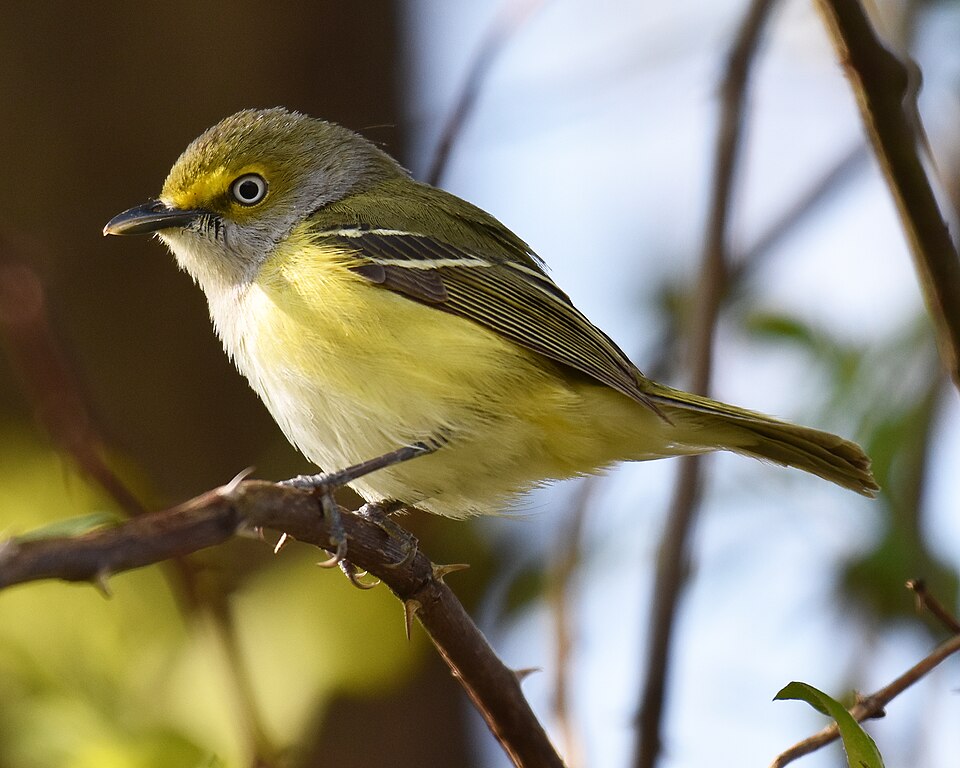
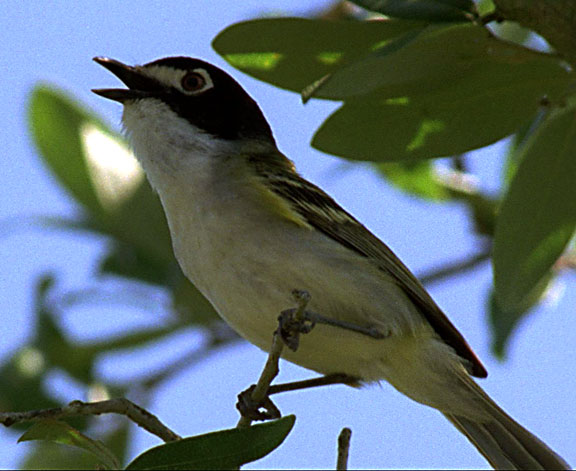
The Lemon-chested Greenlet is a small bird, measuring approximately 12 centimeters in length, with a wingspan of around 18 centimeters. Its most striking feature is the lemon-yellow chest that contrasts with its olive-green back and wings. The bird's head is a muted gray, providing a subtle backdrop to its vivid chest. Males and females look alike, which can make gender identification challenging in the field. Juveniles resemble adults but may have slightly duller plumage, particularly on the chest.
In terms of distinguishing the Lemon-chested Greenlet from similar species, the bright chest color is the key field mark. Other greenlets, such as the Rufous-browed Peppershrike, lack this vibrant chest and have more extensive brown markings on the head. When observing the Lemon-chested Greenlet in flight, its silhouette is typical of small passerines, with rapid wing beats and short, direct flights between trees.
The Lemon-chested Greenlet often perches upright on thin branches, maintaining a characteristic posture that makes it recognizable to those familiar with its behavior. Its small size and agile movements allow it to navigate through dense foliage with ease, often remaining within the protective cover of the canopy.
Having trouble telling birds apart? Upload a photo to our bird identification tool for an instant species match.
Lemon-chested Greenlet Habitat and Range
Preferred Habitat
The Lemon-chested Greenlet predominantly inhabits tropical and subtropical forests throughout its range in South America. It prefers lowland rainforests and is often seen in both primary and secondary growth forests. These birds generally occupy elevations from sea level up to about 1,200 meters, although they may venture into higher altitudinal ranges during specific seasonal movements.
In terms of habitat preferences, the Lemon-chested Greenlet is quite adaptable and can be found in various forest types, including moist lowland forests, forest edges, and sometimes even in well-vegetated urban areas. During the dry season, when food resources in the lower canopy may become scarce, these birds may move to higher elevations or denser forest areas where food remains abundant.
Unlike many other bird species, the Lemon-chested Greenlet does not frequent open country or grasslands, preferring the protection and resources provided by the forest canopy. This preference for forested environments underscores the importance of conserving these habitats to ensure the species' continued survival and ecological function.
Geographic Range
The Lemon-chested Greenlet's range covers a substantial portion of northern and central South America. It is predominantly found in countries such as Venezuela, Colombia, Ecuador, Peru, and Brazil. Its range extends southward into parts of Bolivia and eastward into the Guianas. The species is non-migratory, but it does exhibit some localized movements based on seasonal food availability.
In areas like the Amazon basin, the Lemon-chested Greenlet is particularly widespread, taking advantage of the rich biodiversity and extensive forest cover. In more fragmented landscapes, such as the Atlantic Forest in southeastern Brazil, its presence is less uniform, often limited to larger forest patches where habitat conditions are more favorable.
Population density of the Lemon-chested Greenlet tends to be higher in regions where dense, continuous forest cover is available, as these areas provide optimal conditions for foraging and breeding. Despite the pressures of deforestation and habitat fragmentation, the species remains relatively common in many parts of its range, benefiting from its ability to utilize secondary forest habitats.
Want to know which birds visit your area? Browse our backyard birds by location guides for region-specific species lists.
What Does the Lemon-chested Greenlet Eat?
The Lemon-chested Greenlet primarily feeds on a diet of insects and fruits, which provides a balanced nutritional intake essential for its survival and reproductive success. Insects, particularly caterpillars and beetles, form the bulk of its diet during the breeding season, supplying the necessary protein for raising young.
As a versatile forager, the Lemon-chested Greenlet often gleans insects from leaves and branches in the mid to upper canopy. It employs a methodical approach, meticulously inspecting foliage and occasionally hanging upside down to reach hidden prey. During the non-breeding season, their diet shifts more towards fruits and berries, which are more abundant and provide sustenance when insect populations decline.
The Lemon-chested Greenlet's feeding schedule is primarily diurnal, with peak activity occurring during the cooler morning and late afternoon hours. This timing allows it to avoid the midday heat while maximizing foraging efficiency. The bird's ability to switch between insectivorous and frugivorous diets highlights its adaptability and ecological importance as both a seed disperser and insect controller.
Lemon-chested Greenlet Behavior and Social Structure
The Lemon-chested Greenlet exhibits a range of fascinating behaviors that reflect its adaptability and ecological niche. This bird is predominantly solitary or found in pairs, especially during the breeding season, when it becomes more territorial and vocal. It defends its territory against intruders with a series of sharp calls and physical displays.
Courtship displays involve the male performing a series of fluttering flights and vocalizations to attract a mate. Once paired, the birds often engage in mutual preening, which strengthens pair bonds. Outside the breeding season, the Lemon-chested Greenlet may join mixed-species flocks, a behavior that enhances foraging success and offers protection from predators by increasing vigilance.
In terms of daily activity patterns, the Lemon-chested Greenlet is mostly active during daylight hours, with peak activity in the morning and late afternoon. It responds to predators with alarm calls and seeks cover in dense foliage to evade capture. The species' social structure is relatively simple, with a tendency to remain in loose, fluid groups when not actively breeding.
Lemon-chested Greenlet Nesting and Reproduction
The Lemon-chested Greenlet constructs a delicate cup-shaped nest, typically situated in the fork of a branch high in the forest canopy. The nest is woven from grasses, small twigs, and cobwebs, creating a lightweight yet strong structure that blends seamlessly with its surroundings.
During the breeding season, the female usually lays a clutch of 2 to 3 eggs, which she incubates for approximately 12 to 14 days. Both parents participate in feeding and caring for the chicks, which fledge around 14 to 16 days after hatching. Parental duties are shared, with both male and female contributing to the feeding and protection of the young.
The Lemon-chested Greenlet typically raises one brood per year, although in regions with favorable conditions, a second brood may be attempted. Nest success can be influenced by various factors, including predation and weather conditions, but the species' ability to utilize diverse forest habitats aids in maintaining stable reproductive rates.
Lemon-chested Greenlet Sounds and Vocalizations
The primary song of the Lemon-chested Greenlet is a series of clear, melodious notes that rise and fall in a rhythmical pattern. Each phrase typically consists of 3 to 5 notes, delivered at a medium pitch with a pleasant, flute-like quality. These songs serve as a crucial tool for territory defense and mate attraction.
In addition to its song, the Lemon-chested Greenlet produces several call notes, including sharp 'chip' and 'chup' sounds, often used to maintain contact with mates or signal alarm. During the dawn chorus, this greenlet's song can frequently be heard resonating through the forest, adding to the symphony of early morning bird activity.
Alarm calls are more abrupt and staccato, serving to alert other birds to potential threats. These calls are less musical but highly effective in conveying urgency and have a noticeable impact on the behavior of nearby birds.
Interesting Facts About the Lemon-chested Greenlet
- 1The Lemon-chested Greenlet can consume up to 50% of its body weight in insects and fruits each day, showcasing its high metabolic rate.
- 2Despite its striking appearance, the Lemon-chested Greenlet is often difficult to spot due to its preference for the dense forest canopy.
- 3The Lemon-chested Greenlet's song can travel significant distances through the forest, thanks to its clear and penetrating quality.
- 4Unlike many songbirds, the Lemon-chested Greenlet does not engage in long-distance migrations, relying instead on local movements to find food.
- 5The species' ability to thrive in secondary forests demonstrates its ecological resilience and adaptability to changing environments.
- 6Lemon-chested Greenlets often join mixed-species flocks outside the breeding season, enhancing their foraging success and protection from predators.
- 7The bird's intricate nest construction involves the use of spider silk, which helps bind the structure together and makes it more resilient.
Lemon-chested Greenlet Conservation Status
The Lemon-chested Greenlet is currently classified as Least Concern by the IUCN, with a stable population trend across its range. Despite ongoing habitat loss due to deforestation, particularly in the Amazon basin, this species has demonstrated resilience by adapting to secondary forests. Primary threats include habitat fragmentation and degradation, which reduce available breeding and foraging grounds. Conservation efforts focus on protecting large tracts of forest, particularly in biodiversity hotspots where the species density is highest. Historically, the Lemon-chested Greenlet has maintained stable populations, benefiting from its adaptability to various forest types. Continued conservation actions are necessary to prevent future declines, with emphasis on sustainable land use practices and habitat restoration initiatives.