
Lesser Greenlet
Hylophilus decurtatus
Order: Passeriformes / Family: Vireonidae

Wikimedia Commons
About the Lesser Greenlet
The Lesser Greenlet, scientifically known as Hylophilus decurtatus, is a captivating member of the Vireonidae family. This small passerine bird thrives in the tropical and subtropical regions of the Americas, particularly favoring the lush canopies of humid forests. Its range extends from southern Mexico through Central America and into the northern parts of South America, including countries like Colombia and Venezuela. These regions provide the bird with a rich diversity of habitats, from lowland rainforests to montane forests, where it plays a crucial ecological role by participating in seed dispersal and insect population control. Notably, the Lesser Greenlet is an integral part of the forest ecosystem, contributing to the balance of its habitat through its feeding and nesting behaviors. During the breeding season, which typically occurs during the wet months, this bird becomes particularly vocal and active, showcasing its vibrant songs amidst the dense foliage. The Lesser Greenlet's adaptability to different forest types, including secondary growth and edge habitats, highlights its resilience in the face of environmental changes. Although it favors natural forest environments, it can also be found in semi-urban areas where suitable tree cover exists. By thriving in a range of forested environments, the Lesser Greenlet underscores the importance of preserving these critical habitats, not only for its survival but for the myriad species that share its ecosystem.
The Lesser Greenlet belongs to the family Vireonidae, within the order Passeriformes. These birds typically live average 3-5 years with a maximum of 7 years recorded..
How to Identify a Lesser Greenlet
The Lesser Greenlet is a small bird, measuring approximately 11 to 12 centimeters in length, with a weight of about 10 grams. Its most distinctive feature is its olive-green upperparts, which contrast beautifully with its whitish underparts. The bird's head is characterized by a subtle grayish crown and a faint, pale supercilium that gives it a slightly expressive appearance. Both sexes exhibit similar plumage, making field identification based on sex challenging. Juvenile Lesser Greenlets closely resemble adults but may appear slightly duller and lack the pronounced crispness in their plumage. When examining the bird's flight silhouette, note its short wings and relatively long tail, which aid in its agile movements through the forest canopy. Lesser Greenlets are often confused with similar species like the Greenish Elaenia or other small vireos, but their distinct call and consistent olive-green coloration set them apart. When perched, the bird maintains an upright posture, often flicking its tail as it forages among leaves.
Having trouble telling birds apart? Upload a photo to our bird identification tool for an instant species match.
Lesser Greenlet Habitat and Range
Preferred Habitat
The Lesser Greenlet primarily inhabits the humid and subtropical forests of Central and South America. It thrives in lowland rainforests, montane forests, and secondary growth areas. These birds prefer elevations ranging from sea level up to 1,500 meters, though they are most abundant in lower elevations where the forest canopy is dense. During the wet season, they may shift slightly in habitat preference, moving to areas with increased insect activity. In more urbanized regions, Lesser Greenlets can sometimes be found in parks and gardens with substantial tree cover, indicating some level of adaptability.
Geographic Range
The breeding range of the Lesser Greenlet stretches from southern Mexico through Central America, encompassing Belize, Honduras, Nicaragua, Costa Rica, and Panama. Further south, they are found in Colombia and Venezuela. While the Lesser Greenlet is primarily a resident species, local movements within its range are common, particularly in response to seasonal changes in food availability. Its population density hotspots are typically found in regions with vast expanses of intact tropical forest, such as the rainforests of Costa Rica and the Amazon basin in Colombia.
Want to know which birds visit your area? Browse our backyard birds by location guides for region-specific species lists.
What Does the Lesser Greenlet Eat?
Insects and other small arthropods form the primary diet of the Lesser Greenlet. They exhibit a preference for caterpillars, beetles, and spiders, which they skillfully glean from foliage. During certain seasons, when fruits are more plentiful, they also consume a variety of berries, which aids in seed dispersal. The Lesser Greenlet's foraging technique involves actively searching through leaves and branches, often hanging upside down or making short flights to capture prey. Their diet may vary slightly with the season, as they take advantage of the most abundant food sources available. Feeding occurs throughout the day, with peaks during the cooler morning and late afternoon hours.
Lesser Greenlet Behavior and Social Structure
The Lesser Greenlet exhibits a social structure that is often observed in small flocks or mixed-species foraging groups. This social behavior likely provides protection against predators and increases foraging efficiency. They are territorial birds, with males establishing and defending territories through song and visual displays. During courtship, males may perform subtle displays to attract females, which include singing from prominent perches and brief chases. Lesser Greenlets are generally active during daylight hours, with periods of heightened activity in the early morning and late afternoon. When faced with predators, they employ a variety of evasive maneuvers, including rapid flight and seeking cover in dense foliage.
Lesser Greenlet Nesting and Reproduction
Lesser Greenlets construct cup-shaped nests using plant fibers, moss, and spider silk, typically placed in the fork of a tree branch. Nesting occurs during the rainy season, when food is most abundant. The typical clutch size ranges from two to three eggs, which the female incubates for about 12 to 14 days. Both parents play a role in feeding the chicks, which fledge approximately 11 to 14 days after hatching. The Lesser Greenlet may raise two broods per year, depending on environmental conditions and food availability. Parental care continues for several weeks post-fledging, ensuring the young learn essential survival skills.
Lesser Greenlet Sounds and Vocalizations
The Lesser Greenlet's primary song is a series of high-pitched, melodious notes delivered in quick succession. This song is often described as a pleasant, whistled sequence that resonates through the forest canopy. Their call notes include a variety of sharp chips and trills, used to communicate with other members of their flock. Alarm calls are more abrupt and harsh, alerting others to potential threats. During the dawn chorus, the Lesser Greenlet's song contributes to the symphony of the forest, blending with the calls of other tropical bird species.
Interesting Facts About the Lesser Greenlet
- 1The Lesser Greenlet often joins mixed-species flocks, benefiting from increased foraging success and predator detection.
- 2Despite its small size, the Lesser Greenlet plays a crucial role in seed dispersal, aiding the regeneration of tropical forests.
- 3The species was first described in 1861 by the renowned ornithologist Osbert Salvin.
- 4Lesser Greenlets exhibit remarkable agility, capable of deftly maneuvering through dense forest canopies in search of food.
- 5These birds have a lifespan of up to 6 years in the wild, depending on environmental conditions and predation pressures.
- 6During the breeding season, male Lesser Greenlets may sing for several hours a day to establish territory and attract mates.
- 7The Lesser Greenlet's distinct song can often be heard even in areas of dense human activity, indicating its adaptability.
Lesser Greenlet Conservation Status
The Lesser Greenlet currently holds a status of Least Concern on the IUCN Red List, with population trends considered stable. Despite facing threats from habitat destruction due to deforestation and urbanization, the species' ability to adapt to secondary growth and edge habitats has helped maintain its population. Conservation efforts focus on preserving critical forest habitats and mitigating the impacts of human encroachment. Historically, the Lesser Greenlet's population has remained relatively stable, thanks to its broad range and adaptability.
Other Vireonidae Species
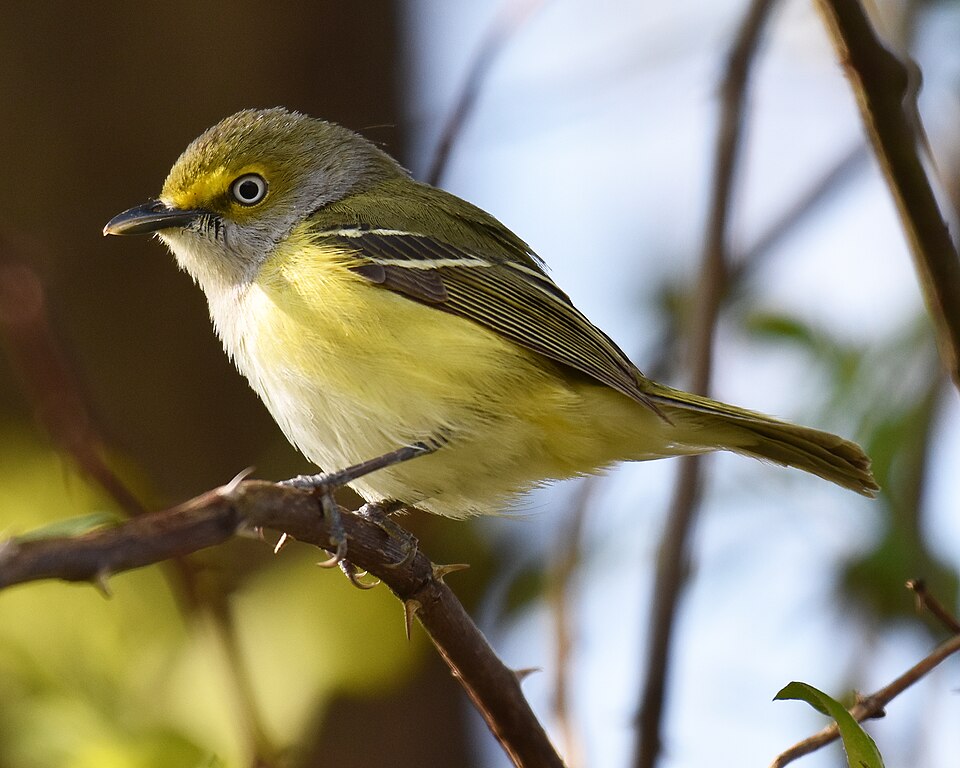

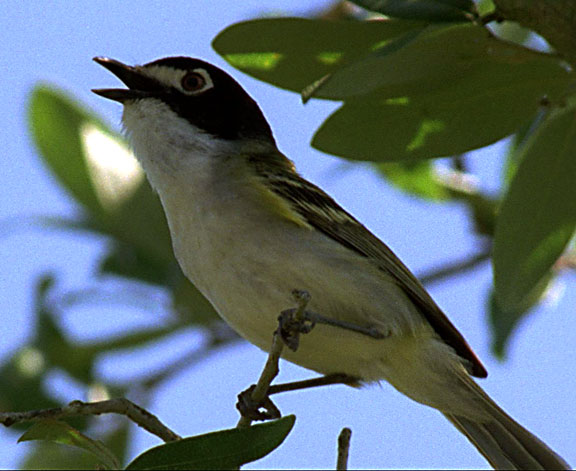

Birds Similar to the Lesser Greenlet
These species are often confused with the Lesser Greenlet due to similar appearance or overlapping range.

