
Lesser Nothura
Nothura minor
Order: Tinamiformes / Family: Tinamidae
Wikimedia Commons
About the Lesser Nothura
The Lesser Nothura (Nothura minor) is a fascinating member of the Tinamidae family, primarily inhabiting the open grasslands and savannas of southeastern Brazil, particularly in the states of Minas Gerais, São Paulo, and Paraná. This small, elusive bird plays a significant ecological role in these regions, contributing to the balance of insect populations and providing prey for larger predators. Unlike many other birds, the Lesser Nothura spends most of its life on the ground, where its cryptic plumage provides excellent camouflage against predators. During the breeding season, which typically occurs in the austral spring and summer, males take on the responsibility of incubating the eggs and caring for the young, a rare trait among birds. This role reversal reflects the unique life history strategies of the Tinamidae family, where females often lay eggs in the nests of multiple males. Lesser Nothuras are vital players in their ecosystems due to their role in seed dispersal. As they forage for seeds and small invertebrates, they inadvertently transport seeds across their habitat, fostering plant diversity. In addition to their ecological roles, these birds hold cultural significance in their native regions, where they are often featured in local folklore. Their presence signifies a healthy grassland ecosystem, though habitat loss and agricultural expansion pose significant threats. Conservation efforts focus on protecting the natural habitats of the Lesser Nothura to ensure the survival of this intriguing species. Understanding their behaviors and maintaining the balance of their grassland habitats remains crucial for their continued existence.
The Lesser Nothura belongs to the family Tinamidae, within the order Tinamiformes. These birds typically live average 5 years, with a maximum recorded of 8 years..
How to Identify a Lesser Nothura
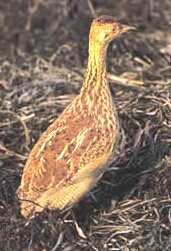
Identifying the Lesser Nothura requires a keen eye due to its cryptic coloration, which blends seamlessly with its grassland environment. Adults typically exhibit mottled brown and buff plumage, with subtle streaks of black and white. The bird's back and wings are marked with intricate patterns that provide excellent camouflage. Males and females are similar in appearance, though females may be slightly larger. Juveniles resemble adults but have duller plumage with less defined markings. The Lesser Nothura's flight silhouette is characterized by short, rounded wings and a relatively short tail, which is often hidden when the bird is at rest. When flushed, the bird flies low to the ground, showing its rapid wingbeats and short bursts of flight. In terms of posture, the Lesser Nothura often appears crouched when walking or foraging, using its cryptic plumage to remain inconspicuous. It can be confused with other tinamous, such as the Spotted Nothura, but the Lesser Nothura's smaller size and distinct geographical range help distinguish it.
Having trouble telling birds apart? Upload a photo to our bird identification tool for an instant species match.
Lesser Nothura Habitat and Range
Preferred Habitat
The Lesser Nothura primarily inhabits open grasslands and savannas within its range in southeastern Brazil. These habitats provide the bird with ample foraging opportunities and cover from predators. It favors areas with tall grasses interspersed with patches of bare ground, where it can easily forage for seeds and insects. The bird typically resides at elevations ranging from sea level to about 1,000 meters. Seasonal shifts in habitat use may occur in response to changes in food availability, though the bird generally remains within its preferred grassland habitat. While the Lesser Nothura avoids urban areas, it may occasionally be found near rural agricultural lands where grasslands are preserved. Maintaining these habitats is critical for the bird's survival, as agricultural expansion poses a significant threat.
Geographic Range
The Lesser Nothura is endemic to southeastern Brazil, with its range primarily encompassing the states of Minas Gerais, São Paulo, and Paraná. This region represents the core of its breeding and year-round range. The bird does not undergo long migrations, instead remaining within its established range throughout the year. Within this range, population densities can vary, with higher concentrations often found in well-preserved grassland habitats. While the bird does not migrate seasonally, it may exhibit some local movements in response to rainfall patterns, seeking areas where food resources are more abundant. Conservation efforts are concentrated in these regions to preserve the critical grassland habitats that support the Lesser Nothura.
Want to know which birds visit your area? Browse our backyard birds by location guides for region-specific species lists.
What Does the Lesser Nothura Eat?
The diet of the Lesser Nothura consists primarily of seeds and small invertebrates, including insects such as ants, beetles, and grasshoppers. This diet reflects the bird's adaptation to its grassland habitat, where these food sources are abundant. Seasonal changes in diet may occur, with insects comprising a larger portion during the wet season when they are more plentiful. The bird forages by walking slowly through grasses, using its keen eyesight to locate prey. It employs a methodical pecking technique to capture insects and pick up seeds. Lesser Nothuras typically forage during the early morning and late afternoon, avoiding the heat of midday. This feeding schedule allows them to exploit the cooler parts of the day when invertebrate activity is higher.
Lesser Nothura Behavior and Social Structure
Lesser Nothuras are generally solitary or found in pairs, particularly during the breeding season. They exhibit strong territorial behavior, with males defending their chosen areas with vocal displays and physical posturing. Courtship involves a series of vocalizations and displays, with males attempting to attract multiple females. Once breeding occurs, the male becomes the primary caretaker, incubating the eggs and raising the chicks. Lesser Nothuras are diurnal, with activity patterns that include periods of foraging interspersed with rest. When threatened by predators, the bird relies on its camouflage to remain hidden, often freezing in place to avoid detection. If necessary, it will flush suddenly, flying low to the ground to evade capture. This behavior underscores its adaptation to a life on the ground.
Lesser Nothura Nesting and Reproduction
The Lesser Nothura constructs its nest on the ground, usually in a shallow scrape lined with grasses and leaves for insulation. Nest sites are carefully chosen to provide maximum concealment, often nestled among tall grasses. The typical clutch size ranges from four to seven eggs, which are glossy and pale in color. The incubation period lasts about 16 to 20 days, during which the male assumes full responsibility. After hatching, chicks are precocial and can leave the nest within hours, following the male to learn foraging techniques. Fledging occurs approximately two to three weeks after hatching. Lesser Nothuras usually have one or two broods per year, depending on environmental conditions and resource availability.
Lesser Nothura Sounds and Vocalizations
The primary song of the Lesser Nothura is a series of soft, low-pitched whistles that carry across the grasslands, often heard during the early morning hours. These whistles have a rhythmic quality, with each note repeated several times before a brief pause. Call notes are softer and used for communication between individuals, particularly during the breeding season. Alarm calls are sharper and more urgent, alerting others to potential danger. The dawn chorus is a significant aspect of their vocal behavior, with territorial males singing to establish and defend their territories.
Interesting Facts About the Lesser Nothura
- 1The Lesser Nothura has a unique reproductive strategy where the male incubates the eggs, a rarity among birds.
- 2Despite its small size, the Lesser Nothura's camouflage makes it incredibly difficult to spot in the wild.
- 3Lesser Nothuras can travel short distances by running quickly, using their powerful legs to navigate grassland terrain.
- 4The bird's diet shifts with the seasons, with more insects consumed during wetter periods when they are more accessible.
- 5In local folklore, the Lesser Nothura symbolizes stealth and adaptability, traits it exhibits in its natural habitat.
Lesser Nothura Conservation Status
The Lesser Nothura is currently listed as Near Threatened by the IUCN, with population trends showing a decline due to habitat loss and fragmentation. Primary threats include agricultural expansion and the conversion of grasslands to croplands. Conservation efforts focus on habitat preservation and the establishment of protected areas within its range. Historical population data indicate a more widespread distribution in the past, emphasizing the need for continued conservation actions to prevent further declines.
Other Tinamidae Species


Birds Similar to the Lesser Nothura
These species are often confused with the Lesser Nothura due to similar appearance or overlapping range.
